The word “sciatica” gets thrown around a lot — and honestly, it’s one of the most misused terms I hear in clinical conversation. Someone mentions lower back pain that shoots into the hip, and suddenly everyone’s calling it sciatica. But true sciatica has a very specific pattern, and taking a sciatica quiz is one of the best first steps you can take toward understanding what’s actually going on with your body. Knowing whether your symptoms genuinely match sciatica changes everything: which exercises help, which positions make things worse, and whether imaging is truly warranted.
This post contains affiliate links. As an Amazon Associate I earn from qualifying purchases at no extra cost to you.
In my experience, the people who struggle longest with lower back and leg pain are the ones who’ve been self-treating the wrong condition. Someone doing piriformis stretches for months because they assumed they had sciatica — when actually they had referred pain from a stiff SI joint. Or someone avoiding all exercise because they’d been told their sciatica was “serious,” when in reality their symptoms were more consistent with tight hip flexors and muscular irritation. Getting the pattern right matters enormously.
Something I always explain to people is that sciatica is not a diagnosis in itself — it’s a description of symptoms caused by irritation or compression of the sciatic nerve, which runs from the lower spine down through the buttock and into the leg. The checklist below is designed to help you identify whether your symptoms fit that specific pattern. It won’t replace a clinical assessment, but it can give you a much clearer starting point.
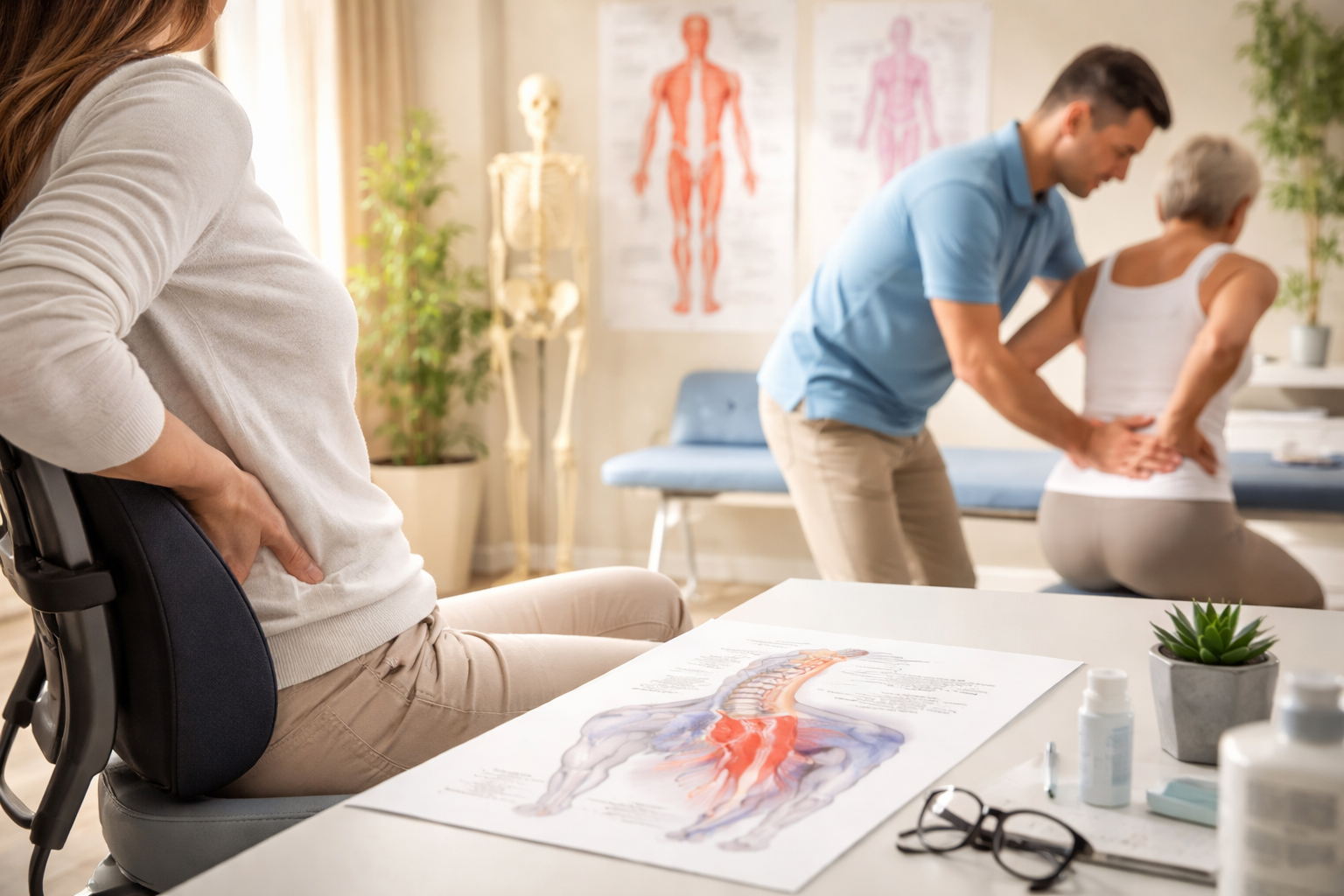
The Sciatica Symptom Checklist
Work through each question honestly and answer yes or no based on your current or most recent symptoms. Try not to overthink it — go with your gut response for each one.
- Does your pain travel from your lower back, through the buttock, and down one leg (usually below the knee)?
- Is only ONE leg affected, rather than both?
- Do you experience numbness, tingling, or a burning sensation along the back or side of the leg?
- Is your pain significantly worse when sitting for prolonged periods?
- Do you experience sharp, shooting, or electric shock-like pain rather than a dull ache?
- Is coughing, sneezing, or bearing down (like during a bowel movement) painful in your back or leg?
- Did your symptoms begin after lifting something heavy, a sudden movement, or gradually worsen over time?
- Does lying down flat provide significant relief?
- Have you had a recent episode of significant lower back pain before the leg pain started?
- Do the symptoms affect a very specific area of the leg or foot — for example, the sole, the outer calf, or the top of the foot?
Give yourself 1 point for every “Yes.” Then check your score below.
What Your Score Means
0–3: True sciatica is less likely based on this pattern. Piriformis syndrome, referred pain from the hip or SI joint, or muscular lower back pain are more probable — and importantly, each of these has a different management approach. Piriformis syndrome, for example, responds well to targeted stretching and hip mobility work, whereas SI joint dysfunction often benefits from stabilisation exercises and manual therapy. If you’re scoring in this range, it may be worth reconsidering whether the exercises and advice you’ve been following are actually suited to your real presentation.
4–6: A moderate correlation with sciatica. If the shooting leg pain, sitting aggravation, and single-leg involvement are all present within your score, this pattern is worth taking seriously. A GP review and potentially an MRI to assess disc involvement is a reasonable next step at this stage. Research published in the British Journal of General Practice suggests that leg-dominant pain — particularly below the knee — is one of the stronger predictors of nerve root involvement, so don’t brush this off simply because your score isn’t at the top of the range.
7–10: A strong pattern consistent with true sciatica — particularly if the leg pain is worse than the back pain, extends below the knee, and follows a specific nerve distribution down the leg or into the foot. The good news is that the majority of sciatica cases do resolve with conservative treatment over time. Studies suggest that around 60–70% of people with acute sciatica show meaningful improvement within six to twelve weeks without surgery. That said, medical review is genuinely warranted at this score level — especially if you’re noticing any bladder or bowel changes, significant weakness in the leg, or symptoms that are rapidly worsening.
Understanding the Pattern
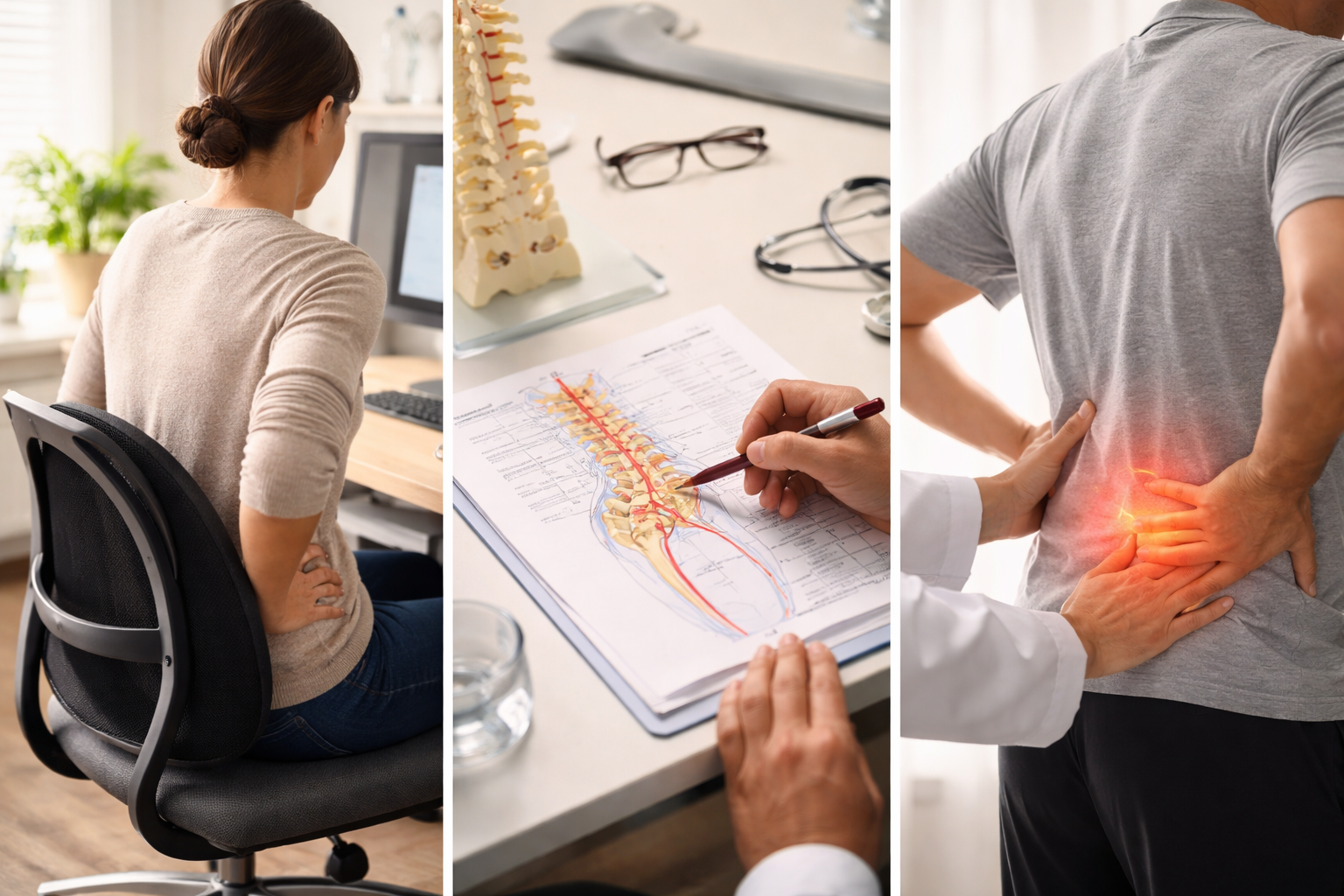
The sciatic nerve is the longest and widest nerve in the human body, formed from nerve roots at spinal levels L4, L5, S1, S2, and S3. It exits the lumbar spine, travels through the deep gluteal region, and runs down the back of the thigh before branching below the knee. The pattern I look for when assessing someone for sciatica is whether symptoms follow a recognisable dermatomal path — meaning pain, numbness, or tingling that tracks along a very predictable line down the leg. This is what separates true nerve root involvement from more general referred pain, which tends to be vaguer and less well-defined in its distribution.
The most common cause of sciatica is a herniated lumbar disc — often at the L4/L5 or L5/S1 levels — where the soft inner material of the disc bulges out and presses against the adjacent nerve root. Spinal stenosis (a narrowing of the spinal canal) is another common cause, particularly in older adults, and tends to produce symptoms that are worse with standing and walking rather than sitting. Less commonly, piriformis syndrome can mimic sciatica by compressing the sciatic nerve as it passes through or near the piriformis muscle in the buttock, which is why it’s sometimes called “pseudo-sciatica.”
Risk factors that may increase your likelihood of developing sciatica include prolonged sitting (particularly with poor posture), heavy manual work, smoking, obesity, and a history of lower back problems. Age is also a factor — disc degeneration is a natural part of ageing, and the likelihood of a disc herniation increases through your 30s and 40s. Understanding these mechanisms not only helps explain why you’re feeling what you’re feeling, it also points toward the kinds of interventions most likely to help: decompression positions, nerve gliding exercises, core stabilisation, and avoiding prolonged nerve compression.
Take a Validated Sciatica Assessment
If you’d like to go deeper than this checklist, there are some well-structured online tools that can help you build a clearer picture of your symptoms before speaking with a healthcare professional. These won’t replace a proper clinical assessment, but they’re genuinely useful for organising your thoughts and identifying the most likely causes of your discomfort.
- Revision Health Services Sciatica Quiz — a free quiz designed to help you determine whether you have sciatica and identify potential causes such as disc herniation or spinal stenosis. Clear, methodical, and easy to work through.
- Ubie Sciatica Symptom Checker — a free, AI-powered 3-minute quiz that analyses your sciatic nerve-related symptoms and provides a personalised overview of possible causes. Particularly useful if you want a quick but thorough initial screening.
Please do discuss the results of any online quiz with a qualified healthcare professional — a GP, physiotherapist, or sports medicine physician — before making decisions about treatment or imaging. These tools are a starting point, not a finish line.
Products That Can Help While You Figure This Out
While you’re working through the assessment process, there are a couple of practical products that many people with suspected sciatica find genuinely helpful for managing day-to-day discomfort — particularly if sitting is a major aggravating factor for you.
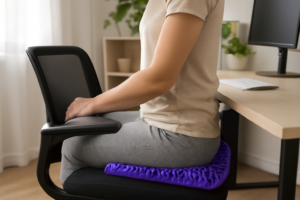
If prolonged sitting is making your symptoms worse (which is very common in disc-related sciatica), a quality memory foam seat cushion can make a real difference by reducing pressure on the tailbone and lower lumbar spine. The Everlasting Comfort Doctor Recommended Memory Foam Seat Cushion is a well-reviewed option that’s designed specifically for office chairs and car seats, with an ergonomic shape that helps offload pressure from the coccyx and sciatic nerve pathway. For a slightly different profile, the BlissTrends Thick Memory Foam Seat Cushion offers a 4.7-inch depth with a velvet cover — a good option if you spend long hours in a car or at a desk and need something with a bit more height adjustment.
If your lower back pain is the more prominent issue and you need a bit of additional support during movement or activity, a lumbar support brace can help reduce mechanical load on the spine during those vulnerable early weeks. The FEATOL Back Brace Support Belt is a practical, adjustable option with a removable lumbar pad that works for both men and women. These aren’t long-term solutions — in fact, over-reliance on a brace isn’t something I’d recommend — but used strategically during flare-ups or periods of necessary activity, they can help you stay functional without making things significantly worse.
If this checklist has given you a clearer sense of what you might be dealing with, that’s already a meaningful step forward. Understanding your symptoms — really understanding them — is the foundation of managing them well. Whether your score suggests true sciatica or points toward something else entirely, the most important thing is to take the pattern seriously, seek appropriate guidance, and avoid the trap of generic advice that may not fit your specific presentation. Most people with sciatica do recover well with the right approach, and that recovery almost always begins with asking exactly the kind of questions you’re asking right now.