
- AUVON Rechargeable TENS Unit (24 Modes) — This is a feature-rich option with 24 therapy modes and eight electrode pads included. The rechargeable design is convenient for regular use, and the variety of modes means you can experiment to find what feels most effective for your specific area of discomfort. Many users appreciate how intuitive it is to operate.
Why Movement Matters More Than Rest for Joint Pain
This might feel counterintuitive, but research consistently suggests that prolonged rest is rarely the answer for chronic joint discomfort. When joints aren’t moving, the synovial fluid that lubricates cartilage doesn’t circulate as effectively. Muscles around the joint weaken, putting more stress on the joint itself. Inflammation can settle in and become stubborn. It becomes a cycle — pain leads to rest, rest leads to weakness, weakness leads to more pain.
Low-impact movement, on the other hand, may help increase circulation, strengthen the muscles that support your joints, and reduce stiffness over time. The key word is low-impact — we’re talking about movement that keeps at least one foot on the ground (or your body supported by water or a seat), drastically reducing the shock and stress on vulnerable joints. This isn’t about pushing through pain. It’s about moving with your body instead of against it.
The Best Low-Impact Exercises for Joint Pain Relief
Not all low-impact exercise is created equal, and what works beautifully for one person may not suit another. Here are some of the options many people find most helpful, along with honest notes on who they tend to work best for.
Swimming and Water Aerobics
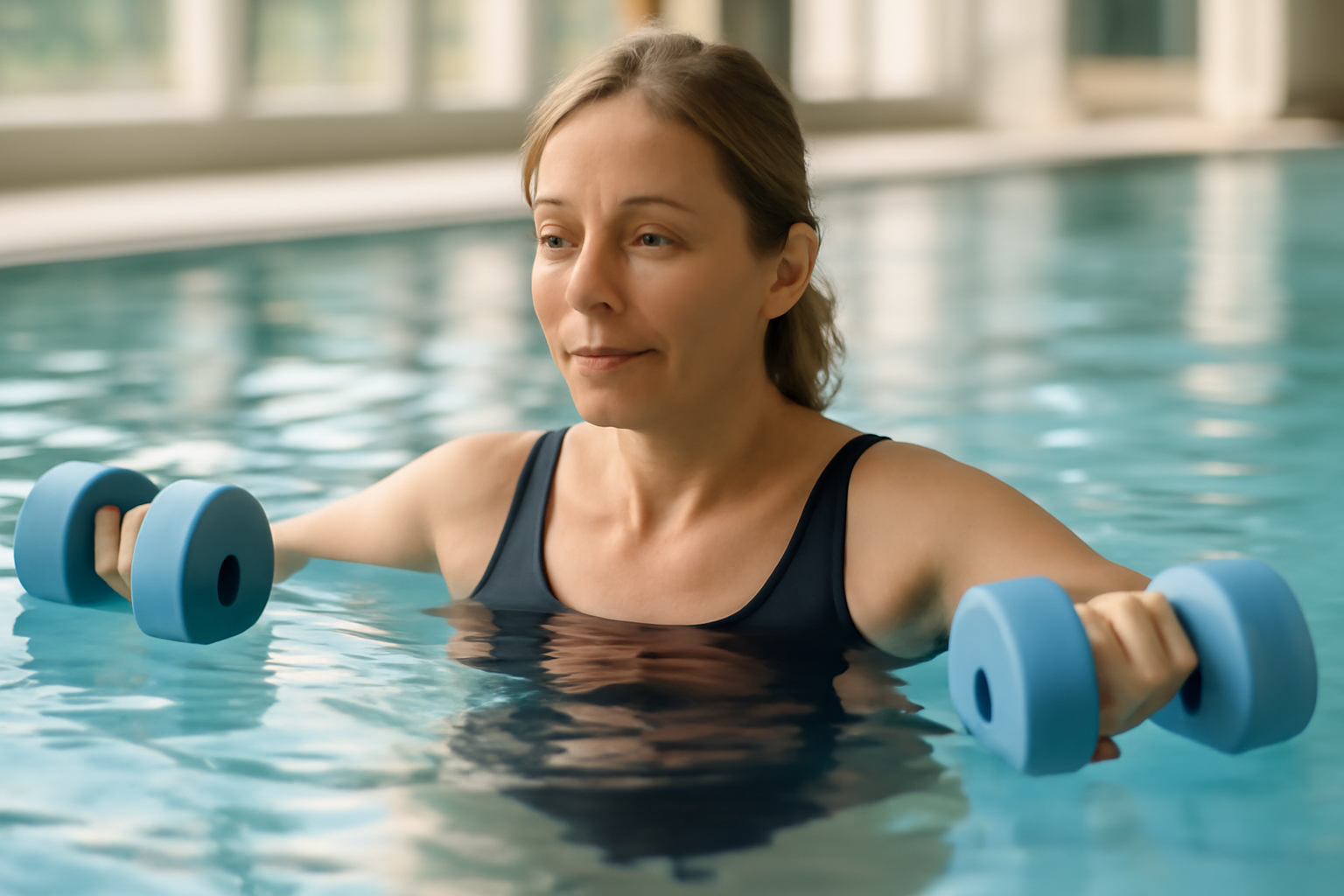
Water is magic for achy joints. The buoyancy supports your body weight — up to 90% of it when you’re submerged to the neck — so your joints can move through a full range of motion with dramatically reduced compression. Research suggests that aquatic exercise may help improve flexibility, reduce pain, and support cardiovascular fitness without the joint stress of land-based movement. If you have access to a pool, even gentle water walking for 20–30 minutes several times a week is worth trying.
Cycling (Stationary or Outdoor)
Cycling is a personal favorite recommendation of mine for people dealing with knee and hip discomfort. It keeps your joints moving rhythmically without the pounding of running or jumping. A stationary bike is particularly useful because you control the resistance, and there’s no risk of a fall or uneven terrain. Start with low resistance and a comfortable seat height — your knee should have a slight bend at the bottom of the pedal stroke, not fully extended or deeply compressed.
Walking (With Intention)
Don’t underestimate a good walk. It’s accessible, free, and research suggests regular walking may help reduce joint stiffness and support a healthy weight — which directly affects the load on weight-bearing joints. The trick is surface and footwear. Opt for grass, tracks, or rubberized paths over concrete when possible, and invest in supportive shoes that absorb shock well. Start with 10–15 minutes and build gradually.
Yoga and Gentle Stretching
Gentle yoga — not the intense hot or power varieties — may help improve flexibility, reduce tension in the muscles surrounding your joints, and support better body mechanics overall. Chair yoga is an excellent option if getting up and down from the floor is challenging. Many people find that even 15 minutes of slow, intentional stretching in the morning makes the rest of the day significantly more comfortable.
Resistance Band Training
Strengthening the muscles around your joints is one of the most protective things you can do. Resistance bands allow you to build that strength with minimal joint stress. Hip abductor exercises, seated leg presses against a band, and gentle shoulder rotations are all approachable starting points. Always prioritize slow, controlled movement over speed or maximum resistance.
Products Worth Trying to Support Your Recovery
Exercise is the foundation, but many people find that combining movement with the right supportive products makes recovery more comfortable and consistent. Here are a few options I think are worth your attention — these aren’t cures, but they may help take the edge off and keep you moving.
Topical Pain Relief Creams
Topical analgesics can be genuinely useful for pre- and post-exercise discomfort because they work locally without the systemic effects of oral pain medications.
- Bengay Ultra Strength Pain Relief Cream (4 oz) — A classic for good reason. The combination of camphor, menthol, and methyl salicylate creates a deep warming sensation that many people find helpful for minor arthritis, muscle, and joint aches. It’s non-greasy and absorbs well, making it practical to use before a walk or gentle workout.
- Penetrex Daily Joint & Muscle Care Cream (2 oz) — This is a lighter, botanical-forward formula featuring arnica, vitamin B6, and MSM. It’s lightweight, fast-absorbing, and has a subtle scent — great for everyday use if you prefer a gentler option. Many people use it as part of their morning routine to ease into movement more comfortably.
- HealthWise Lidocaine Plus+ Cream (3 oz) — If heat-based creams aren’t your preference, a lidocaine-based topical may be worth exploring. This formula uses 4% OTC lidocaine plus 10% benzyl alcohol as a topical anesthetic to temporarily numb localized discomfort. It’s non-greasy and can be a useful option when you need targeted relief without the warming sensation.
TENS Units for At-Home Therapy
Transcutaneous electrical nerve stimulation — TENS — is something physical therapists use regularly in clinical settings, and at-home units have become impressively effective and affordable. TENS works by sending gentle electrical impulses through electrode pads placed on the skin, which may help disrupt pain signals and promote a sense of relief. Research suggests TENS may be helpful for various types of musculoskeletal pain, though results vary by person.
- AUVON Rechargeable TENS Unit (24 Modes) — This is a feature-rich option with 24 therapy modes and eight electrode pads included. The rechargeable design is convenient for regular use, and the variety of modes means you can experiment to find what feels most effective for your specific area of discomfort. Many users appreciate how intuitive it is to operate.
- Categories Low-Impact Exercise & Recovery