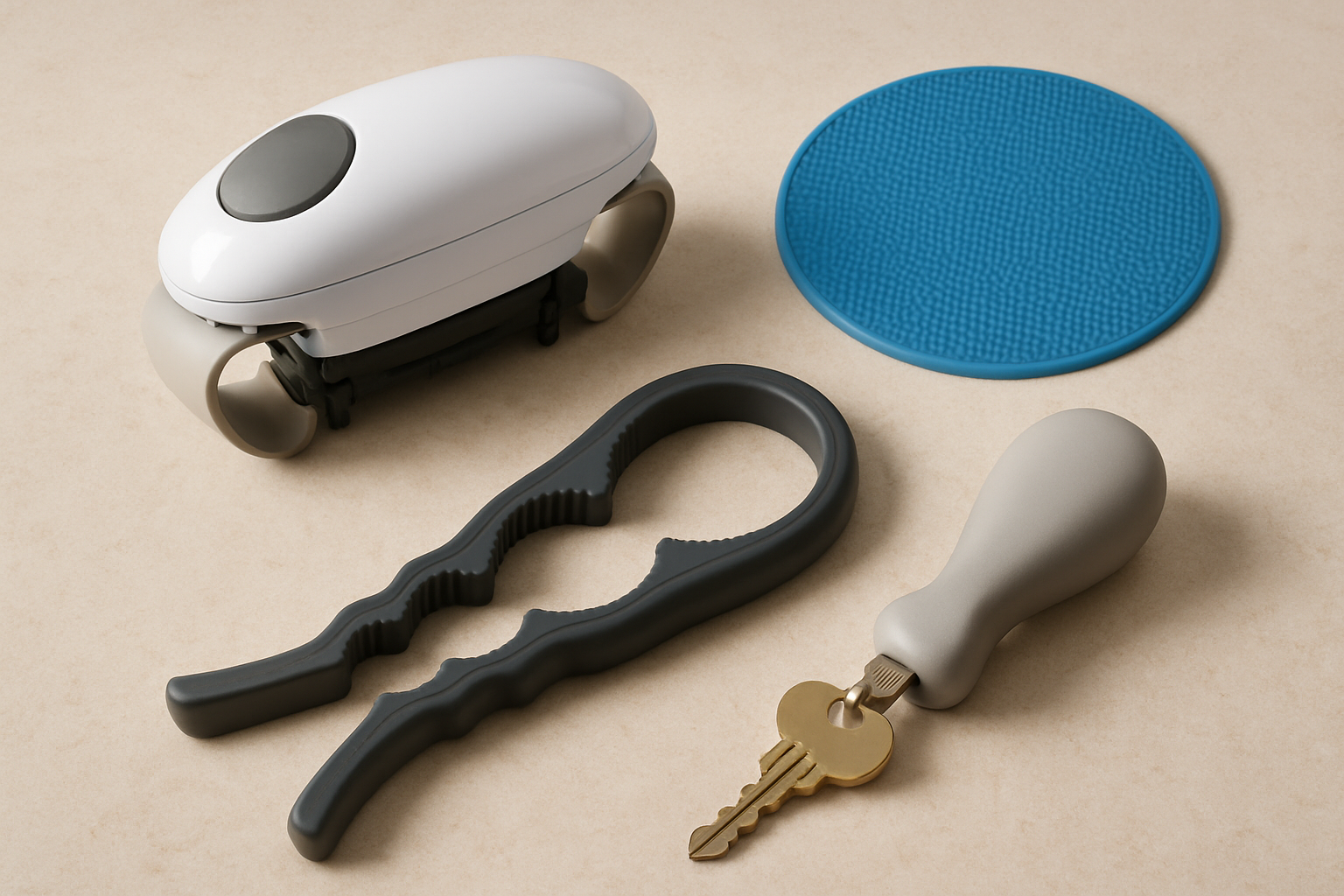

You know that moment — you’re standing at the kitchen counter, both hands wrapped around a stubborn pickle jar, twisting with everything you’ve got, and suddenly that sharp ache shoots through your wrist and knuckles. Maybe you laugh it off, maybe you quietly put the jar back in the fridge and pretend you weren’t hungry anyway. If that sounds familiar, you’re far from alone. For millions of people managing arthritis, hypermobility, tendinitis, or simply the wear that comes with decades of daily use, everyday gripping tasks can quietly add up to significant joint stress. That’s exactly why grip aids wrist joint protection tools deserve a real conversation — not as a sign of giving up, but as one of the smartest daily habits you can build into your routine.
Why Gripping and Twisting Are So Hard on Your Hand and Wrist Joints
Here’s something I wish more people understood: the wrist and hand are genuinely complex structures. You’ve got 27 bones, dozens of tendons, ligaments, and small muscles all working together every time you grip something. When those tissues are healthy and well-rested, most gripping tasks feel effortless. But when inflammation is present — or when the same motion is repeated too many times in a short window — the forces involved can become surprisingly large relative to the size of those joints.
Opening a jar is a perfect example. Research in occupational therapy has shown that twisting motions against resistance place considerable rotational load on the wrist joint and the small joints of the fingers. For someone managing rheumatoid arthritis or osteoarthritis, those loads can contribute to pain, swelling, and over time, further joint stress. Even for people without a formal diagnosis, repetitive forceful gripping throughout the day may contribute to cumulative strain. The good news? This is one of those areas where simple adaptive tools can make a meaningful, immediate difference in how your joints feel day to day.
Grip Aids Wrist Joint Protection Tools: What to Look For and Why They Work
The principle behind most grip aids is elegantly simple: they either increase the surface friction between your hand and an object (so you need less force to achieve the same result) or they transfer the mechanical work to a motor or a larger muscle group. Both strategies reduce the peak load on your wrist and finger joints. Occupational therapists have recommended adaptive tools like these for decades, and many people find that incorporating them consistently helps them stay independent and active in the kitchen — which matters enormously for quality of life.
When choosing tools, I generally look for a few things: ease of use with one hand if needed, minimal grip force required to operate the tool itself, durability, and how easy the item is to clean. Here’s what I’ve found actually works well across different budgets and hand strength levels.
The Electric Jar Opener That Actually Eliminates Pinch-and-Twist Strain
If your fingers or wrists hurt every time you open a jar, an electric opener removes the core problem — the repetitive twisting and pinching force that accumulates throughout the day. This is one of the few kitchen tools that genuinely protects your hand joints instead of just making a task easier.
What works
- One-touch operation means zero manual twisting — the motor does 100% of the grip-and-turn work, which is the exact movement pattern that aggravates finger and wrist joints.
- The higher torque motor opens stubborn jars and sealed containers that would normally force you into a white-knuckle grip, so you’re not compensating elsewhere in your hand or wrist.
- Most people report that daily jar opening stops being a moment of dread or pain within the first week of regular use — the relief is immediate and consistent across jar sizes.
What doesn’t
- It doesn’t work on odd-shaped or extremely wide jars, and you still need to position the jar correctly — it’s not a set-and-forget tool.
- The motor can be loud and takes up counter or cabinet space, so if you’re in a small kitchen or noise-sensitive environment, you may resent using it often enough to make the investment worthwhile.
This is a tool that works best if you open jars multiple times per week — it’s not magic, but it removes a real, recurring source of joint stress from your daily routine. INSTACAN Higher Torque One Touch Electric Jar Opener
About This Article

Written by Michael Torres. Michael Torres has had joint problems his whole life — hypermobile as a kid, chronic sprains and a dislocating shoulder through his twenties, an osteoarthritis diagnosis in his early fifties, and a right knee replacement since. He is not a doctor or a physical therapist and has no clinical training. He writes about what has helped him and what he has watched help the people around him, and says plainly when he has not tried something himself. More about this site.
Scope and limits. Michael has no medical or clinical training — he writes about living with his own joint pain, not about treating anyone else's. Nothing here is medical advice. Talk to a doctor before starting anything new, and get seen promptly for pain that is new, severe, worsening, or comes with swelling, fever, or numbness.
Verify this against a primary source
Specifics change, and your situation may differ from the one described here. These are the authorities worth checking directly:
- NIAMS — arthritis and musculoskeletal research from the NIH
- MedlinePlus — plain-language medical reference from the NIH
- Arthritis Foundation — condition guides and treatment overviews