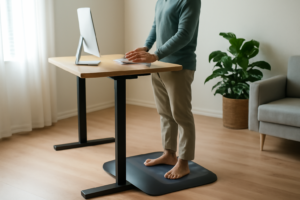


You know that dull ache that creeps into your wrist after a long day of typing, or the stiffness in your knees after hours of kneeling on a job site? I’ve heard that complaint from so many people sitting across from me in a clinic — and I’ve felt it myself. What most people don’t realize is that these nagging discomforts are often early warning signs of something very preventable. Repetitive motion joint protection isn’t just a concern for professional athletes or factory workers — it’s something every one of us needs to think about, whether we’re clicking a mouse all day, playing guitar, or stocking shelves.
What Repetitive Motion Actually Does to Your Joints
Here’s the honest truth: your joints are remarkably resilient — but they weren’t designed for the same motion, repeated hundreds or thousands of times a day, with little recovery time in between. When you repeat a movement over and over, the tendons, cartilage, and soft tissue surrounding your joints don’t get a chance to fully recover. Microtrauma builds up, inflammation sets in, and before long, that “minor ache” becomes something that interrupts your sleep or limits your daily activities.
Common conditions linked to repetitive stress include carpal tunnel syndrome, tendonitis, bursitis, and even early-onset joint degeneration. Research suggests that sustained, repetitive loading on joints — especially without adequate rest or ergonomic support — significantly increases the risk of these injuries over time. The knees, wrists, elbows, and shoulders tend to take the hardest hits, but honestly, no joint is completely immune if the pattern is bad enough.
Smart Strategies for Repetitive Motion Joint Protection
The good news? A lot of this damage is preventable — or at least dramatically reducible — with some intentional habit changes. These aren’t complicated fixes. They’re the same practical strategies I’d share with a friend over coffee.
1. Take Micro-Breaks Seriously
I know, I know — you’re busy. But stepping away from a repetitive task for even 60 to 90 seconds every 20–30 minutes can make a meaningful difference in how much stress accumulates in your joints. Set a timer if you have to. Use that break to shake out your hands, roll your shoulders, or simply stand up and walk a few steps. It sounds almost too simple, but many people find this single habit reduces their daily joint discomfort noticeably over time.
2. Pay Attention to Your Ergonomics
The position your body is in while performing a repetitive task matters enormously. If you’re typing with your wrists bent downward, your keyboard is too high. If your monitor forces you to tilt your head up or to the side, your neck and shoulders are absorbing that load with every small movement. Spend 15 minutes evaluating your workstation or work posture — it’s one of the highest-return investments you can make for your long-term joint health.
3. Strengthen the Muscles Around Your Joints
Joints don’t work in isolation — they’re stabilized and protected by the muscles surrounding them. Research suggests that targeted strengthening exercises for areas like the forearms, rotator cuff, and quadriceps may help reduce the stress transferred directly to joint structures during repetitive activities. Even 10 minutes of resistance work a few times a week can go a long way. If you’re not sure where to start, a physical therapist can design a short routine specifically for your situation.
4. Don’t Ignore Compression and Support
Wearing a supportive brace or compression sleeve during high-risk activities may help keep joints properly aligned and reduce strain on vulnerable tendons and soft tissue. Think of it as a seat belt — not because something has already gone wrong, but because it’s a smart precaution. Many people find that adding support during repetitive tasks helps them stay more comfortable throughout the day and recover more easily afterward.
Products Worth Trying for Daily Joint Support
I want to be upfront: no brace or sleeve is a cure, and nothing replaces good movement habits and professional care when you need it. But for day-to-day support during repetitive activities, these are products I think are genuinely worth considering.
The Wrist Brace That Actually Stabilizes Without Cutting Off Your Circulation
If you’re typing, gripping, or repetitively using your hands all day, a wrist brace that provides genuine support—not just compression—can be the difference between catching the problem early and watching it turn into chronic carpal tunnel. The right brace stabilizes the joint without restricting blood flow, which matters if you’re wearing it for hours at a time.
What works
- Firm wrist stabilization actually limits repetitive strain—research shows braces reduce excessive motion during high-frequency tasks, which is where most cumulative damage happens.
- Most people report noticeable relief within 3–5 days of consistent daytime use, especially if you catch the issue before it becomes inflammatory.
- This design uses a rigid splint rather than elastic-only compression, which means it actually keeps your wrist in a neutral position instead of just squeezing and hoping.
What doesn’t
- A brace is a Band-Aid if you don’t address the underlying repetitive motion—you still need to take breaks, adjust your ergonomics, and actually change how you’re using your wrist.
- Some people find daytime braces uncomfortable or bulky for fine motor work; if your job requires full dexterity, you might need a nighttime-only approach instead.
A brace works best when you’re willing to use it consistently and honestly assess whether your daily habits are making the problem worse—it’s not a substitute for changing the behavior that caused the strain in the first place. Check out the Doctor Developed Wrist Brace.
About This Article

Written by Michael Torres. Michael Torres has had joint problems his whole life — hypermobile as a kid, chronic sprains and a dislocating shoulder through his twenties, an osteoarthritis diagnosis in his early fifties, and a right knee replacement since. He is not a doctor or a physical therapist and has no clinical training. He writes about what has helped him and what he has watched help the people around him, and says plainly when he has not tried something himself. More about this site.
Scope and limits. Michael has no medical or clinical training — he writes about living with his own joint pain, not about treating anyone else's. Nothing here is medical advice. Talk to a doctor before starting anything new, and get seen promptly for pain that is new, severe, worsening, or comes with swelling, fever, or numbness.
Verify this against a primary source
Specifics change, and your situation may differ from the one described here. These are the authorities worth checking directly:
- NIAMS — arthritis and musculoskeletal research from the NIH
- MedlinePlus — plain-language medical reference from the NIH
- Arthritis Foundation — condition guides and treatment overviews