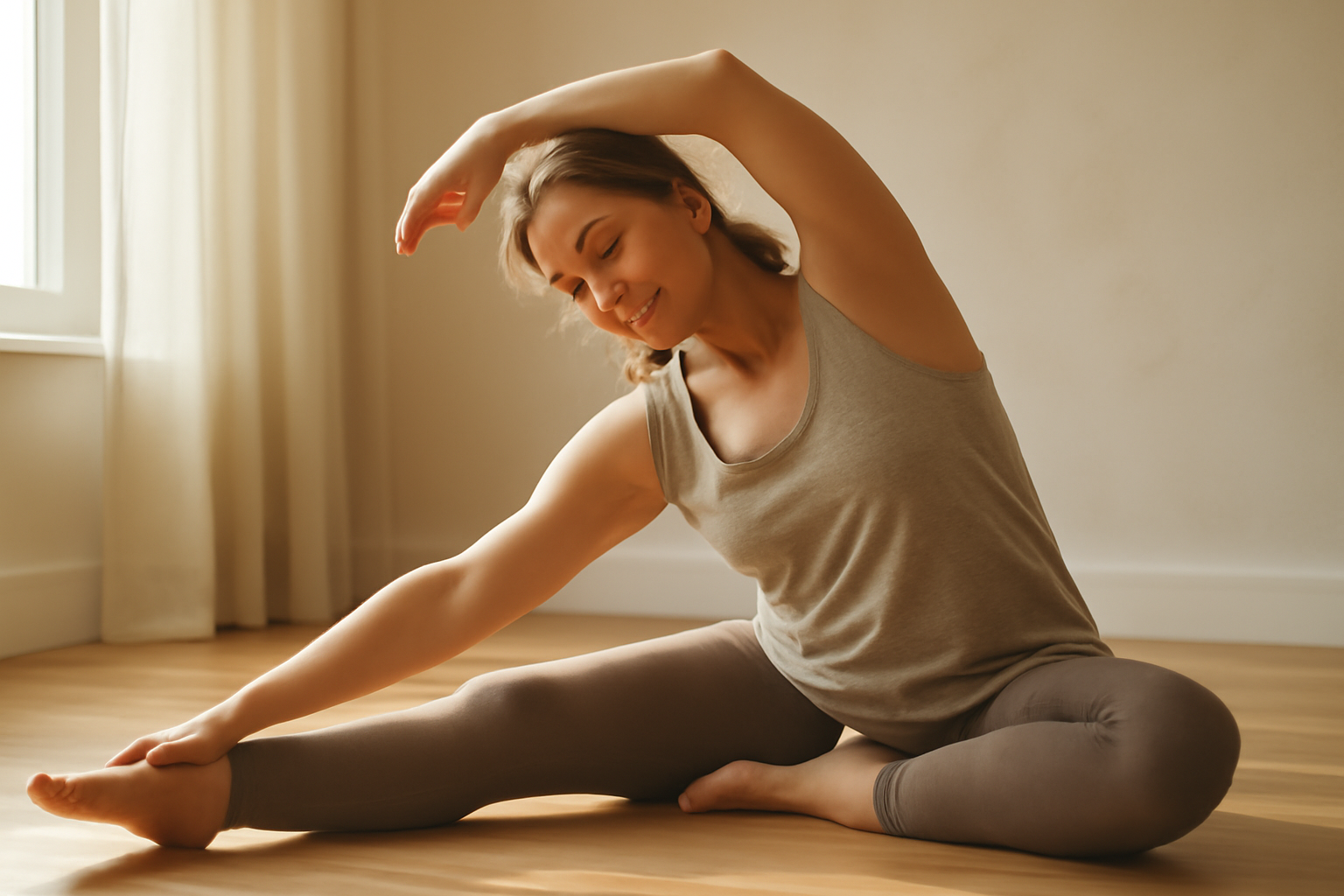

You roll out of bed one morning, take your first few steps toward the kitchen, and feel that familiar stiffness radiating from your knees or hips — the kind that makes you wonder if today is going to be one of those days. Maybe a friend suggested you try yoga for joint pain, and you thought, “That sounds too gentle to actually do anything.” I had the same skepticism. But after working with patients managing arthritis, hypermobility, and post-injury stiffness, I’ve seen firsthand how the right yoga practice can genuinely shift how joints feel and function — when it’s done thoughtfully.
Why Yoga for Joint Pain Is Worth Taking Seriously
Let’s be honest — yoga has a bit of an image problem. Many people picture pretzel-shaped poses held by flexible twenty-somethings in studio lighting. That version of yoga isn’t what we’re talking about here. What research suggests is valuable for joint health is slow, deliberate movement that improves range of motion, strengthens the muscles surrounding vulnerable joints, and reduces the kind of tension that compounds pain over time.
A review of clinical studies cited by Apex Medical Center found that yoga-based interventions may help reduce pain intensity and improve physical function, particularly in people dealing with chronic musculoskeletal conditions. The key phrase there is “may help” — yoga isn’t a cure, and it won’t reverse structural damage. But many people find that consistent, low-impact movement is one of the most effective tools in their pain management toolkit, often more accessible than they expected.
Here’s what makes yoga particularly well-suited for joint health: it emphasizes movement through a controlled range, rather than pushing through load-bearing extremes. That matters a lot when your knees, hips, shoulders, or hands are involved.
What the Research Actually Says (Without Overpromising)
I want to be straightforward with you, the way I’d want someone to be straight with me. Yoga is not going to rebuild cartilage or reverse arthritis progression. What it can do, based on available evidence, is meaningful:
- Reduced stiffness: Gentle, sustained movement encourages synovial fluid circulation — essentially lubricating the joint from the inside. Many people report less morning stiffness when they build even a short daily practice.
- Improved muscle support: Yoga strengthens the muscles that stabilize joints — quads for the knees, glutes and hip flexors for the hips, rotator cuff muscles for the shoulders. Stronger surrounding muscles mean less stress on the joint itself.
- Better body awareness: This one’s underrated. Yoga teaches you to notice how your body moves and where you hold tension. That awareness often leads to better posture and movement habits throughout the day.
- Stress reduction: Chronic pain and stress have a frustrating relationship — each makes the other worse. The breathwork and mindfulness components of yoga may help interrupt that cycle.
Poses That Tend to Help (and a Few to Approach Carefully)
Gentle Poses Worth Trying
If you’re new to yoga or coming back after a painful flare, start with these. They’re accessible, forgiving, and specifically supportive for common problem joints:
- Cat-Cow (Marjaryasana-Bitilasana): A gentle spinal mobilizer that also decompresses the hips and lower back. Do it slowly, matching movement to breath.
- Supine Figure-Four Stretch: Lying on your back, crossing one ankle over the opposite knee. Excellent for hip and SI joint tension without loading the joint.
- Legs Up the Wall (Viparita Karani): Restorative and circulation-boosting. Research suggests this may help reduce swelling in the lower extremities after a long day.
- Seated Forward Fold with Bent Knees: Gentle hamstring and lower back release. Keeping the knees slightly bent protects them from hyperextension.
- Child’s Pose (Balasana): A restorative resting pose that gently opens the hips and spine. Use a folded blanket under the knees if that area is sensitive.
Poses to Modify or Skip When Joints Are Flaring
Deep knee flexion poses like Hero’s Pose (Virasana) or full lotus can be problematic if you have knee cartilage issues. Similarly, weight-bearing wrist positions like Downward Dog may need modification if you’re managing wrist or hand arthritis — try making fists or using yoga blocks instead. Always listen to your body, and if something produces sharp or worsening pain, back off and consult your provider.
Products Worth Trying to Support Your Practice
Having the right equipment makes a real difference — not as luxury, but as a practical way to protect your joints during practice. A good mat cushions pressure points, and a foam roller afterward can help keep the surrounding muscles from tightening up between sessions.
Yoga Mats with Joint-Friendly Cushioning
Standard thin mats can make kneeling or floor-based poses genuinely uncomfortable if your knees or hips are sensitive. These thicker options are worth considering:
- BalanceFrom All-Purpose 1-Inch Extra Thick High Density Anti-Tear Yoga Mat (Purple) — A full inch of high-density foam provides meaningful cushioning for knees, ankles, and wrists. The anti-tear surface holds up well over time, and it comes with a carrying strap for convenience.
- Amazon Basics 1/2 Inch Extra Thick Exercise Yoga Mat (Black) — At 74 inches long and a half-inch thick, this is a reliable, budget-friendly option that still offers noticeably more cushioning than standard mats. Great for beginners building a home practice.
- Retrospec Solana Yoga Mat 1″ Thick with Nylon Strap (Boysenberry) — Another solid one-inch option with a non-slip texture that works well on hardwood floors. The nylon strap makes storage and transport easy, which matters when you want no excuses to skip your practice.
Foam Rollers for Post-Yoga Recovery
Spending five to ten minutes with a foam roller after your session can help release tension in the muscles surrounding your joints — which often matters as much as the yoga itself. Many people find that consistent myofascial release supports better flexibility and reduced soreness between sessions:
- TriggerPoint GRID 1.0 Foam Roller — The multi-density surface is firm enough for real myofascial release without the bruising feel of bare PVC rollers.
The Thick Yoga Mat That Actually Protects Your Knees During Floor Work
If you’ve ever tried yoga on a standard thin mat and spent half the session adjusting your knees because they hurt against the floor, you know that cushioning isn’t a luxury—it’s foundational. A mat with real density and thickness takes pressure off vulnerable joints during kneeling poses and floor-based work, which means you can actually stay in poses long enough for them to help.
What works
- 1-inch thickness provides genuine cushioning for knees, hips, and sensitive joints without feeling unstable during balance work or weight-bearing poses—most people notice this immediately on the first practice.
- High-density material resists compression over time, so it doesn’t flatten out after a few weeks the way budget mats do, which means consistent joint protection across months of use.
- Non-slip surface keeps you from compensating with muscle tension to stay in place, which reduces the secondary strain that often compounds joint pain during practice.
What doesn’t
- A good mat won’t fix poor form or protect you from pushing too hard into painful ranges—you still need to listen to your body and modify poses that provoke sharp pain.
- Thickness takes up more storage space and can feel slightly less portable if you’re moving between locations, though the joint protection usually makes that trade-off worth it.
A better mat is a support tool, not a replacement for consistent, mindful practice—the cushioning helps, but you’re still doing the actual work.
About This Article

Written by Michael Torres. Michael Torres has had joint problems his whole life — hypermobile as a kid, chronic sprains and a dislocating shoulder through his twenties, an osteoarthritis diagnosis in his early fifties, and a right knee replacement since. He is not a doctor or a physical therapist and has no clinical training. He writes about what has helped him and what he has watched help the people around him, and says plainly when he has not tried something himself. More about this site.
Scope and limits. Michael has no medical or clinical training — he writes about living with his own joint pain, not about treating anyone else's. Nothing here is medical advice. Talk to a doctor before starting anything new, and get seen promptly for pain that is new, severe, worsening, or comes with swelling, fever, or numbness.
Verify this against a primary source
Specifics change, and your situation may differ from the one described here. These are the authorities worth checking directly:
- NIAMS — arthritis and musculoskeletal research from the NIH
- MedlinePlus — plain-language medical reference from the NIH
- Arthritis Foundation — condition guides and treatment overviews