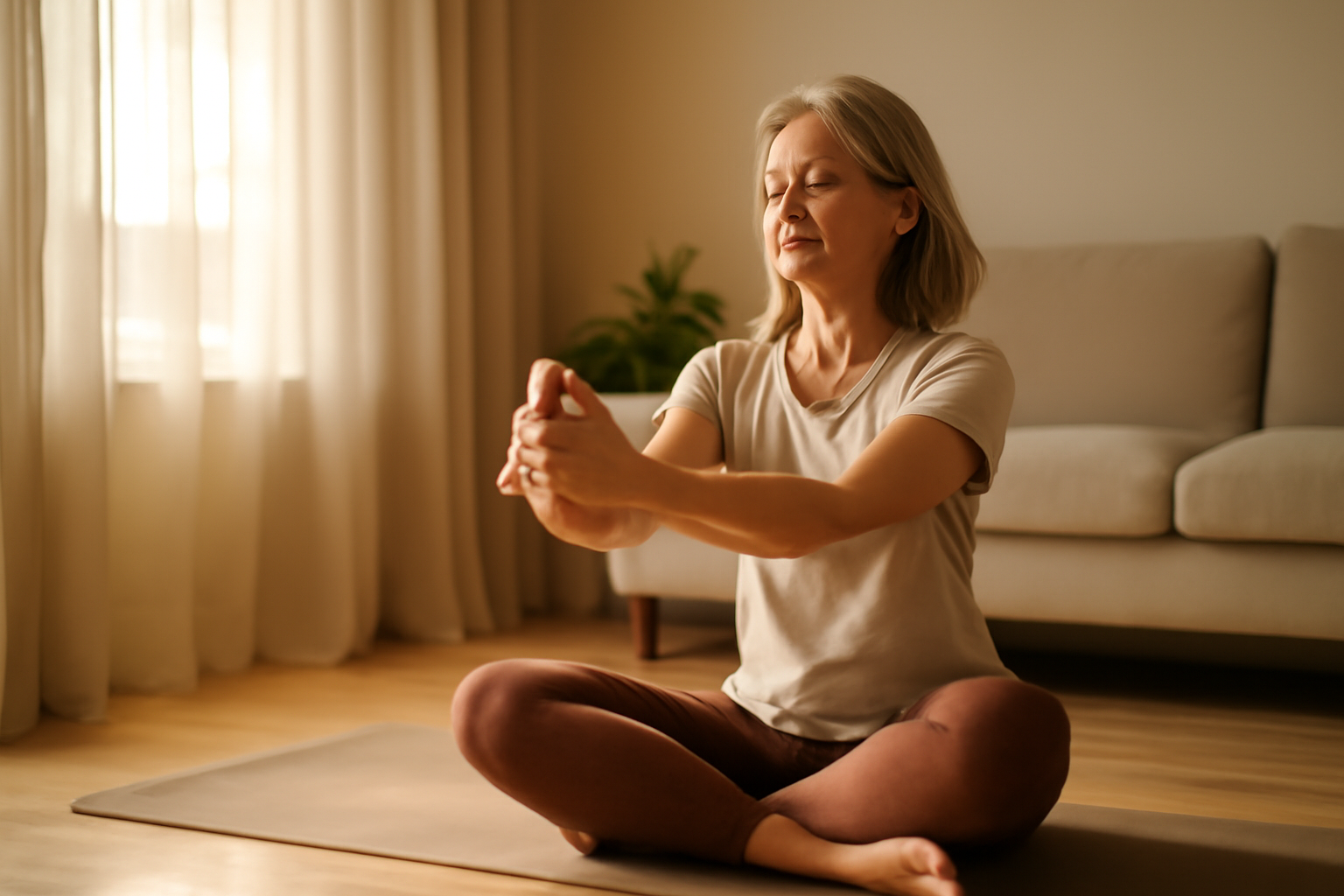

You’ve just made it through a brutal week at work. Your shoulders are knotted up, your mind won’t stop racing — and by Friday night, your knees and hips are aching more than usual. Sound familiar? If you’ve noticed that your joints flare up when life gets overwhelming, you’re not imagining it. Stress and joint pain are deeply connected, and finding practical stress relief for joint pain can make a real difference in how your body feels day to day. I’ve seen this pattern play out over and over — and the good news is that small, consistent habits can genuinely help calm both your nervous system and your joints.
Why Stress Makes Your Joints Hurt More
Before we get into the habits themselves, it helps to understand what’s actually happening in your body. When you’re stressed, your body releases cortisol and other inflammatory chemicals. Research suggests that chronic stress may increase systemic inflammation — and inflammation is one of the primary drivers of joint pain and stiffness. For people already managing conditions like osteoarthritis or rheumatoid arthritis, that inflammatory response can feel like pouring gasoline on a fire.
Beyond the chemistry, stress also causes muscle guarding — that unconscious tightening where you clench your jaw, hunch your shoulders, or brace through your hips without realizing it. That constant low-level tension puts extra load on your joints and can leave you stiff and sore by the end of the day. Addressing both the mental and physical sides of stress is where the real relief tends to come from.
7 Gentle Stress-Relief Habits That May Soothe Aching Joints
1. Diaphragmatic Breathing (It’s More Powerful Than You Think)
Slow, deep belly breathing activates your parasympathetic nervous system — the “rest and digest” mode that counteracts your stress response. Many people find that just five minutes of focused breathing before bed noticeably reduces muscle tension and that tight, achy feeling in their joints. Try inhaling for four counts, holding for two, and exhaling for six. That extended exhale is key for downregulating your nervous system.
2. Gentle Mobility Flows in the Morning
Jumping out of bed and immediately into a stressful day is one of the worst things for stiff joints. Instead, spending even eight to ten minutes doing slow, gentle joint circles — wrists, ankles, hips, shoulders — helps warm up synovial fluid in the joints and signals your nervous system that it’s safe to move. Think of it less as exercise and more as a check-in with your body. YouTube has plenty of free arthritis-friendly morning flows if you need somewhere to start.
3. Self-Massage with Targeted Tools
One of my favorite recommendations for people dealing with stress-related joint and muscle tension is incorporating simple self-massage tools into their daily routine. Rolling out tight muscles reduces the compression they place on nearby joints — and the act of doing it is genuinely calming.
4. Warm Water Therapy
A warm bath or shower before bed isn’t just a luxury — it’s a legitimate low-impact therapy. Heat helps relax muscle spasms, improve circulation, and reduce joint stiffness. Many people find that adding Epsom salts may enhance the relaxation effect, though the research on transdermal magnesium absorption is still mixed. Either way, the warmth and the ritual of slowing down signals your body that it’s time to decompress.
5. Progressive Muscle Relaxation (PMR)
PMR involves intentionally tensing and then releasing muscle groups one at a time, working from your feet up to your face. Research suggests it may reduce both perceived stress and physical tension. For people with joint pain, the deliberate “release” phase can highlight areas where you’ve been unknowingly guarding — and help you consciously let that tension go. There are free guided PMR audio tracks available through apps like Insight Timer or Calm.
6. Hand and Grip Exercises
If you carry tension in your hands — which many of us do, especially those who type all day — gentle squeezing and resistance exercises can improve circulation, maintain joint flexibility, and double as a grounding technique when anxiety spikes. It’s one of those habits that quietly addresses both stress and joint health at the same time.
7. Consistent, Low-Intensity Movement (Not High-Intensity Workouts)
Walking, swimming, tai chi, and gentle yoga are all research-backed for reducing both stress and joint discomfort. The key word is consistent. A 20-minute walk every day tends to do more for joint health than an intense weekend workout followed by five days of rest. Consistency keeps joints lubricated, muscles supportive, and stress hormones in check.
Products Worth Trying for Stress-Related Joint Tension
I want to be upfront: no product is a cure, and none of these replace professional care. But the right tools can make it easier to stay consistent with habits like self-massage and hand therapy — and consistency is everything. Here’s what I think is genuinely worth having around the house.
The Myofascial Release Tool That Actually Addresses Stress-Held Tension in Joints
When stress tightens your muscles, the tension radiates straight into your joints — especially shoulders, hips, and knees. A quality foam roller targets the muscle tissue surrounding your joints, releasing that held tension before it compounds your pain. This is one of the few stress-relief tools with solid evidence behind it for joint-adjacent muscle release.
What works
- Research supports myofascial release for reducing muscle tension and improving range of motion — the effect is real, not placebo, especially when done consistently 3–4 times per week.
- The textured grid design (versus a smooth roller) gives you control over pressure intensity; you can target specific knots without the guesswork of a generic foam roll.
- Most people report noticeable softening of joint stiffness within 2–3 weeks of regular use, particularly when combined with gentle movement — not overnight, but real progress.
What doesn’t
- This won’t fix your stress response or address the underlying reason your nervous system is tightening your muscles — it’s a symptom manager, not a solution to the stress itself.
- If you have acute inflammation, severe joint damage, or certain neurological conditions, aggressive self-myofascial release can make things worse; you need a PT’s guidance first, not a DIY tool.
Foam rolling feels good immediately, but the joint-pain reduction takes time — you’re retraining muscle tension patterns that likely took months to build. Check the TriggerPoint Grid 1.0 Foam Roller on Amazon
About This Article

Written by Michael Torres. Michael Torres has had joint problems his whole life — hypermobile as a kid, chronic sprains and a dislocating shoulder through his twenties, an osteoarthritis diagnosis in his early fifties, and a right knee replacement since. He is not a doctor or a physical therapist and has no clinical training. He writes about what has helped him and what he has watched help the people around him, and says plainly when he has not tried something himself. More about this site.
Scope and limits. Michael has no medical or clinical training — he writes about living with his own joint pain, not about treating anyone else's. Nothing here is medical advice. Talk to a doctor before starting anything new, and get seen promptly for pain that is new, severe, worsening, or comes with swelling, fever, or numbness.
Verify this against a primary source
Specifics change, and your situation may differ from the one described here. These are the authorities worth checking directly:
- NIAMS — arthritis and musculoskeletal research from the NIH
- MedlinePlus — plain-language medical reference from the NIH
- Arthritis Foundation — condition guides and treatment overviews