You wake up in the morning, swing your legs over the side of the bed, and the moment your feet hit the floor — there it is. That deep, nagging ache in your knees or hips that makes you wince before the day has even started. If that sounds familiar, you’re not alone. Millions of people are searching for natural ways to manage joint discomfort, and one of the most common questions I hear is whether turmeric curcumin joint inflammation remedies actually work — or whether it’s just another wellness trend dressed up in a golden spice. I want to give you a straight, honest answer on that today.
This post contains affiliate links. As an Amazon Associate, I earn from qualifying purchases. This means if you click a product link and make a purchase, I may earn a small commission at no extra cost to you. I only recommend products I genuinely believe in and that align with what the research supports.
What Is Curcumin and Why Does It Matter for Your Joints?
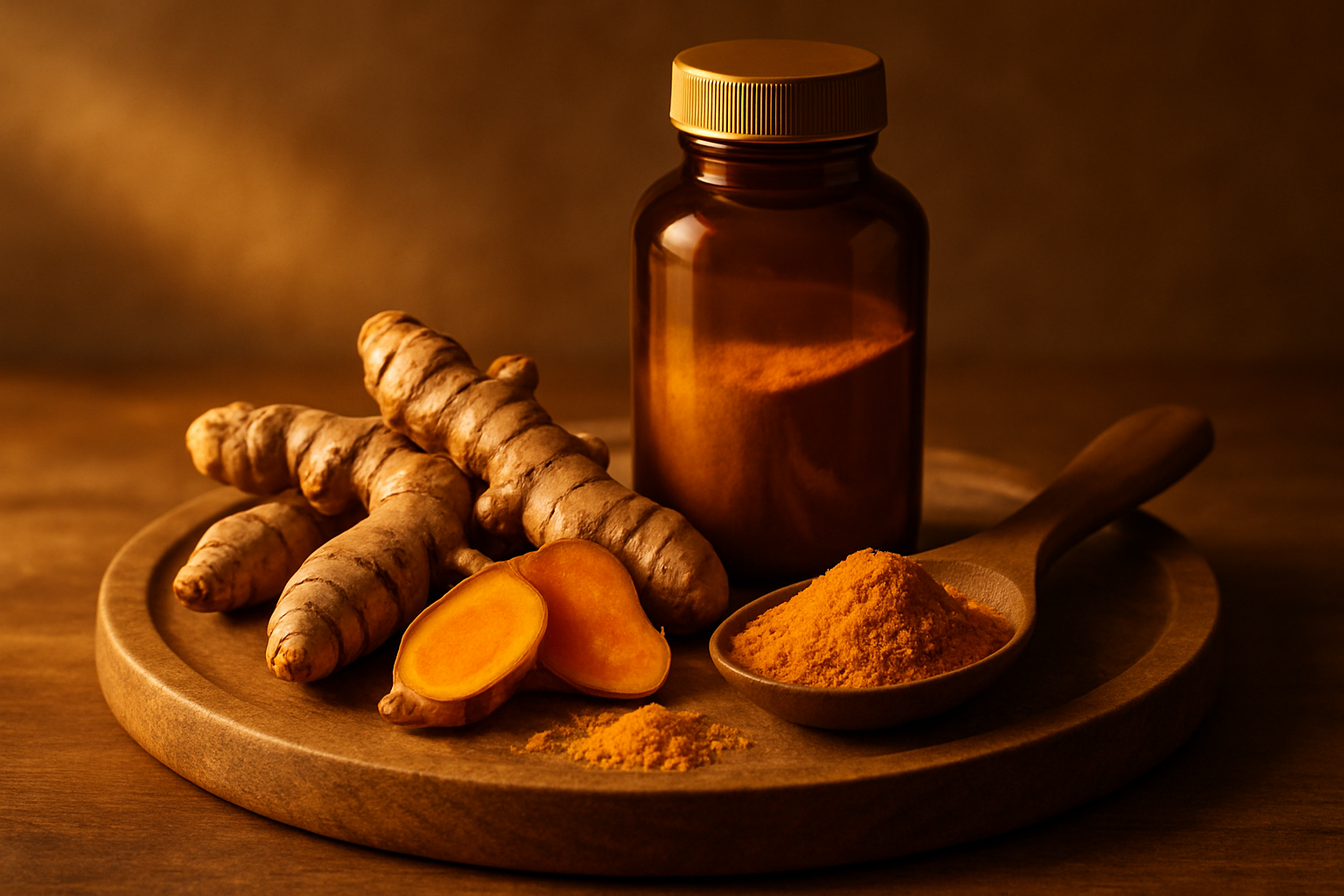
Turmeric is the bright yellow root you’ve probably seen in curry dishes or golden lattes. But the real active ingredient is curcumin — a naturally occurring compound that researchers have been studying for its potential to support a healthy inflammatory response in the body. When your joints are dealing with chronic low-grade inflammation, that’s often what’s driving the stiffness, swelling, and discomfort you feel day to day.
Research suggests curcumin may help interrupt some of the inflammatory pathways that contribute to joint pain. A number of clinical studies have looked at curcumin supplementation in people with osteoarthritis and rheumatoid arthritis, and many participants reported meaningful reductions in stiffness and discomfort over time. I want to be clear — curcumin is not a cure, and it won’t work the same way for everyone. But for many people, it becomes a genuinely helpful part of a broader joint care routine.
The Bioavailability Problem — and How to Actually Solve It
Here’s the part most people skip over, and it’s honestly the most important thing I can tell you: raw turmeric and even plain curcumin powder have notoriously poor bioavailability. Your body struggles to absorb and use curcumin on its own. You could be swallowing capsules every day and getting very little benefit simply because the compound isn’t making it into your bloodstream effectively.
So what actually helps with absorption? There are two main approaches the supplement industry has developed, and both have solid evidence behind them:
- Black pepper extract (BioPerine/piperine): Studies suggest that combining curcumin with piperine — the active compound in black pepper — can increase curcumin absorption by up to 2,000%. This is the most common and cost-effective approach you’ll see in quality supplements.
- Phospholipid complex (Meriva/Phytosome technology): This method binds curcumin to a phospholipid called lecithin, which makes it significantly more bioavailable without needing piperine. This is a good option if you’re sensitive to black pepper or take medications that interact with it.
If a supplement doesn’t mention either of these delivery methods on the label, I’d honestly pass it by. Plain curcumin powder at a low price is rarely a bargain.
Turmeric Curcumin Joint Inflammation Supplements: What I Actually Recommend
After looking at what’s available, I’ve narrowed down a handful of options I feel comfortable pointing people toward. Here’s what I like and why.
Best Everyday Value: 90-Count BioPerine Formula
If you’re just starting out with turmeric supplementation and want to try it without a big commitment, this is a great entry point. The Turmeric Curcumin with Black Pepper Extract 1500mg (90 Capsules) delivers 1500mg per serving with 95% curcuminoids standardized extract and includes BioPerine for absorption. It’s non-GMO, well-reviewed, and a solid place to begin. Many people find one to three month trial periods helpful for gauging whether any supplement is working for them, so this 90-count bottle is a practical starting size.
Best Value for Long-Term Use: 180-Count Options
If you’ve already tried turmeric curcumin and found it helpful, buying in a larger quantity makes good financial sense. Two options I like here:
The Turmeric Curcumin with Black Pepper Extract 1500mg (180 Capsules) is essentially the same high-quality formula as the 90-count, just at a better per-capsule cost. Same 95% curcuminoids standardization, same BioPerine inclusion — just more of it.
Another strong choice in this category is Best Naturals Turmeric Curcumin 1500mg with BioPerine (180 Veggie Capsules). This one uses veggie capsules, which some people prefer for dietary or digestive reasons. It’s a clean, straightforward formula without unnecessary additives.
A Trusted Clinical Brand: Doctor’s Best
For people who want a brand with a longer track record and a more clinical focus, Doctor’s Best Turmeric Curcumin 1000mg with BioPerine (120 Veg Capsules) is a name I trust. At 1000mg per serving with 95% standardized curcuminoids and piperine included, it’s formulated for real absorption. Doctor’s Best is a brand that takes third-party testing seriously, which matters when you’re choosing something you’ll take daily.
Premium Absorption Technology: Thorne Curcumin Phytosome (Meriva)
If you want the most clinically studied form of curcumin available, look at Thorne Curcumin Phytosome 1000mg (Meriva). Thorne is one of the most respected names in professional-grade supplements, and their Meriva formulation uses phytosome technology to dramatically improve curcumin absorption without black pepper. This is the option I’d suggest for anyone who is sensitive to piperine, takes medications where black pepper might be a concern, or simply wants the highest-quality product money can buy. It costs more, but the bioavailability data behind Meriva is genuinely impressive