
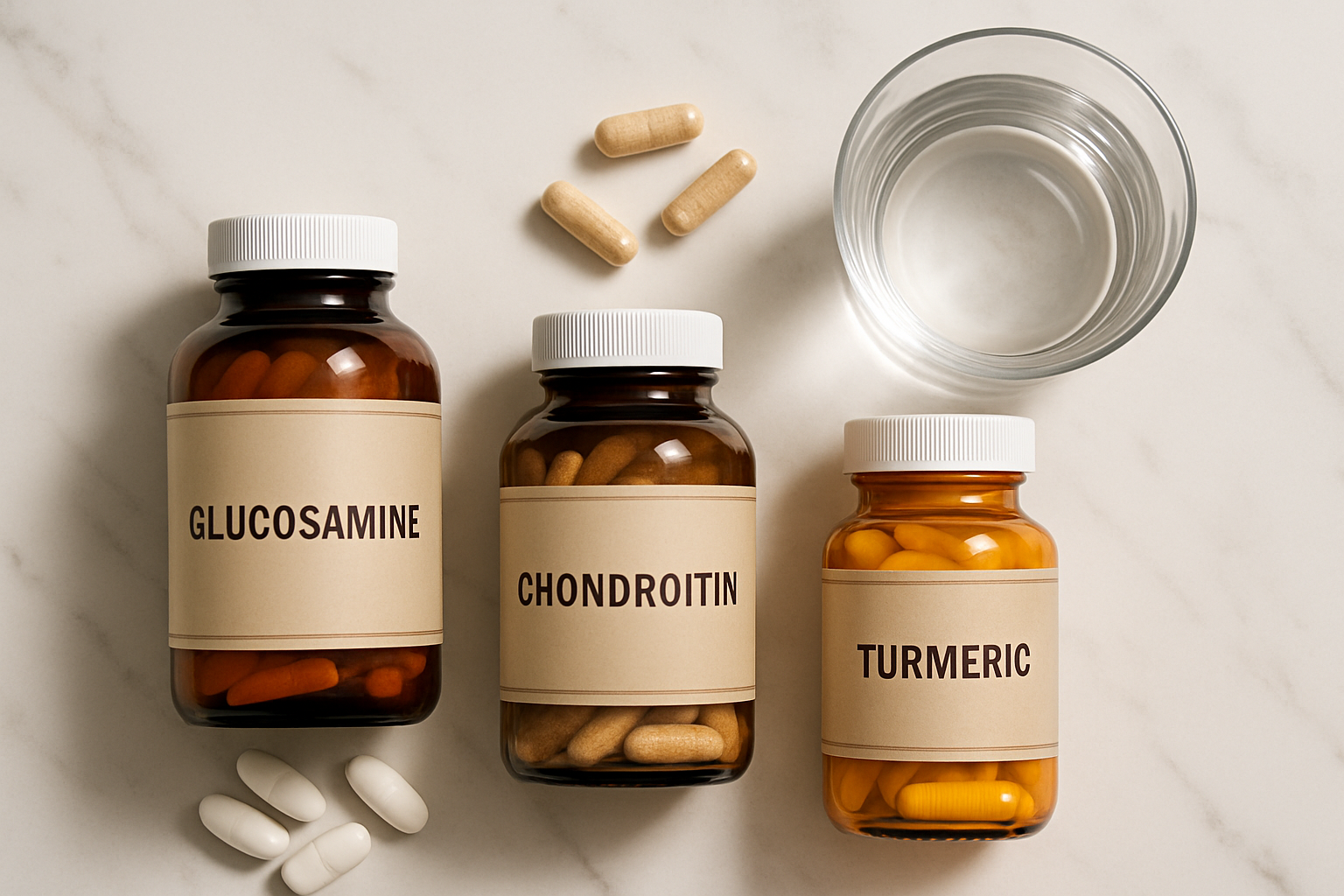

You’ve decided to give glucosamine and chondroitin a real try — maybe after reading through the research, maybe on a friend’s recommendation. Now you’re standing in front of a shelf (or a screen) with a dozen different bottles: glucosamine sulfate, glucosamine HCl, “triple strength,” vegetarian formulas, ones with MSM tacked on, ones without. The research tells you these supplements can help. It doesn’t tell you which bottle to actually buy. That’s what this guide is for.
Glucosamine Sulfate vs. Glucosamine HCl: Does the Form Matter?
This is the single most confusing label distinction, and most people never notice it. Glucosamine comes in two common forms: glucosamine sulfate and glucosamine hydrochloride (HCl). Most of the clinical research showing benefit — including the larger European trials — used glucosamine sulfate, not HCl. Glucosamine HCl is cheaper to manufacture and shows up in a lot of budget formulas, but it has less research behind it specifically, and some of the studies that failed to show benefit used the HCl form.
That doesn’t mean HCl formulas are useless — the two forms are chemically similar once absorbed — but if you’re choosing between two otherwise-identical bottles, the sulfate form has the stronger evidence trail. Check the supplement facts panel, not just the front label; “glucosamine sulfate” should be listed explicitly as an ingredient, not just “glucosamine” with the form left unspecified.
Shellfish Allergies and Vegetarian Alternatives
Most glucosamine is derived from the shells of shrimp, crab, and lobster. If you have a shellfish allergy, this matters — not because glucosamine itself is the allergen (it’s a highly purified sugar, not shellfish protein), but because trace cross-contamination during manufacturing is a real risk with lower-quality supplements. If you have a documented shellfish allergy, talk to your doctor before starting, and look specifically for products labeled “vegetarian glucosamine,” which is fermented from corn or another plant source rather than shellfish shells.
Chondroitin is typically sourced from bovine (cow) or shark cartilage, occasionally from a fermentation process for vegetarian formulas. If sourcing matters to you for religious, ethical, or dietary reasons, this is worth checking on the label — it’s not always obvious from the front of the bottle.
Reading the Label: What Actually Matters
Once you’re past the sulfate-vs-HCl and sourcing questions, here’s what to actually look for on the supplement facts panel:
- Dose that matches the research. The trials showing the most consistent benefit used roughly 1,500mg glucosamine and 1,200mg chondroitin daily. A bottle offering a fraction of that dose “for convenience” isn’t giving you a fair trial of the supplement — check the total daily amount, not just the per-capsule number.
- Third-party testing. Look for a USP, NSF, or ConsumerLab verification seal. Supplements aren’t regulated with the same rigor as medications, and independent testing is the best signal that the bottle actually contains what the label claims.
- Proprietary blends are a yellow flag. If a label lists a “joint support blend” with a single combined milligram total instead of breaking out glucosamine and chondroitin separately, you can’t tell if you’re getting a meaningful dose of either one.
- Added ingredients should be disclosed, not hidden. MSM, turmeric, and hyaluronic acid are common and reasonable additions — just make sure they’re listed with their own doses rather than buried inside a blend.
Capsules, Powders, or Liquid — Does the Delivery Method Matter?
Capsules and tablets are the most common and the most studied format, and they’re the easiest to dose consistently. Powders mixed into water or a shake can work just as well and are sometimes easier to swallow for people who struggle with large pills — the tradeoff is taste, and you need to measure carefully to hit the right daily dose. Liquid formulas are marketed as “faster absorbing,” but there’s no strong evidence that liquid glucosamine reaches your joints any faster or more effectively than capsules; treat that claim as marketing rather than science.
Red Flags That Should Make You Put the Bottle Back
- Claims of “pain relief in 48 hours” or similar — glucosamine and chondroitin are slow-building supplements with no legitimate fast-acting mechanism.
- No listed manufacturing location or company contact information.
- A price that’s dramatically lower than comparable products with the same dose and form — this is often a sign of a lower-quality raw material source.
- Labels that don’t specify glucosamine sulfate vs. HCl, or list chondroitin sulfate without a percentage purity — vague labeling is often a sign of a vague manufacturing process.
About This Article

Written by Michael Torres. Michael Torres has had joint problems his whole life — hypermobile as a kid, chronic sprains and a dislocating shoulder through his twenties, an osteoarthritis diagnosis in his early fifties, and a right knee replacement since. He is not a doctor or a physical therapist and has no clinical training. He writes about what has helped him and what he has watched help the people around him, and says plainly when he has not tried something himself. More about this site.
Scope and limits. Michael has no medical or clinical training — he writes about living with his own joint pain, not about treating anyone else's. Nothing here is medical advice. Talk to a doctor before starting anything new, and get seen promptly for pain that is new, severe, worsening, or comes with swelling, fever, or numbness.
Verify this against a primary source
Specifics change, and your situation may differ from the one described here. These are the authorities worth checking directly:
- NIAMS — arthritis and musculoskeletal research from the NIH
- MedlinePlus — plain-language medical reference from the NIH
- Arthritis Foundation — condition guides and treatment overviews