
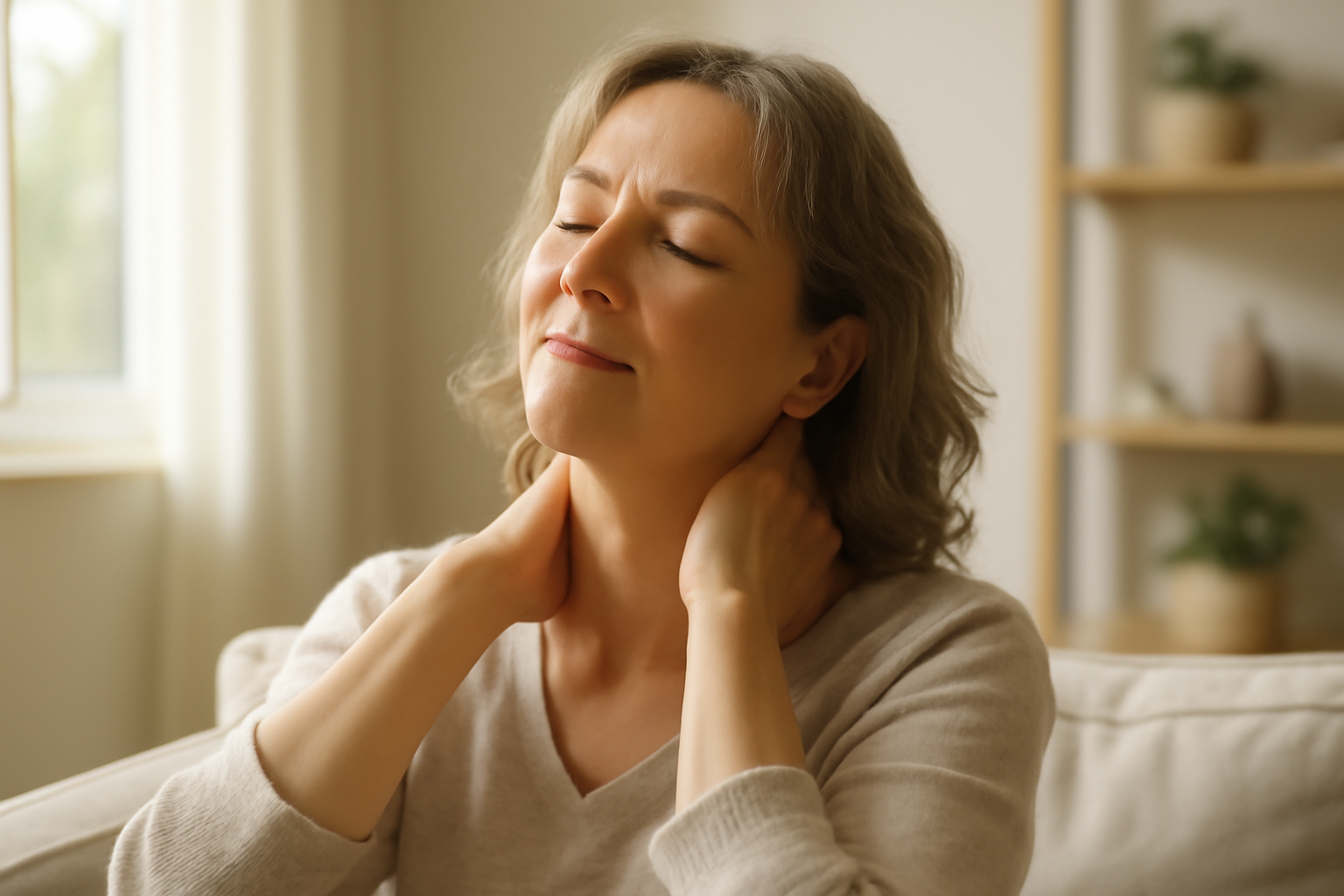
You wake up with that familiar tightness at the base of your skull. By mid-morning, it has crept up into a full-blown headache — and not just any headache. It’s the kind that makes light unbearable and noise feel like a personal attack. If this sounds like your Tuesday, you are far from alone. The connection between neck pain migraines older adults experience is one of the most underappreciated health issues for people over 50, and it deserves a much more honest conversation than it usually gets.
This post contains affiliate links. As an Amazon Associate, I earn from qualifying purchases. This helps keep the site running at no extra cost to you — thank you for your support!
Yes, Migraines Can Start — or Get Worse — After 50
A lot of people assume migraines are a younger person’s problem. They’re not. Research suggests that while migraine frequency often peaks in the 30s and 40s, many adults over 50 experience new-onset migraines or a significant shift in how their migraines present. For some, the classic throbbing pain becomes less prominent while neck stiffness, dizziness, and sensitivity to movement take center stage. That shift can make it genuinely difficult to tell where the neck problem ends and the migraine begins.
Here’s what I find myself explaining to people constantly: the cervical spine — your neck — houses nerves that are intimately connected to the trigeminal nerve system, which plays a major role in migraine pathways. As we age, natural cervical degeneration, reduced disc height, and changes in posture can all irritate those nerve roots. The result is something clinicians sometimes call a cervicogenic headache, which can trigger or overlap with true migraines. They feed each other, and after 50, that cycle often becomes harder to break without the right strategy.
Why Neck Changes After 50 Matter More Than You Think
After 50, the cervical spine goes through real structural changes. Cartilage thins, discs lose hydration, and the muscles that stabilize your neck may weaken if you have been sedentary or dealing with other pain that keeps you from moving well. Add in years of screen time, driving, and sleeping on a pillow that doesn’t support your cervical curve, and you have a recipe for chronic tension that radiates straight into your head.
What many people don’t realize is that even small improvements in cervical alignment and muscle tension can have a meaningful impact on headache frequency. I am not promising miracles here — but I have seen people reduce their headache days significantly by simply addressing what was happening in their neck. That means posture habits, sleep setup, targeted stretching, and yes, some well-chosen tools that support the process.
Posture and Daily Habits to Start With
- Keep your screen at eye level — looking down even slightly for hours compresses the cervical joints
- Take a two-minute neck mobility break every 45–60 minutes if you sit at a desk
- Avoid sleeping on your stomach, which forces your neck into prolonged rotation
- Apply gentle heat to the base of your skull before bed to release suboccipital tension
- Stay hydrated — dehydration is a well-known migraine trigger and also affects disc health
What Actually Helps: Products Worth Trying for Neck Pain and Migraines in Older Adults
I want to be upfront — no product replaces a proper evaluation from your doctor or physical therapist, especially if your headaches are new, severe, or changing. But for many people managing ongoing cervicogenic migraines or neck-related head pain, the right supportive tools can make a real difference in day-to-day comfort. Here are five that I think are genuinely worth your attention.
For Immediate Migraine Relief: Cooling Head Wraps
Cold therapy is one of the most evidence-supported non-drug approaches for migraine relief, and a hands-free gel cap makes it practical even when you can barely tolerate light. Many people find that applying cold to the head and forehead during a migraine helps dull the intensity and makes it easier to rest through the episode.
The Migraine Relief Cap with All-Around Gel Coverage is a solid option that covers the full head for broad cold contact. If you want something with a bit more brand recognition and a design that also addresses eye puffiness and sinus pressure, the TheraICE Migraine Relief Cap is one of the most popular choices on the market and many users report it as a go-to for tension and stress headaches. For those who prefer an odorless gel option that stays flexible even when cold, the Qnoon Migraine Relief Cap is worth a look — it molds comfortably and works well for extended wear during a migraine episode.
For Cervical Tension Between Episodes: A Neck Stretcher
This is the category I get the most questions about. A cervical traction device used gently and consistently may help decompress the neck joints and relieve the muscle tension that contributes to cervicogenic headaches. The RESTCLOUD Neck and Shoulder Relaxer is one I recommend frequently because it supports the natural cervical curve while encouraging gentle traction. You simply lie back on it for 10–15 minutes. Many people find it helps reduce the baseline tension that builds up through the day, especially after screen time. Start gently — your neck may need time to adjust.
For Better Sleep and Cervical Alignment: An Ergonomic Pillow
Your pillow setup matters more than most people realize. Eight hours on a pillow that puts your cervical spine in poor alignment is eight hours of cumulative stress on the very joints and muscles that contribute to your headaches. The Ultra Pain Relief Cooling Cervical Contour Pillow is designed to support side and back sleepers with proper neck alignment. The cooling layer is a bonus for anyone who runs warm or wants that calming sensation at bedtime — which can itself help with headache prevention.
When to Talk to Your Doctor
Please don’t manage this entirely on your own if your headaches are new after 50, if they’re the worst of your life, or if they come with neurological symptoms like vision changes, weakness, or confusion. These need professional evaluation first. Once you have a clear picture of what you’re dealing with, the strategies and tools above can be wonderful complements to your care plan. A physical therapist who specializes in cervical health can also be a game-changer — manual therapy and targeted exercise for the deep neck flexors have a strong evidence base for both cervicogenic headaches and migraine reduction.
You Don’t Have to Just Live With It
The connection between neck pain migraines older adults face is real, it’s treatable, and you have more options than you might think. Start with one small change — whether that’s addressing your sleep position, adding a cooling cap to your migraine toolkit, or spending 10 minutes with a cervical stretcher in the evening. Building a layered approach, with good habits, supportive tools, and the right professional guidance, may help you reclaim more good days. You deserve to feel better, and with the right information and a little consistency, many people over 50 genuinely do.