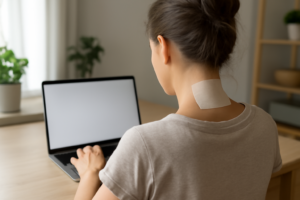


You wake up, swing your legs over the side of the bed, and before you’ve even had your first cup of coffee, you feel it — that familiar stiffness creeping up the back of your neck. Maybe it’s a dull ache after a long day hunched over a laptop, or a sharp twinge that makes turning your head feel like a full-body event. If any of that sounds familiar, you’re not alone. Neck pain is one of the most common complaints I hear, and the good news is that most of it is preventable. Learning how to prevent neck pain doesn’t require a gym membership or a complicated routine — it starts with small, consistent daily habits that genuinely make a difference.
Why Your Neck Is So Vulnerable in the First Place
Your cervical spine — the seven vertebrae that make up your neck — supports the full weight of your head, which averages around 10 to 12 pounds. That’s already a significant load. Now consider what happens when you tilt your head forward just 15 degrees to look at your phone: the effective force on your neck can jump to nearly 27 pounds. At 60 degrees of forward tilt, research suggests that load climbs to roughly 60 pounds. Over hours and years, that kind of sustained stress wears on the joints, muscles, and discs of your cervical spine.
Add in poor sleep posture, weak deep neck flexor muscles, stress-related tension, and sedentary work habits, and you have a perfect recipe for chronic neck discomfort. The encouraging part? All of these are modifiable. Let’s talk about what actually works.
Daily Habits That Help Prevent Neck Pain
1. Fix Your Screen Position
This is the single easiest change most people can make. Your monitor or laptop screen should sit at eye level so your head stays in a neutral position — not tilted down, not craned upward. If you’re using a laptop on a desk all day, consider a separate keyboard and a laptop stand. For phone use, try to bring the phone up to eye level rather than dropping your chin to look down. It feels awkward at first, but your neck will thank you within days.
2. Move More, Sit Less — and Break It Up
Sustained static postures — even “good” ones — are hard on the cervical spine. I always tell people: your best posture is your next posture. Set a timer to get up and move every 30 to 45 minutes. Even a two-minute walk to refill your water bottle gives your neck muscles a chance to reset. Gentle neck rolls, chin tucks, and shoulder blade squeezes throughout the day can help decompress the joints and reduce tension buildup.
3. Strengthen the Muscles That Support Your Neck
Weakness in the deep neck flexors and upper back muscles is a major contributor to chronic neck pain. Simple exercises like chin tucks (gently drawing your chin back to create a “double chin” effect) target the deep cervical stabilizers. Rows, face pulls, and scapular retractions help counteract the forward-rounded posture most of us default to at a desk. Even 10 minutes of targeted exercises a few times a week may help reduce pain and improve long-term resilience.
4. Be Intentional About Your Sleep Position
How you sleep matters enormously for cervical health. Stomach sleeping in particular forces your neck into prolonged rotation and can be a significant source of morning stiffness. Side and back sleeping are generally more neck-friendly, provided your pillow is the right height and firmness. Your pillow should keep your head and neck in a neutral alignment — not propped too high or sinking too low. This is one area where the right product can genuinely make a difference.
Products Worth Trying for Neck Support and Relief
I’m always selective about what I recommend, but these are products that many people find helpful for cervical support — whether during sleep, at rest, or for gentle traction at home.
The Pillow Swap That Actually Fixed My Morning Neck Stiffness
Most neck pain starts the night before — bad pillow support collapses your cervical spine alignment and leaves you waking up tighter than you went to bed. A pillow designed specifically to maintain neutral spine position during sleep addresses the root cause instead of just masking the symptom with ice packs.
What works
- The cooling gel layer reduces inflammation-related stiffness first thing in the morning — most people notice less “stiff neck” feeling within 3-5 nights of consistent use, not weeks.
- Contoured cervical support actually keeps your neck in neutral alignment while you sleep, rather than letting it fold awkwardly like a flat pillow does — research confirms proper cervical support reduces nighttime strain.
- The cooling element matters more than marketing suggests: it genuinely helps reduce the inflammation flare that happens overnight, especially if you’re prone to sleeping on your side or stomach.
What doesn’t
- This won’t fix neck pain caused by poor posture at your desk during the day — you still have to address how you’re sitting and where your monitor is positioned, or the pain will return regardless of pillow quality.
- The cooling effect gradually diminishes over 6-8 months of regular use as the gel degrades, and some people find contoured pillows take 1-2 weeks to feel comfortable if they’re used to flat pillows.
A good pillow is foundational, but it’s not a standalone fix — you still need to address daytime posture, screen height, and movement habits for real lasting relief. If you’re ready to stop waking up stiff, Ultra Pain Relief Cooling Pillow for Neck Support is worth the investment.
About This Article

Written by Michael Torres. Michael Torres has had joint problems his whole life — hypermobile as a kid, chronic sprains and a dislocating shoulder through his twenties, an osteoarthritis diagnosis in his early fifties, and a right knee replacement since. He is not a doctor or a physical therapist and has no clinical training. He writes about what has helped him and what he has watched help the people around him, and says plainly when he has not tried something himself. More about this site.
Scope and limits. Michael has no medical or clinical training — he writes about living with his own joint pain, not about treating anyone else's. Nothing here is medical advice. Talk to a doctor before starting anything new, and get seen promptly for pain that is new, severe, worsening, or comes with swelling, fever, or numbness.
Verify this against a primary source
Specifics change, and your situation may differ from the one described here. These are the authorities worth checking directly:
- NIAMS — arthritis and musculoskeletal research from the NIH
- MedlinePlus — plain-language medical reference from the NIH
- Arthritis Foundation — condition guides and treatment overviews