
You wake up after a rough night of anxious thoughts, and before you even get out of bed, your knees feel stiff, your shoulders ache, and your fingers seem harder to curl than usual. Sound familiar? If you’ve noticed that your worst joint days often follow your most stressful ones, you’re not imagining it. The connection between anxiety and joint pain is very real, and understanding it is one of the most overlooked pieces of the recovery puzzle for a lot of people I work with.
This post contains affiliate links. As an Amazon Associate, I earn from qualifying purchases. This means I may earn a small commission if you purchase through my links, at no extra cost to you. I only recommend products I genuinely think may help.
The Science Behind Anxiety and Joint Pain
When you feel anxious, your body activates its stress response — that familiar fight-or-flight mode. Your brain signals the release of cortisol and adrenaline, your muscles tighten, and your blood vessels constrict. That’s a helpful short-term survival mechanism. The problem is that for many people dealing with chronic anxiety, this response doesn’t fully switch off.
Prolonged stress hormones, especially elevated cortisol, are associated with increased systemic inflammation. And inflammation is the engine behind most joint pain. Research suggests that people who experience chronic anxiety or psychological stress may show higher levels of inflammatory markers like C-reactive protein, which is directly linked to joint discomfort and stiffness. Over time, this low-grade inflammation can make existing joint conditions worse and, in some cases, may contribute to new discomfort in joints that were previously fine.
There’s also the muscle tension factor. Anxiety causes you to guard your body — you hunch your shoulders, clench your jaw, tighten your hips. When muscles stay contracted for extended periods, they pull unevenly on joints, reduce circulation to surrounding cartilage, and create compression that leads to pain. It’s a cycle: anxiety creates tension, tension creates pain, and pain creates more anxiety.
Low-Impact Ways to Break the Cycle
Here’s the good news: many of the most effective strategies for managing anxiety are also excellent for joint health. You really can work on both at the same time. The key is choosing movement and recovery practices that are gentle enough not to stress inflamed joints while still being effective enough to actually shift your nervous system out of that heightened state.
Gentle Movement That Calms the Nervous System
Walking — even just 15 to 20 minutes at a slow, comfortable pace — is one of the most underrated tools available to you. It increases circulation to joint tissue, helps flush inflammatory byproducts from the body, and triggers the release of endorphins that naturally ease both pain and anxiety. Many people find relief with a short morning walk before the day’s stressors build up.
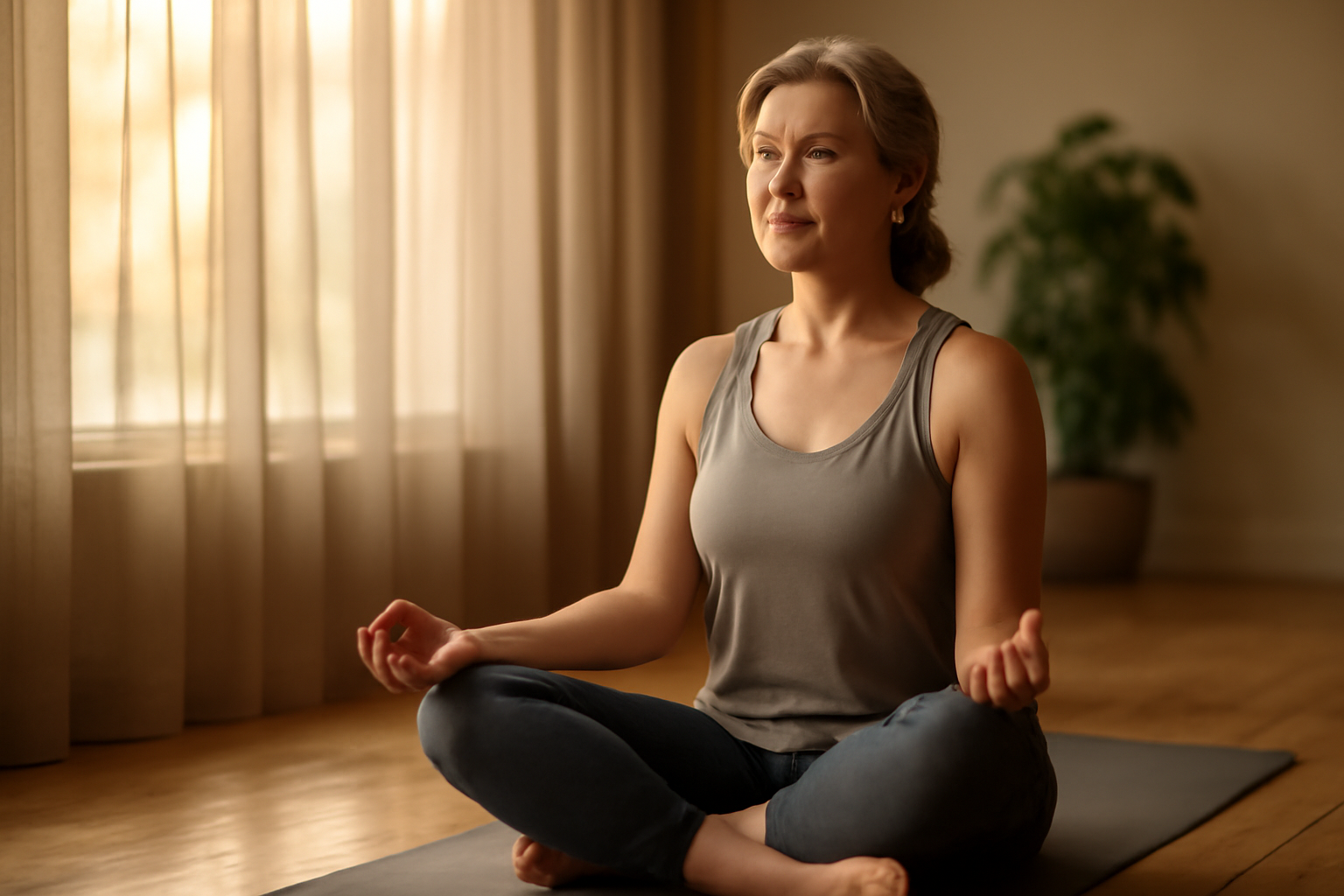
Tai chi and gentle yoga are also worth exploring. Both emphasize slow, controlled movement patterns, breath awareness, and body scanning — all of which directly counter the muscle-bracing response that anxiety drives. Research suggests that regular tai chi practice may help reduce inflammatory markers and improve joint mobility in people with conditions like osteoarthritis.
Water-based exercise is another excellent option if your joints are particularly sensitive. The buoyancy of water reduces the load on your knees, hips, and spine while still allowing you to move through a full range of motion. Many people find that even gentle pool walking a few times a week makes a noticeable difference in both mood and joint comfort.
Breathwork and Sleep as Recovery Tools
Diaphragmatic breathing — slow, deep belly breathing — activates your parasympathetic nervous system, which is essentially the off switch for your fight-or-flight response. Spending five to ten minutes doing this before bed or during a stressful moment can meaningfully reduce cortisol levels and ease the muscle tension that’s grinding on your joints. Box breathing (inhale for 4 counts, hold for 4, exhale for 4, hold for 4) is a simple protocol that many of my clients find effective.
Sleep is where most of your joint tissue repair actually happens. Poor sleep — which anxiety notoriously disrupts — has been linked to increased pain sensitivity and higher levels of systemic inflammation. Prioritizing sleep hygiene: consistent bedtimes, a cool dark room, and limiting screen exposure before bed, is not optional if you’re trying to address the root of the problem.
Products Worth Trying for Stress and Joint Support
I want to be clear: no supplement is going to fix everything. But when movement, sleep, and stress management practices are already in place, certain supplements may help support the process. Here are some that many people find helpful and that have reasonable evidence behind their key ingredients.
For Stress and Nervous System Support
If you’re looking for a daily supplement to support your body’s stress response, OLLY Ultra Strength Goodbye Stress Softgels combine GABA, ashwagandha, L-theanine, and lemon balm — a well-regarded lineup of ingredients that research suggests may help support a calmer nervous system. These are the softgel version for those who prefer a more concentrated option.
If you prefer something chewable and easier to stick with daily, the OLLY Goodbye Stress Gummies in Berry flavor have the same core formula in a gummy format that many people find more enjoyable. Sometimes the supplement you’ll actually remember to take is the right one.
For a clean, vegetarian option focused on ashwagandha, Nature’s Bounty Stress Relief with Ashwagandha KSM-66 is worth a look. KSM-66 is a well-researched form of ashwagandha that multiple studies suggest may help reduce occasional stress and support healthier cortisol levels over time.
For Muscle, Nerve, and Joint Support
Magnesium is one of the most commonly depleted minerals in people who experience chronic stress — and low magnesium is associated with both increased anxiety and muscle cramping that can worsen joint discomfort. Pure Encapsulations Magnesium Glycinate is a highly bioavailable form that’s gentle on digestion and widely used by practitioners for stress relief, sleep support, and muscle relaxation.
If you want a broader magnesium formula, the Vitalibre 10-in-1 Magnesium Complex combines multiple forms of chelated magnesium at 420mg elemental magnesium per serving, which may help address bone health, nerve function, and muscle recovery simultaneously. It’s a good choice if you want to cover more ground with a single supplement.
A Final Word: You Can Feel Better
The link between anxiety and joint pain is frustrating precisely because it can feel like a trap — you hurt, so you stress, so you hurt more. But the same bidirectional relationship that creates that cycle also means that improving one genuinely helps the other. Start small. Add a ten-minute walk tomorrow morning. Try five minutes of deep breathing before bed tonight. Consider whether your magnesium intake is adequate. Each small change builds on the last. You don’t have to overhaul your entire life at once — you just have to take one step that’s gentle on your joints and kind to your nervous system. That’s enough to start.