
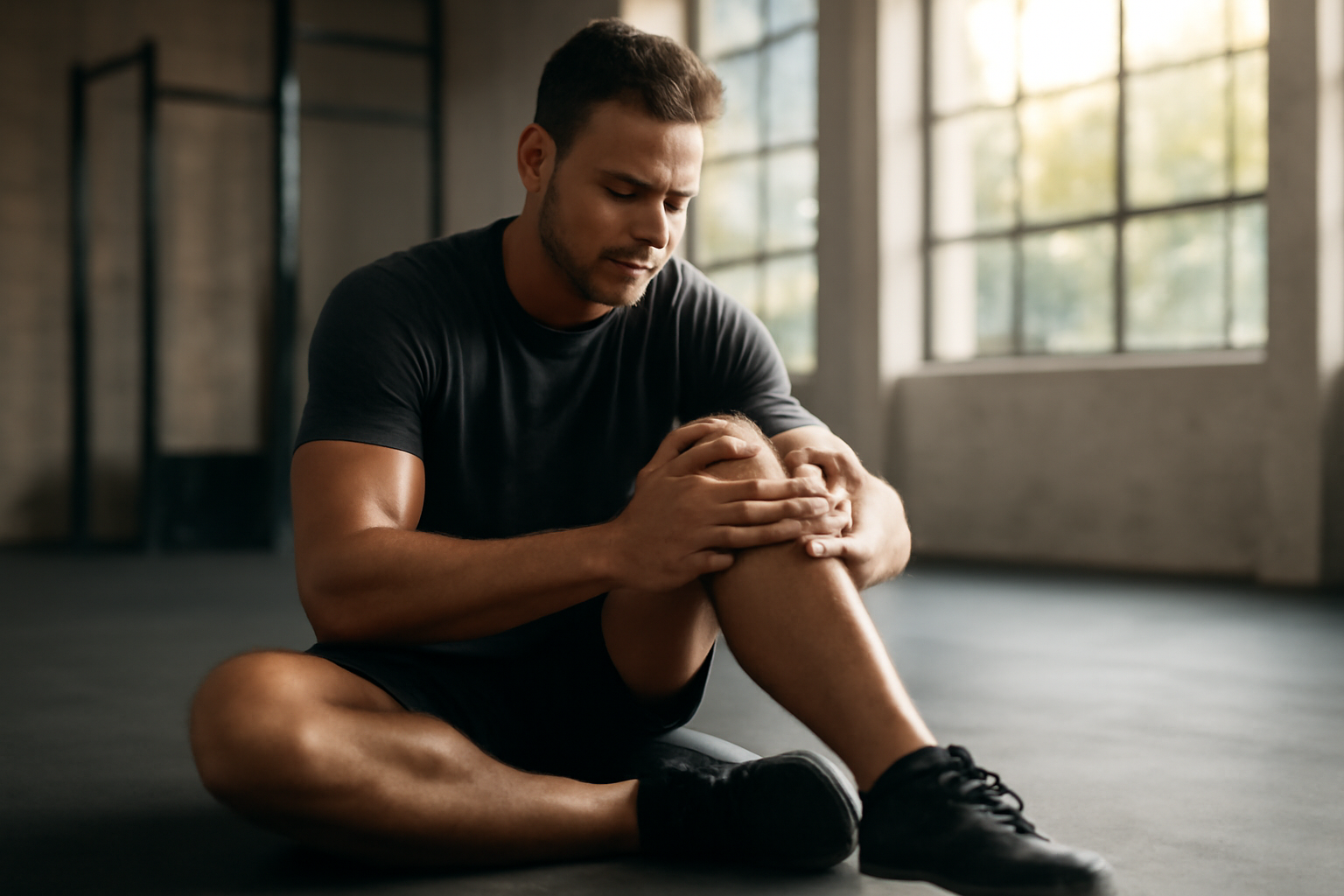
You crushed your workout. You felt great afterward — maybe even a little proud. Then you woke up the next morning and your knees ached going down the stairs, your shoulders felt stiff reaching for your coffee, or your hips protested every time you stood up from your chair. Sound familiar? If you’ve ever experienced joint pain after workout sessions, you’re not alone — and you’re definitely not broken. This is one of the most common concerns I hear, and the good news is that most of the time, there are real, practical explanations and real solutions.
Affiliate disclosure: This post contains affiliate links. As an Amazon Associate, I earn from qualifying purchases. This helps support the site at no extra cost to you — thank you!
What’s Actually Happening in Your Joints During Exercise
First, let’s get one thing straight: not all post-workout joint discomfort is the same, and it doesn’t all mean something is wrong. Your body is a pretty intelligent system, and what feels like “joint pain” can actually have several different sources.
When you exercise — especially with resistance training, running, or high-impact activity — you’re placing mechanical stress on your joints, tendons, ligaments, and the cartilage that cushions everything together. Some of that stress is necessary and productive. It’s how your body gets stronger and more resilient over time. But when that stress exceeds what your tissues are currently conditioned to handle, inflammation kicks in as a protective response.
That inflammation is the source of a lot of the aching, stiffness, and swelling you feel in the days following a tough session. It’s your body saying, “Hey, I need a little time to adapt here.” Research suggests that this low-level inflammatory response is a normal and even necessary part of the recovery process — but when it lingers or becomes chronic, that’s when it’s worth paying closer attention.
The Difference Between DOMS and True Joint Pain
Delayed Onset Muscle Soreness — or DOMS — is that deep, achy muscle soreness that typically peaks around 24 to 72 hours after exercise. It’s primarily a muscle issue, not a joint issue, though it can feel like it’s coming from the same area. True joint pain tends to feel different: it often shows up as stiffness, a sharp or clicking sensation, swelling around the joint, or pain that worsens with specific movements rather than general activity.
If you’re dealing with DOMS, gentle movement and time are usually your best allies. If the discomfort feels sharper, more localized to the joint itself, or doesn’t improve within a week, it’s worth checking in with a healthcare provider to rule out something structural going on.
Common Reasons Your Joints Hurt After a Workout
Let’s talk about the most frequent culprits. Understanding why this happens is the first step to preventing it.
- Ramping up too fast: One of the biggest mistakes I see is jumping from zero to intense training too quickly. Your cardiovascular system adapts faster than your connective tissue does. Joints, tendons, and cartilage need more time to catch up. Going too hard, too soon is a recipe for overuse irritation.
- Poor movement mechanics: If your form is off during squats, deadlifts, or even running, you may be loading your joints at awkward angles. Over time — or even in a single session — this can cause irritation in the knees, hips, or lower back.
- Inadequate warm-up: Cold, stiff tissues don’t move as efficiently. Skipping a dynamic warm-up leaves your joints less prepared for the demands you’re about to place on them.
- Pre-existing inflammation or underlying conditions: If you have early-stage osteoarthritis, old injuries, or hypermobility, your joints may be more reactive to training stress than someone without those factors.
- Insufficient recovery between sessions: Your joints need time to recover just like your muscles do. Training the same joints hard day after day without adequate rest can create a cycle of chronic low-grade inflammation.
What Actually Helps: Joint Pain After Workout Relief
Okay — here’s the part you actually came for. These are the strategies and tools that many people find genuinely helpful for managing post-workout joint discomfort. These aren’t magic fixes, but used consistently and alongside smart training habits, they can make a real difference in how your body feels and recovers.
Topical Relief Creams and Gels
Topical products are one of the most convenient tools for targeted joint and muscle support. They work locally without the systemic side effects that can come with oral pain relievers, and many people find them easy to work into a post-workout routine.
Penetrex Daily Joint & Muscle Care Cream is a popular choice for everyday maintenance. It features a botanical formula with arnica, Vitamin B6, and MSM — ingredients that many active people incorporate into their recovery routine. It’s lightweight, non-greasy, and has a light scent, which makes it easy to apply after a shower post-workout without feeling like you’re covered in product all day.
If your post-workout joint discomfort is more intense or you want something with a clinically studied active ingredient, Voltaren Arthritis Pain Gel is worth considering. It contains diclofenac sodium, an NSAID that research suggests may help reduce localized inflammation and pain. It’s available over the counter and has become a go-to for people managing joint pain related to arthritis and overuse.
For more of a classic warming relief experience, Bengay Ultra Strength Pain Relief Cream combines camphor, menthol, and methyl salicylate for a warming, soothing sensation that many athletes and active adults have relied on for years. It may help ease minor joint and muscle discomfort, making it a solid addition to your recovery kit.
TENS Therapy for Recovery
If you haven’t tried a TENS (Transcutaneous Electrical Nerve Stimulation) unit yet, it might be time to explore it. These devices use gentle electrical pulses to help interrupt pain signals and may support muscle recovery after intense exercise. Physical therapy clinics use them regularly, but there are now excellent at-home options that are very user-friendly.
The TENS 7000 Digital TENS Unit is one of the most widely used options available. It’s straightforward to operate and comes with everything you need to target areas like the back, knees, shoulders, and hips. Many users find it helpful for managing aching joints and muscles after hard training sessions.
If you want something with more modes and a rechargeable design, the AUVON Rechargeable TENS Unit Muscle Stimulator offers 24 modes and comes with premium electrode pads. It’s a great option for people who want more customization in their pain relief and recovery routine.