
You know that awful moment — one wrong step off a curb, a misjudged landing after a jump, or just walking across an uneven lawn — and suddenly your ankle rolls and that sharp, sickening pain shoots right up your leg. If you’ve been there, you’re not alone. Ankle sprains are one of the most common musculoskeletal injuries out there, and the question I hear constantly is: what’s actually the best ankle brace for sprain stability? The honest answer is that it depends on your specific situation, and I want to walk you through the three main types so you can make a genuinely informed choice.
Why Brace Type Actually Matters for Ankle Sprain Recovery
Not all ankle braces are created equal, and picking the wrong style can actually slow you down. I’ve seen people grab whatever’s cheapest at the pharmacy, stuff it into their shoe, and wonder why their ankle still feels unstable three weeks later. The structure of a brace determines how much motion it restricts, how much proprioceptive feedback it gives your ankle, and whether it’s actually going to hold up under real activity. Broadly, lace-up and stirrup styles are what clinicians call semi-rigid ankle braces — structured enough to meaningfully restrict the harmful rolling motions, but not fully immobilizing like a cast or walking boot — while compression sleeves sit at the soft, flexible end of the spectrum. Let’s break down the three main categories you’ll encounter.
Lace-Up Ankle Braces
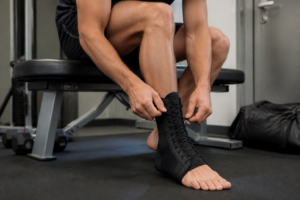
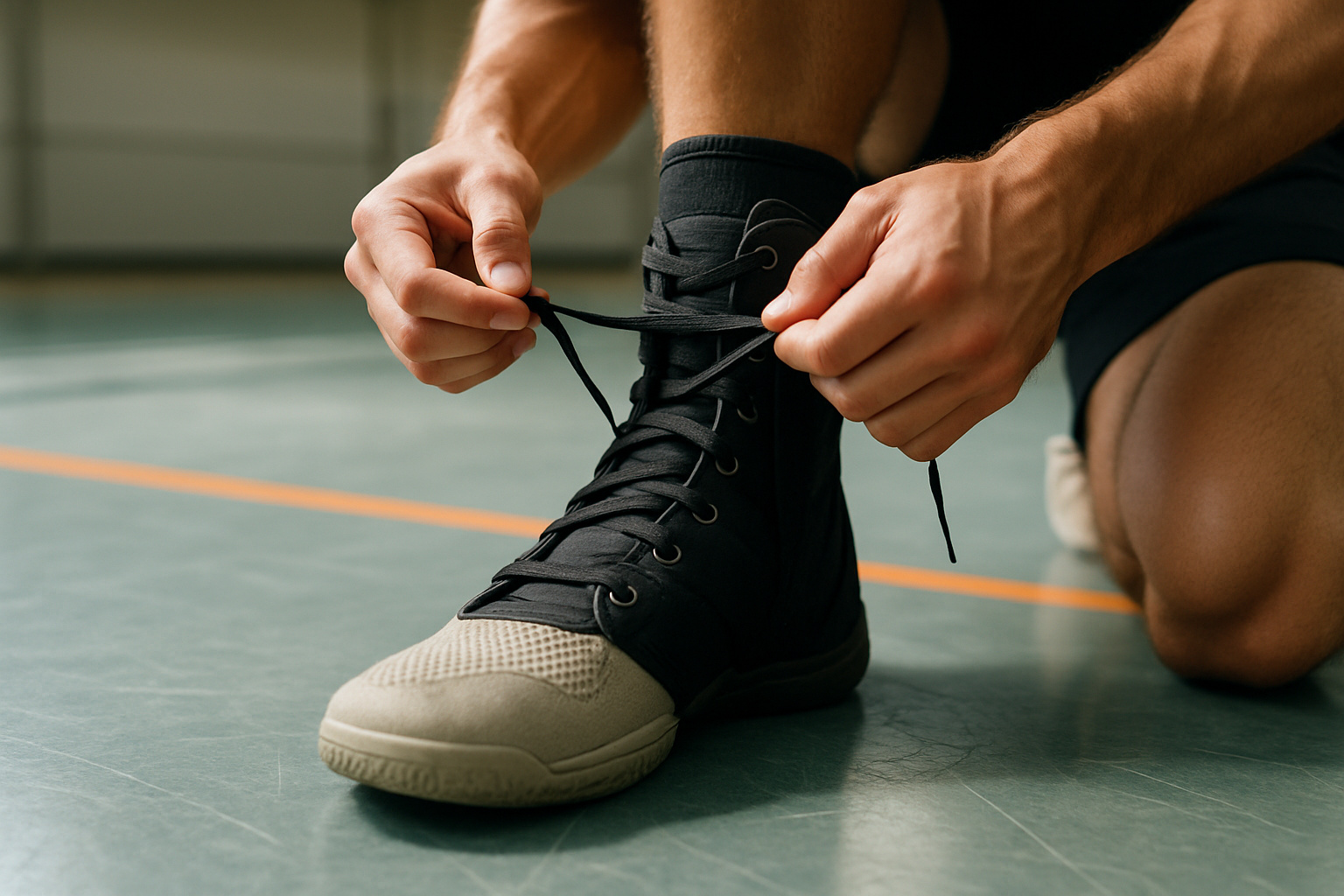
Lace-up braces are the workhorses of ankle support. They wrap around the ankle much like a high-top sneaker, using a lacing system to let you customize how snug the fit feels. Research suggests that lace-up braces may help reduce the risk of recurrent sprains and provide meaningful mechanical support during lateral movements — which is why you see them constantly in basketball and volleyball. They sit low-profile enough to fit inside most athletic shoes, and the adjustable tension means you can tighten them as the ankle swells in the morning or loosen them as the day goes on.
The trade-off is a bit of a learning curve on application. You need to lace them consistently and snugly to get the full benefit. Done sloppily, a lace-up brace might actually give you a false sense of security without meaningful restriction of inversion — the rolling motion that causes most sprains.
Stirrup (Rigid or Semi-Rigid) Ankle Braces
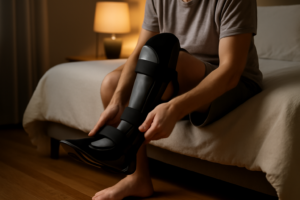
Stirrup braces have two hard plastic or semi-rigid shells that run along the inside and outside of your ankle, held in place with straps across the top of the foot. They’re specifically engineered to block inversion and eversion — the side-to-side tipping motions — while still allowing relatively normal forward flexion so your walking gait isn’t thrown off completely. Many clinicians recommend stirrup-style braces in the acute phase after a grade II sprain when the ligaments need the most mechanical protection. The downside? They’re bulkier, they require a wider shoe, and they’re not always practical for everyone’s daily footwear.
Compression Sleeves
Compression sleeves slide on like a sock and apply gentle, consistent pressure around the ankle joint. They won’t stop a serious inversion event the way a lace-up or stirrup brace will, but many people find real value in them for mild sprains, everyday aches, tendonitis flare-ups, and situations where you want some proprioceptive awareness without bulk. Think of a sleeve as the “maintenance” option — great for staying active during recovery, managing swelling, and keeping that ankle joint aware of where it is in space.
Choosing the Right Ankle Brace for Sprain Stability: A Practical Guide
Here’s the quick decision framework I share with people who ask me where to start:
- Acute moderate sprain (grade II, significant swelling, can bear weight but feels unstable): Start with a stirrup or lace-up brace for maximum mechanical support.
- Returning to sport after a sprain: A lace-up brace worn inside your athletic shoe is generally well-tolerated and may help reduce re-injury risk during lateral cutting movements.
- Chronic mild instability or general soreness: A compression sleeve worn daily can help manage discomfort and may improve proprioception over time.
- Everyday walking or work on your feet: Either a lace-up or compression sleeve depending on how much support you feel you need — comfort and compliance matter most here.
One thing I always emphasize: a brace is a support tool, not a substitute for rehabilitation. Strengthening the muscles around the ankle — especially the peroneals — and working on balance and proprioception is what actually builds long-term stability. A brace helps you stay active while that process happens.
The Lace-Up Brace That Actually Stays Put During Recovery
If you’re dealing with a moderate sprain or chronic ankle instability and need support that won’t slip or shift during movement, a lace-up brace gives you the adjustability and compression you can’t get from a sleeve. This is the type of brace most physical therapists recommend during the active recovery phase, when your ankle still feels unreliable but you need to start moving again.
What works
- The lacing system lets you dial in exactly how much compression you need, which means you can tighten it more on bad days and ease off as your ankle stabilizes — something a pre-fitted sleeve can’t do.
- Research supports lace-up designs for limiting inversion and eversion (the ankle rolling motions that cause sprains), and most people report feeling noticeably more stable within the first few wears, especially on uneven surfaces.
- The figure-eight design with reinforced straps on both sides of the ankle catches the most vulnerable points — unlike generic sleeves that can ride up or lose tension throughout the day.
What doesn’t
- Takes 30 seconds to put on and take off, which gets old if you’re changing shoes multiple times a day — not ideal if you’re looking for something you slip into like a sock.
- If your sprain was severe (Grade 2 or 3 with significant swelling and bruising), a brace alone won’t fix it — you’ll need physical therapy, rest, and possibly professional evaluation first.
A brace is support, not a cure, and you’ll get the best results if you’re also doing gentle ankle mobility work and strengthening exercises as swelling subsides. ProCare Lace-Up Ankle Support Brace — Small
About This Article

Written by Michael Torres. Michael Torres has had joint problems his whole life — hypermobile as a kid, chronic sprains and a dislocating shoulder through his twenties, an osteoarthritis diagnosis in his early fifties, and a right knee replacement since. He is not a doctor or a physical therapist and has no clinical training. He writes about what has helped him and what he has watched help the people around him, and says plainly when he has not tried something himself. More about this site.
Scope and limits. Michael has no medical or clinical training — he writes about living with his own joint pain, not about treating anyone else's. Nothing here is medical advice. Talk to a doctor before starting anything new, and get seen promptly for pain that is new, severe, worsening, or comes with swelling, fever, or numbness.
Verify this against a primary source
Specifics change, and your situation may differ from the one described here. These are the authorities worth checking directly:
- NIAMS — arthritis and musculoskeletal research from the NIH
- MedlinePlus — plain-language medical reference from the NIH
- Arthritis Foundation — condition guides and treatment overviews