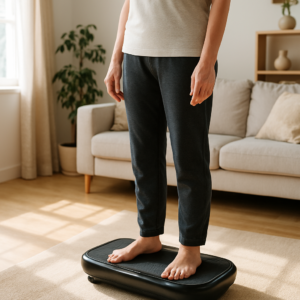


You wake up after a rough night, your knees aching before you even swing your legs over the side of the bed. By the time you’ve shuffled to the kitchen to make coffee, you’re already exhausted — and the day hasn’t even started. Sound familiar? If you’re living with arthritis, that kind of morning doesn’t just wear on your body. It wears on your mind, too. The connection between arthritis and mental health is something I see play out constantly, and it deserves a lot more attention than it typically gets.
Why Arthritis and Mental Health Are More Connected Than You Think
Here’s the thing nobody warns you about when you first get an arthritis diagnosis: chronic pain doesn’t stay in your joints. It seeps into everything — your sleep, your relationships, your ability to enjoy things you used to love. Research suggests that people living with arthritis are significantly more likely to experience depression and anxiety than the general population. In fact, some estimates put the rate of depression among arthritis patients at two to three times higher than average.
And this isn’t just a matter of feeling sad because you’re in pain. The biology goes deeper than that. Chronic inflammation — which drives many forms of arthritis — may also influence brain chemistry in ways that make depression and anxiety more likely. Your body and brain are talking to each other constantly, and when inflammation is part of that conversation, the whole system feels it.
Then there’s what I call the pain-mood cycle. Pain makes you less active. Less activity leads to social withdrawal, disrupted sleep, and loss of purpose. Those things tank your mood. And a low mood? It actually makes you more sensitive to pain. Round and round it goes — and without some intentional intervention, it can feel impossible to break.
Breaking the Cycle: Practical Strategies That May Help
I want to be upfront: there’s no magic switch that turns this cycle off overnight. But there are evidence-informed strategies that many people find genuinely helpful, and most of them you can start working on today without a prescription.
Move — Even a Little Bit
I know. When your joints hurt, the last thing you want to hear is “exercise more.” But gentle, consistent movement may be one of the most powerful tools you have — both for joint health and for mood. Research suggests that low-impact activities like swimming, walking, and tai chi can help reduce stiffness, support joint function, and trigger the release of endorphins that naturally lift your mood. Start with five or ten minutes a day. Progress slowly. Give yourself credit for showing up.
Prioritize Sleep Like It’s Medicine
Poor sleep amplifies pain perception and wrecks emotional regulation — it’s a double hit for people with arthritis. Many people find that establishing a consistent sleep schedule, keeping the bedroom cool and dark, and doing a short wind-down routine before bed helps improve sleep quality over time. If pain is keeping you awake, that’s worth a direct conversation with your doctor or physical therapist.
Don’t Underestimate Human Connection
Isolation is one of the sneakiest contributors to depression in people with chronic conditions. Arthritis can make social plans feel unpredictable — you never quite know what kind of day you’ll have. But staying connected, even in small ways, matters enormously. Consider online support communities, local arthritis groups, or simply texting a friend when you’re struggling. You don’t have to carry this alone.
Consider Talking to a Professional
Cognitive behavioral therapy (CBT) has solid research behind it for both chronic pain management and depression. A therapist who understands chronic illness can help you reframe unhelpful thought patterns, build coping strategies, and find a sense of agency even on hard days. This isn’t a sign of weakness — it’s one of the smartest tools in your toolkit.
Products Worth Trying: What Actually Helps Many People
When you can manage pain a little better day-to-day, your mental load lightens. Here are a few products I think are genuinely worth considering as part of a broader arthritis management routine.
Managing Morning Pain So You Can Actually Start Your Day
When arthritis pain hijacks your morning routine, everything downstream suffers — your mood, your motivation, your willingness to move. A topical anti-inflammatory can be the difference between shuffling through the first hours of your day and actually having energy to engage with life, especially on mornings when systemic inflammation is running high.
What works
- Diclofenac (the active ingredient) penetrates joint tissue effectively and shows measurable pain reduction in 15–30 minutes for most users — faster than oral NSAIDs for localized joints, and without the stomach or systemic side effects of oral medication.
- The gel format lets you target specific problem areas (knees, hands, shoulders) rather than medicating your whole body, which matters if you’re concerned about long-term NSAID use or managing multiple joint issues.
- The travel-size tube means you can keep pain relief in your bag, car, or desk — consistency matters more than perfection, and accessibility removes friction from actually using it when mornings get rough.
What doesn’t
- This isn’t addressing the underlying arthritis — it’s managing the symptom so you can move and think clearly enough to handle the bigger picture (physical therapy, stress management, sleep, anti-inflammatory eating).
- Some people experience skin irritation or get minimal relief, and it won’t help if your pain is driven primarily by systemic inflammation rather than localized joint inflammation — you might need both topical and oral approaches.
Topical pain relief isn’t a long-term solution on its own, and results vary widely depending on inflammation level and joint location — this is a tool to buy yourself mental and physical space, not a cure. Voltaren Arthritis Pain Gel — 100g Tube + 20g Travel Size (NEW Easy Open Cap)
About This Article

Written by Michael Torres. Michael Torres has had joint problems his whole life — hypermobile as a kid, chronic sprains and a dislocating shoulder through his twenties, an osteoarthritis diagnosis in his early fifties, and a right knee replacement since. He is not a doctor or a physical therapist and has no clinical training. He writes about what has helped him and what he has watched help the people around him, and says plainly when he has not tried something himself. More about this site.
Scope and limits. Michael has no medical or clinical training — he writes about living with his own joint pain, not about treating anyone else's. Nothing here is medical advice. Talk to a doctor before starting anything new, and get seen promptly for pain that is new, severe, worsening, or comes with swelling, fever, or numbness.
Verify this against a primary source
Specifics change, and your situation may differ from the one described here. These are the authorities worth checking directly:
- NIAMS — arthritis and musculoskeletal research from the NIH
- MedlinePlus — plain-language medical reference from the NIH
- Arthritis Foundation — condition guides and treatment overviews