
You know that moment — you’ve just finished a workout, a long hike, or even just a day of sitting at your desk — and your knees, hips, or shoulders start that familiar, dull ache that makes you want to do absolutely nothing. I’ve been there, and so have most of the athletes and active adults I’ve worked with over the years. If you’ve been Googling ways to manage that joint discomfort without reaching for another ibuprofen, you’ve probably stumbled across TENS therapy for joints. And I don’t blame you for being curious — it’s one of the most common questions I get asked, and honestly, it deserves a real, honest answer.
What Is TENS Therapy and How Does It Work?
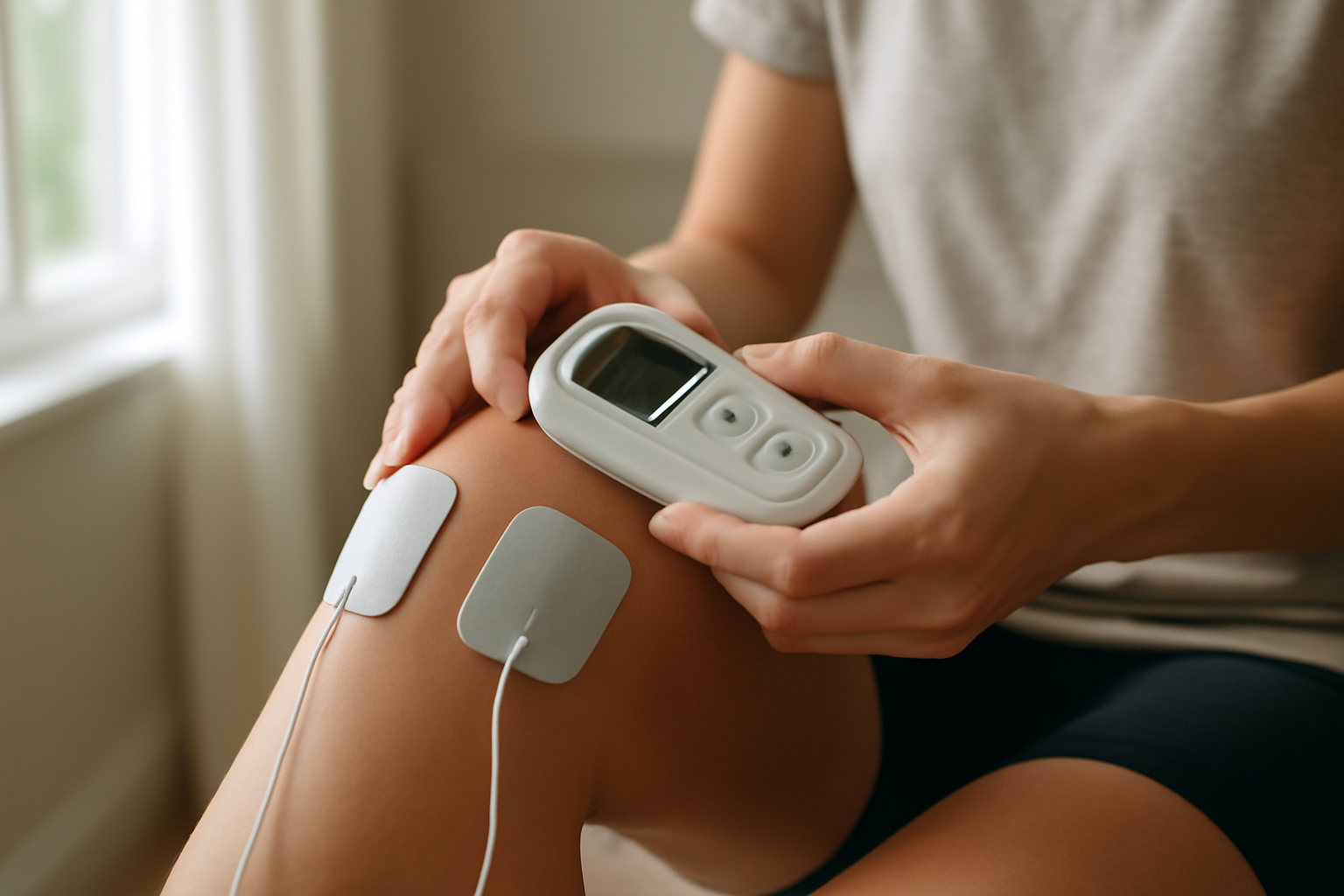
TENS stands for Transcutaneous Electrical Nerve Stimulation. I know — it sounds intimidating — but the concept is actually pretty straightforward. A TENS unit is a small, battery-powered device that sends low-voltage electrical pulses through electrode pads placed on your skin. Those pulses travel along your nerve fibers and may help interrupt pain signals before they reach your brain. Many people also find that TENS stimulation encourages the body to release endorphins, your natural feel-good, pain-reducing chemicals.
Research suggests that TENS therapy may be particularly useful for musculoskeletal discomfort — the kind that settles into joints after exercise, overuse, or chronic inflammation. It’s non-invasive, drug-free, and you can use it from your couch. That combination alone is why so many physical therapists, myself included, think it’s worth having in your recovery toolkit.
Is TENS Therapy for Joints Actually Right for You?
Here’s where I want to be your honest friend rather than just someone selling you a gadget. TENS therapy isn’t a cure-all, and it doesn’t work the same way for everyone. But many people find meaningful relief from it, especially in these situations:
- Post-workout soreness around the knees, shoulders, or hips
- Chronic joint aching associated with conditions like osteoarthritis (always check with your doctor first)
- Sciatica or nerve-related hip and leg discomfort
- Neck and shoulder tension from repetitive motion or poor posture
- Elbow discomfort from racket sports, lifting, or repetitive strain
On the flip side, TENS therapy is generally not recommended if you have a pacemaker or other implanted electrical device, are pregnant, have epilepsy, or have areas of skin that lack normal sensation. If any of those apply to you, please talk to your physician before trying a TENS unit. For everyone else, the risk profile is quite low when used as directed.
A good rule of thumb I share with everyone: TENS works best as part of a broader recovery approach — paired with stretching, appropriate strengthening exercises, good sleep, and anti-inflammatory nutrition. It’s a tool, not a total solution.
Products Worth Trying: TENS Units and Accessories That Deliver
If you’ve decided you want to give TENS a try at home, the good news is that quality devices are more accessible — and more affordable — than ever. Here are the ones I’d genuinely point a friend toward:
The TENS Unit That Actually Delivers Consistent Relief Without the Learning Curve
If you’re dealing with acute joint aches or post-workout soreness, a solid TENS unit can give you drug-free pain relief in minutes — but only if you pick one that’s reliable and intuitive enough to use consistently. The TENS 7000 is built for people who want results without fighting the device itself.
What works
- Clinical evidence supports TENS for acute joint pain and muscle soreness — the stimulation interrupts pain signals without medications, and most people feel noticeable relief within the first 15–20 minutes of use.
- The dual-channel setup lets you target two problem areas at once (like both knees after a hike), and the preset modes remove guesswork — you’re not spending 10 minutes adjusting intensity when your joint already hurts.
- The wired design means no battery anxiety, and the pads are affordable enough to replace regularly, so you’re not stretching worn-out electrodes and getting frustrated with poor contact.
What doesn’t
- TENS is effective for acute pain but doesn’t fix the underlying joint issue — if your knees hurt because of weak quads or poor mechanics, the relief stops when you turn the unit off, and you haven’t addressed why it aches in the first place.
- Some people simply don’t respond well to electrical stimulation (different nervous systems, different pain types), and there’s a learning curve to pad placement — put them in the wrong spot and you’ll get surface tingling instead of deep relief.
TENS works best as part of a broader routine — stretching, strengthening, and addressing movement patterns matter more in the long run. If you’re looking for immediate relief while you work on the root cause, try the TENS 7000 Digital TENS Unit.
About This Article

Written by Michael Torres. Michael Torres has had joint problems his whole life — hypermobile as a kid, chronic sprains and a dislocating shoulder through his twenties, an osteoarthritis diagnosis in his early fifties, and a right knee replacement since. He is not a doctor or a physical therapist and has no clinical training. He writes about what has helped him and what he has watched help the people around him, and says plainly when he has not tried something himself. More about this site.
Scope and limits. Michael has no medical or clinical training — he writes about living with his own joint pain, not about treating anyone else's. Nothing here is medical advice. Talk to a doctor before starting anything new, and get seen promptly for pain that is new, severe, worsening, or comes with swelling, fever, or numbness.
Verify this against a primary source
Specifics change, and your situation may differ from the one described here. These are the authorities worth checking directly:
- NIAMS — arthritis and musculoskeletal research from the NIH
- MedlinePlus — plain-language medical reference from the NIH
- Arthritis Foundation — condition guides and treatment overviews