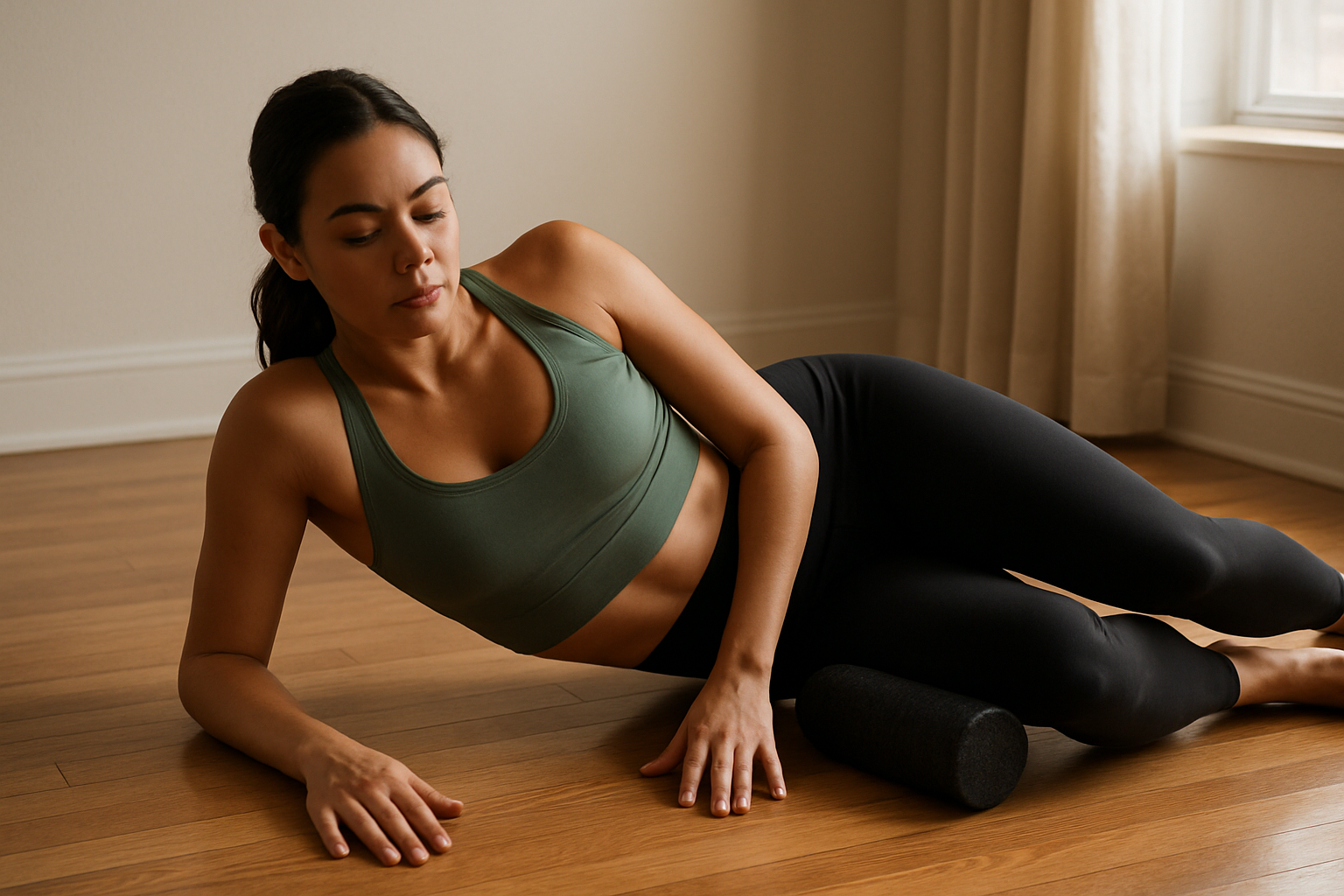

You know that moment — you’ve been sitting at your desk for hours, or you just finished a walk that left your knees feeling stiff and achy, and you think, I really need to do something about this. Maybe you’ve heard about foam rolling from a friend, a trainer, or a random YouTube video at midnight. Maybe you bought a roller six months ago and it’s been living under your bed ever since. Either way, if you’re curious about foam rolling for joint recovery, I want to walk you through exactly why this simple, affordable tool genuinely deserves a permanent spot in your home — and how to use it in a way that actually helps.
Why Your Joints Crave Consistent Recovery Work
Here’s something I wish more people understood early on: joint discomfort rarely comes from the joint alone. Most of the time, the muscles and connective tissue surrounding your joints — your hips, knees, shoulders, and spine — are tight, overworked, or simply not moving the way they should. When that tissue gets restricted, it changes how load is distributed across a joint. Over time, that uneven stress adds up.
This is where foam rolling, also called self-myofascial release (SMR), comes in. Research suggests that consistent SMR may help improve tissue extensibility, reduce perceived muscle soreness, and support better range of motion around joints. One review published in the International Journal of Sports Physical Therapy found that foam rolling before and after exercise may help reduce delayed onset muscle soreness and improve flexibility — both of which matter enormously if joint stiffness is something you deal with regularly.
I want to be clear: foam rolling is not a cure for joint conditions, and it’s not a substitute for medical care. But many people find real, meaningful relief when they make it part of their regular routine — and that’s worth talking about.
How Foam Rolling for Joint Recovery Actually Works
Think of your fascia — the connective tissue wrapped around your muscles — like a piece of plastic wrap. When it’s hydrated, mobile, and well-cared-for, it glides smoothly. When it gets stiff or forms adhesions (basically, sticky spots), it starts to restrict movement and contribute to that tight, achy feeling you know too well.
Foam rolling works by applying sustained, targeted pressure to these areas. This pressure may help break up adhesions, stimulate blood flow, and signal your nervous system to reduce local muscle tension. The result? Muscles that move more freely around your joints — which may translate to less stiffness, reduced discomfort during activity, and better overall mobility.
Here are a few key areas to focus on if joint health is your goal:
- IT band and outer thighs — tightness here is a major contributor to knee discomfort
- Hip flexors and quads — especially important if you sit for long periods
- Calves and Achilles area — directly connected to ankle and knee joint loading
- Thoracic spine (mid-back) — rolling here may help relieve pressure on the lower back and shoulder joints
- Glutes and piriformis — the unsung heroes of hip and lower back health
A good general rule: roll slowly (about an inch per second), pause on tender spots for 20–30 seconds rather than rolling back and forth quickly, and breathe through the pressure. It should feel like a “good hurt” — uncomfortable but not sharp or unbearable. If you feel sharp pain, stop and talk to your healthcare provider.
The Standard Foam Roller That Actually Delivers Consistent Results
If you’re starting with foam rolling for joint stiffness and recovery, you need a roller that’s firm enough to work but not so aggressive it leaves you bruised and discouraged after day one. The Original Body Roller hits that sweet spot — it’s dense, durable, and does the job without the learning curve or price tag of a vibrating model.
What works
- The density is firm enough to release muscle tension around joints without being painful on day one — you can actually use it consistently instead of abandoning it after one brutal session.
- Research supports myofascial release for reducing muscle tension and improving range of motion; most people report noticing less stiffness and easier movement within 2-3 weeks of regular use.
- At 13 inches, it’s long enough to target quads, calves, and glutes effectively, but short enough to store in a closet and actually reach for on days when your knees feel tight.
What doesn’t
- This is a recovery tool, not a treatment — if your joint pain is from structural issues, alignment problems, or inflammation, foam rolling alone won’t fix it and might feel pointless if you’re expecting it to be a substitute for addressing the root cause.
- Results are incremental and require consistency; if you roll twice a month when you remember, you’ll notice almost nothing, and it definitely won’t replace strength training or movement variation.
Foam rolling works best as part of a routine, not as a standalone fix — think of it as ongoing maintenance for stiffness, not a cure. If you’re serious about it, grab the Oceanfoam Soft Tidal Roller – Soft Density Foam Roller (Black & Charcoal) and commit to 2-3 minutes a day on trouble spots for at least three weeks before deciding if it’s working for you.
About This Article

Written by Michael Torres. Michael Torres has had joint problems his whole life — hypermobile as a kid, chronic sprains and a dislocating shoulder through his twenties, an osteoarthritis diagnosis in his early fifties, and a right knee replacement since. He is not a doctor or a physical therapist and has no clinical training. He writes about what has helped him and what he has watched help the people around him, and says plainly when he has not tried something himself. More about this site.
Scope and limits. Michael has no medical or clinical training — he writes about living with his own joint pain, not about treating anyone else's. Nothing here is medical advice. Talk to a doctor before starting anything new, and get seen promptly for pain that is new, severe, worsening, or comes with swelling, fever, or numbness.
Verify this against a primary source
Specifics change, and your situation may differ from the one described here. These are the authorities worth checking directly:
- NIAMS — arthritis and musculoskeletal research from the NIH
- MedlinePlus — plain-language medical reference from the NIH
- Arthritis Foundation — condition guides and treatment overviews