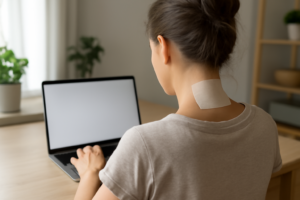
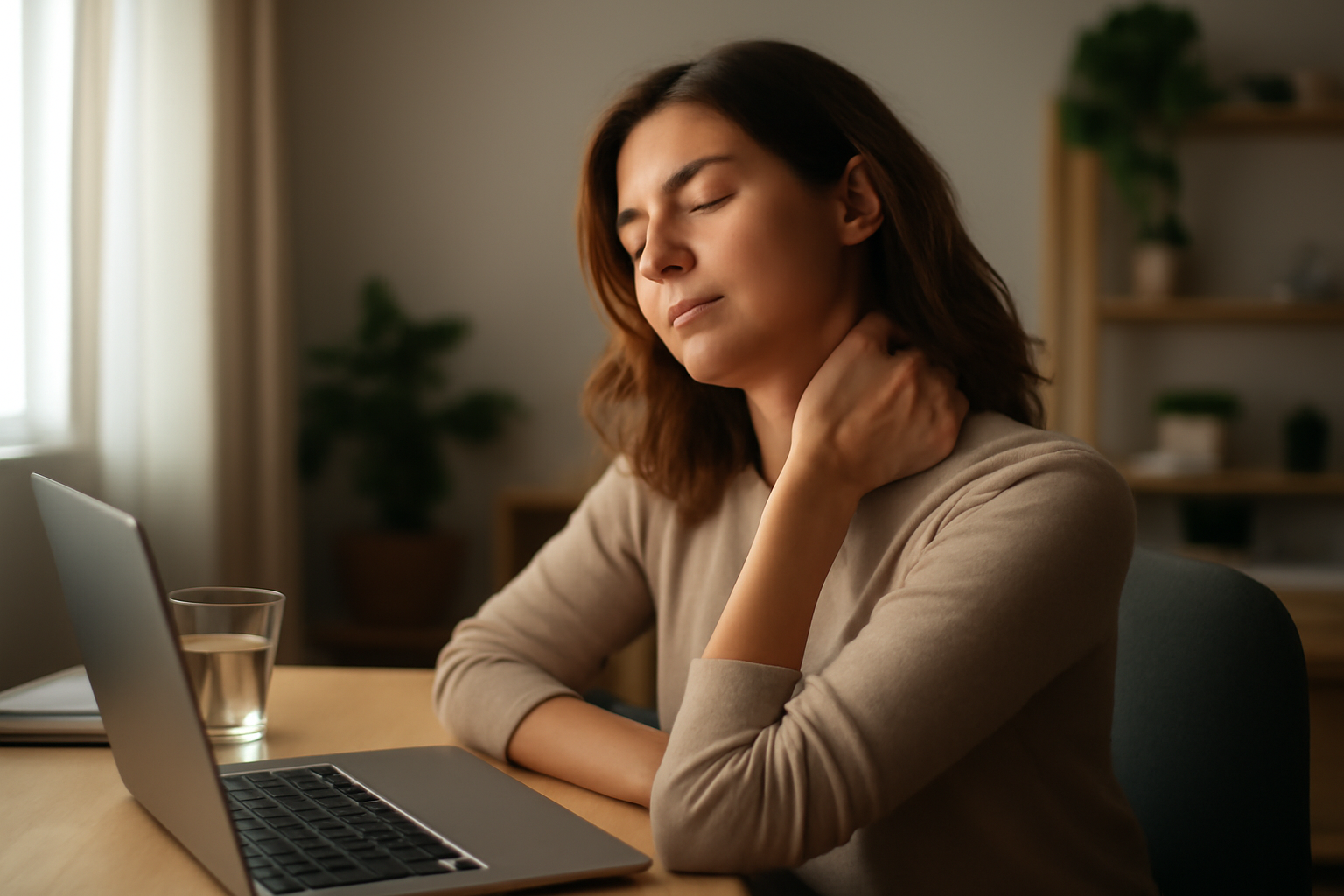

You know that feeling — it’s been a brutal week at work, your to-do list is a mile long, and somewhere between your third stressful meeting and a sleepless night, your neck starts to ache. By Friday, it feels like someone has their hands wrapped around the base of your skull and won’t let go. If that sounds familiar, you’re definitely not alone. The connection between stress and neck pain is something I hear about constantly, and it’s one of those things that most people don’t fully understand until they’re already deep in the cycle of tension, discomfort, and frustration.
Why Stress and Neck Pain Are So Deeply Connected
Here’s what’s actually happening inside your body when stress hits. When your brain perceives a threat — whether it’s a deadline, a difficult conversation, or financial worry — it triggers your fight-or-flight response. Cortisol and adrenaline flood your system, and your muscles instinctively tighten up, especially in the shoulders, upper back, and neck. This was incredibly useful when our ancestors needed to outrun predators. It’s considerably less useful when you’re sitting at a desk for eight hours a day.
The problem is that chronic stress keeps those muscles in a near-constant state of low-grade contraction. Over time, the trapezius, levator scapulae, and suboccipital muscles — all key players in neck movement and stability — develop trigger points, or small knots of tense muscle fiber that restrict blood flow and refer pain outward. Research suggests this sustained muscle guarding is one of the primary drivers of tension-type headaches and cervicogenic neck pain, which is pain that originates in the cervical spine and radiates into the head.
Poor posture makes everything worse. When you’re stressed, you tend to hunch forward, drop your chin, and round your shoulders. That forward head posture adds significant compressive load to the cervical joints and discs — for every inch your head moves forward from neutral, it effectively adds around ten pounds of stress to the structures supporting it. It’s a vicious cycle: stress causes tension, tension causes poor posture, poor posture causes pain, and pain causes more stress.
What You Can Do Right Now to Break the Cycle
The good news is that this cycle is absolutely interruptible. You don’t need to eliminate all stress from your life — that’s not realistic. What you need are reliable tools and habits that prevent your nervous system from staying stuck in overdrive.
Move and Stretch Consistently
Gentle, consistent movement is one of the most evidence-backed ways to reduce both stress and musculoskeletal tension. A few times throughout your day, try these:
- Chin tucks: Gently pull your chin straight back, creating a “double chin.” Hold for five seconds and repeat ten times. This restores cervical alignment and relieves pressure on the suboccipital muscles.
- Shoulder blade squeezes: Pull your shoulder blades together and down, holding for five seconds. This counteracts the forward-rounding posture stress encourages.
- Side neck stretches: Tilt your ear toward your shoulder and hold gently for 20–30 seconds on each side. Many people find this helps release the tight upper trapezius that stress loves to target.
- Diaphragmatic breathing: Slow, deep belly breathing activates your parasympathetic nervous system — the “rest and digest” counterpart to fight-or-flight — and can measurably reduce muscle tension within minutes.
Rethink Your Workspace
If you spend hours at a desk or looking at a screen, small ergonomic adjustments can make a significant difference. Your monitor should be at eye level so your neck stays neutral, your chair should support your lumbar spine, and your keyboard should allow your elbows to sit at roughly 90 degrees. Setting a timer to stand up and reset your posture every 30 to 45 minutes is a simple habit that many people find surprisingly helpful for chronic neck tension.
Products Worth Trying for Stress-Related Neck Pain and Tension Headaches
Beyond lifestyle changes, there are some well-designed products that may help you manage the physical symptoms of stress-related neck pain more comfortably at home. I’ve rounded up a few that I genuinely think are worth considering — both for the neck tension itself and the headaches that often come with it.
The Neck Massager That Actually Targets Stress-Induced Tension
When your neck pain is rooted in muscle tension from stress, a targeted massage device can break the tension cycle faster than waiting for it to release on its own. The Senluyi 6D Neck Massager applies deep kneading pressure to the exact spots where stress settles — the trapezius and neck base — which is where most people feel that vice-grip sensation first.
What works
- 6D massage nodes mimic manual kneading at multiple angles, which research supports as more effective than single-direction vibration for releasing muscle knots and improving blood flow to tense tissue.
- Most people report noticeable relief within 3–5 days of consistent use (10–15 minutes daily), which is realistic enough to stick with unlike solutions that take weeks to show anything.
- It’s portable and hands-free, so you can actually use it during work stress (or after), not just at night like a heating pad — which matters if your neck tension builds throughout the day.
What doesn’t
- This addresses the symptom, not the stress itself — if your underlying tension comes from 12-hour workdays and no breaks, a massager is a band-aid without also fixing the schedule or posture habits.
- The fit is snug and some people find it awkward on smaller or broader necks; it takes a few sessions to find the right positioning, so don’t expect instant comfort on day one.
This won’t cure stress-related neck pain on its own, and you’ll need to keep using it regularly or the tension creeps back in.
About This Article

Written by Michael Torres. Michael Torres has had joint problems his whole life — hypermobile as a kid, chronic sprains and a dislocating shoulder through his twenties, an osteoarthritis diagnosis in his early fifties, and a right knee replacement since. He is not a doctor or a physical therapist and has no clinical training. He writes about what has helped him and what he has watched help the people around him, and says plainly when he has not tried something himself. More about this site.
Scope and limits. Michael has no medical or clinical training — he writes about living with his own joint pain, not about treating anyone else's. Nothing here is medical advice. Talk to a doctor before starting anything new, and get seen promptly for pain that is new, severe, worsening, or comes with swelling, fever, or numbness.
Verify this against a primary source
Specifics change, and your situation may differ from the one described here. These are the authorities worth checking directly:
- NIAMS — arthritis and musculoskeletal research from the NIH
- MedlinePlus — plain-language medical reference from the NIH
- Arthritis Foundation — condition guides and treatment overviews