
You’ve probably been there: standing in a pharmacy aisle or scrolling through Amazon at midnight, knee aching, trying to figure out whether you need a sleeve or a brace — and honestly having no idea what the difference even is. I’ve had people describe this exact moment to me more times than I can count. The knee sleeve vs knee brace difference sounds simple on the surface, but once you’re in pain and overwhelmed by options, it’s anything but. So let me walk you through this the way I’d explain it to a friend.
What Is a Knee Sleeve and What Does It Actually Do?
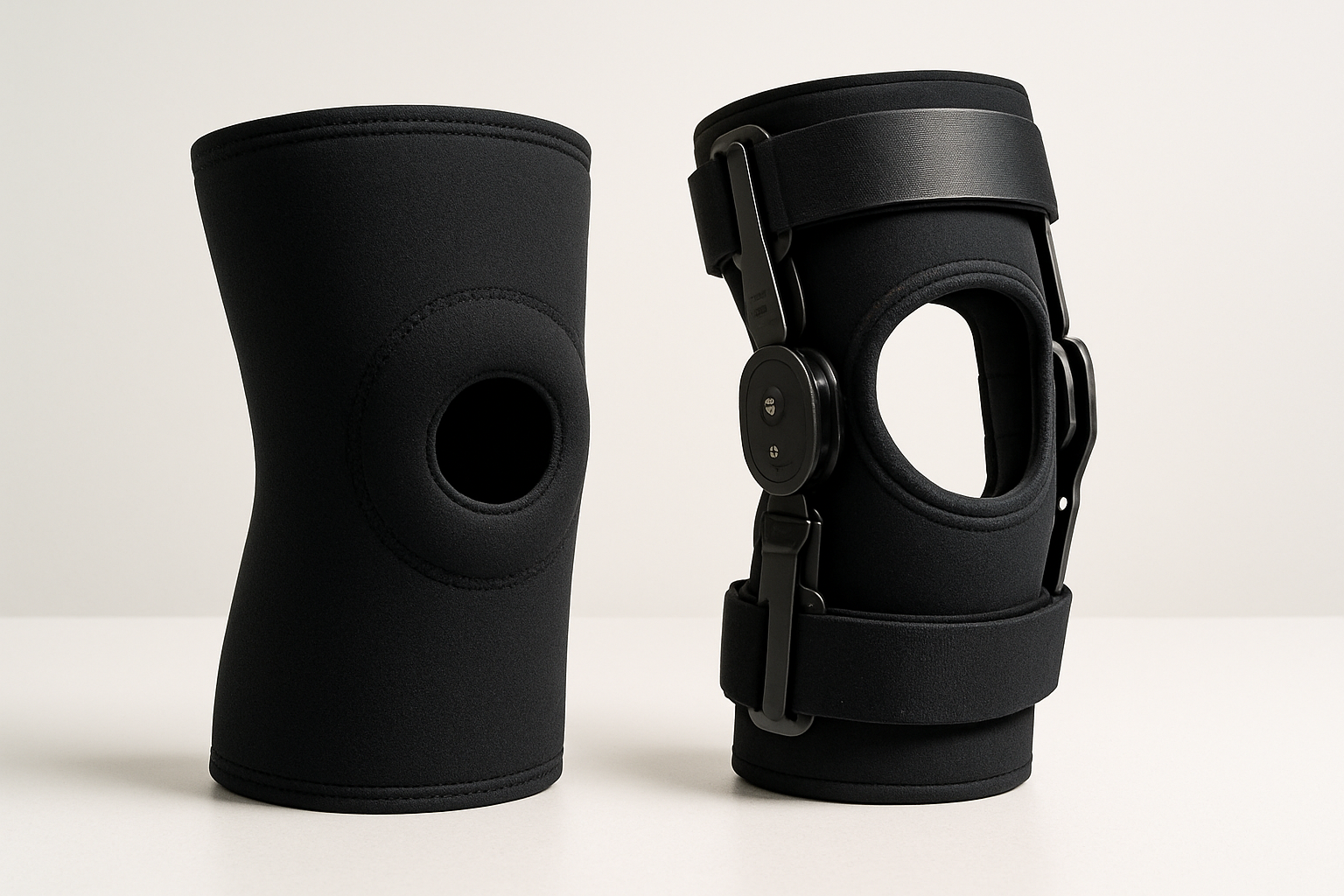
A knee sleeve is exactly what it sounds like — a snug, elastic tube that slides over your knee. It’s typically made from neoprene or a similar compressive material, and it works by applying even pressure around the joint. That compression may help reduce swelling, improve circulation, and give your brain better feedback about where your knee is in space (something we call proprioception). A lot of people are surprised to learn that this sensory feedback alone can make a real difference in how stable a knee feels during movement.
Knee sleeves are generally best suited for people who have mild discomfort, general soreness after activity, or who want preventive support during exercise. Runners, weightlifters, hikers, and people managing mild arthritis often find that a quality sleeve gives them the confidence and comfort they need to stay active. They’re lightweight, easy to put on, and can be worn throughout the day without much hassle.
What Is a Knee Brace and When Do You Need One?
A knee brace takes things a step further. While sleeves rely on compression alone, braces typically include structural elements — hinges, straps, rigid side stabilizers — that physically limit or guide the movement of your knee. This added structure is what makes a brace appropriate for more significant concerns: ligament injuries like ACL or MCL sprains, meniscus tears, post-surgical recovery, or cases where the knee feels genuinely unstable or like it might give out.
Think of a sleeve as a supportive hug and a brace as a protective frame. Both have their place, but using the wrong one for your situation might mean you’re either under-supported when you need real stability, or wearing something bulky and uncomfortable when a simple sleeve would do the job just as well. That’s why understanding the knee sleeve vs knee brace difference really matters for your day-to-day comfort and recovery.
How to Figure Out Which One Is Right for You
Here’s the honest framework I use myself. Ask yourself these questions:
- Does my knee feel unstable or like it might buckle? If yes, lean toward a hinged brace.
- Have I had a diagnosed ligament or meniscus injury? A structured brace is likely what your provider would recommend.
- Am I recovering from knee surgery? A brace is almost always appropriate in early recovery phases.
- Is my pain mild and mostly activity-related? A compression sleeve may be all you need.
- Am I a lifter or athlete looking for performance support during heavy training? A thicker compression sleeve built for that purpose may help protect your joints under load.
Of course, nothing replaces a proper evaluation from your physical therapist or orthopedic provider, especially if you’re dealing with an acute injury or worsening symptoms. But for general guidance, these questions can point you in the right direction.
Knee Compression Sleeve vs Knee Brace: A Quick Test to Tell Them Apart
Part of the confusion is marketing. On retail sites, compression sleeves are routinely labeled as “braces” even though they contain no rigid parts. The practical test is simple: if the device is a flexible, pull-on tube with no hinges or stays, it’s a compression sleeve; if it incorporates hinges, rigid or semi-rigid side uprights, or straps that mechanically limit motion, it’s a brace. That structural difference is the whole knee compression sleeve vs knee brace story — a sleeve compresses the joint and sharpens proprioception, while a brace can physically resist side-to-side stress, hyperextension, and other movements a sleeve simply can’t control. Look past the product label and check the construction directly.
The Main Types of Knee Braces (and Where “Stabilizers” Fit In)
If you’ve compared a knee stabilizer vs a knee brace and wondered whether they’re different devices, here’s the short answer: a stabilizer isn’t a separate product category — it’s a hinged, supportive style of brace. Stabilizer braces use side hinges or rigid stays to actively restrict unwanted movement, whereas a plain sleeve only supports what’s already there. Orthopedic providers, including the American Academy of Orthopaedic Surgeons, group braces into a few functional categories:
- Hinged (stabilizer) braces — side hinges and stabilization bars for ligament injuries, meniscus tears, and genuinely unstable knees.
- Patellar tracking braces — a strap or cutout keeps the kneecap aligned; a targeted option for pain around the front of the knee without the bulk of a full hinged brace.
- Unloader (offloader) braces — shift load away from an arthritic compartment of the knee, useful when arthritis affects mainly one side of the joint.
- Rehabilitative braces — post-surgical braces, usually prescribed by your surgical team, that control range of motion while you heal.
A sensible approach for non-acute knees: start conservative with a compression sleeve, and escalate to a stabilizer-style brace if a few weeks of sleeve wear doesn’t give you enough support. It’s easier to add structure than to scale back.
The Compression Sleeve for Mild Knee Discomfort and Daily Movement
If your knee pain is manageable—a dull ache during certain activities, some swelling after a workout, or general instability without structural damage—a compression sleeve is often the right starting point. It’s the gentler option that actually fits into real life: you can wear it under your pants, sleep in it if you want, and it doesn’t restrict your movement the way a brace does.
What works
- Research supports compression for reducing swelling and proprioceptive feedback—meaning your knee gets better input about where it is in space, which helps stabilize it during movement.
- Most people notice a reduction in post-activity soreness and a modest improvement in swelling within 3–5 days of consistent wear, especially if paired with rest or light movement.
- The McDavid design is durable enough to survive dozens of washes and doesn’t roll down or bunch up the way cheaper sleeves do, which actually matters when you’re trying to stick with wearing it.
What doesn’t
- A sleeve provides zero structural support if you have ligament damage, meniscus tears, or advanced arthritis—compression alone won’t prevent instability during challenging movements.
- It won’t fix the underlying problem; if your knee pain is caused by muscle imbalance, form issues during exercise, or biomechanical problems, a sleeve is a temporary comfort measure, not a solution.
Compression sleeves work best as part of a broader approach—rest, targeted strengthening, and honest assessment of what’s causing the pain in the first place. If you’ve been wearing a sleeve for two weeks with no change, or if your pain is sharp and worsening, that’s your signal to move up to a brace or see someone who can evaluate what’s actually going on.
About This Article

Written by Michael Torres. Michael Torres has had joint problems his whole life — hypermobile as a kid, chronic sprains and a dislocating shoulder through his twenties, an osteoarthritis diagnosis in his early fifties, and a right knee replacement since. He is not a doctor or a physical therapist and has no clinical training. He writes about what has helped him and what he has watched help the people around him, and says plainly when he has not tried something himself. More about this site.
Scope and limits. Michael has no medical or clinical training — he writes about living with his own joint pain, not about treating anyone else's. Nothing here is medical advice. Talk to a doctor before starting anything new, and get seen promptly for pain that is new, severe, worsening, or comes with swelling, fever, or numbness.
Verify this against a primary source
Specifics change, and your situation may differ from the one described here. These are the authorities worth checking directly:
- NIAMS — arthritis and musculoskeletal research from the NIH
- MedlinePlus — plain-language medical reference from the NIH
- Arthritis Foundation — condition guides and treatment overviews