
You know that moment when you stand up from your desk after a long afternoon and your knee just… protests? Maybe it’s a dull ache, a little stiffness, or that unsettling feeling that your joint isn’t quite as stable as it used to be. I hear this constantly from people I work with — and honestly, it’s one of the main reasons so many folks start searching for the best knee brace for support. Whether you’re managing an old injury, dealing with early arthritis, or just trying to stay active without paying for it later, the right knee brace can make a genuine difference in your daily comfort and confidence.
Why People Turn to Knee Braces (And Whether They Actually Help)
Let me be upfront with you: a knee brace is not a cure. It won’t rebuild cartilage or fix a torn ligament on its own. What a good brace can do — and what research suggests it does reasonably well — is provide external stability, reduce swelling through compression, and give your nervous system better feedback about where your knee is in space. That last part, called proprioception, is actually a big deal. Many people find that simply having that physical cue around their knee helps them move more confidently and with less compensatory strain on their hips and lower back.
The tricky part is that “knee brace” is a huge category. There are compression sleeves, hinged braces, wraparound styles, patella stabilizers, and unloader braces for arthritis. Picking the wrong type is like buying the wrong shoes — it won’t necessarily hurt you, but it probably won’t help you either.
How to Choose the Best Knee Brace for Support Based on Your Needs
Before you buy anything, ask yourself one honest question: what is actually going on with my knee? Your answer will point you toward the right category.
For Ligament or Meniscus Issues
If you’ve had an ACL, MCL, or meniscus injury — even a partial one from years ago — you likely need something with structural support. That means a hinged knee brace with metal or rigid polymer side stabilizers. These are designed to limit side-to-side movement and protect the joint during weight-bearing activity. They tend to be bulkier than sleeves, but many people find that trade-off absolutely worth it.
For Arthritis or General Aching
For osteoarthritis or that general “my knee just aches at the end of the day” feeling, a compression sleeve may be all you need. The gentle pressure can help manage swelling and may reduce pain perception. Research suggests compression garments can improve comfort during activity for people with mild to moderate knee arthritis — though results vary from person to person.
For Running or Active Use
If you’re trying to stay active — running, hiking, gym work — look for something with a secure fit that won’t slide down mid-activity. A combination of compression and patella stabilization tends to work well here. Breathability matters too, especially if you’re wearing it for extended periods.
Key Features Worth Paying Attention To
- Hinges: Metal side stabilizers add meaningful structural support — worth it if you have joint instability
- Patella opening or stabilizer ring: Helps with kneecap tracking and may reduce anterior knee pain
- Adjustable straps: Allow you to customize compression and keep the brace from migrating
- Sizing: Always measure your thigh circumference, not just your pants size — brace sizing varies significantly by brand
- Material: Neoprene retains heat (good for stiffness), while spandex blends are cooler for longer wear
The Hinged Brace That Actually Stabilizes Without Feeling Like a Cast
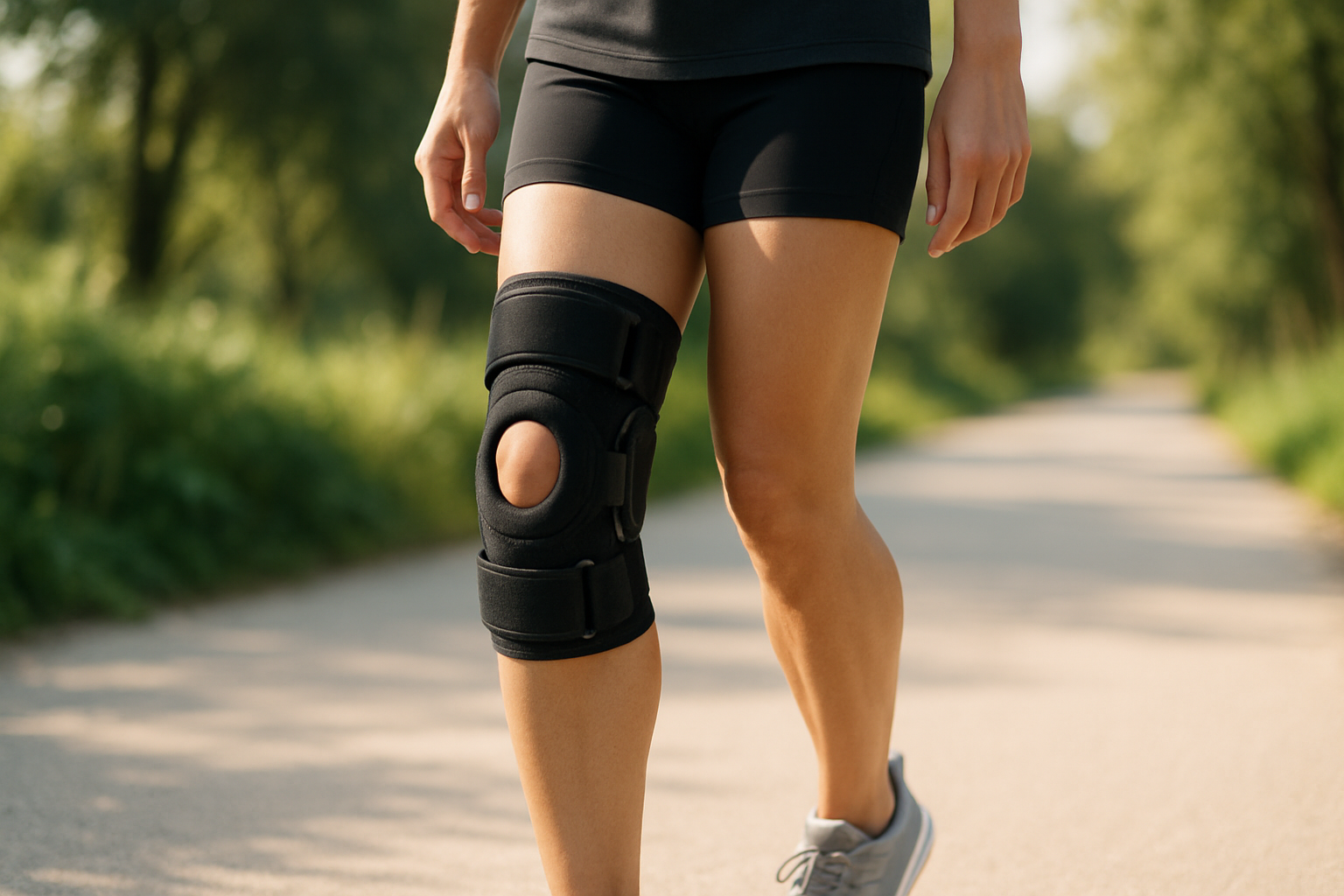
If your knee feels unstable or wobbly during everyday movement — especially going up and down stairs or standing after sitting — a hinged brace gives you the kind of medial-lateral support that compression sleeves just can’t match. The Bodyprox Hinged Knee Brace is built specifically for this: it uses dual hinges to limit side-to-side motion while staying breathable enough that you’ll actually wear it on long days, not just when you remember.
What works
- The dual hinges provide genuine lateral stability without locking your knee completely — you get support where it matters (side-to-side movement) while keeping forward-backward mobility intact.
- Neoprene construction holds compression consistently through the day; most people report the knee feels noticeably “held” after 2-3 days of consistent wear, which translates to less pain during activities that normally aggravate it.
- The wraparound design with adjustable straps actually stays in place without hiking up or rotating — a common complaint with cheaper hinged braces that slip during normal activity.
What doesn’t
- This is not a fix for serious structural damage or ACL issues — it’s a support tool for mild-to-moderate instability and post-injury management, not a substitute for physical therapy or medical evaluation if you have genuine ligament damage.
- The neoprene can feel warm and bulky under fitted pants or shorts, and it does require hand-washing and air-drying to last — this isn’t a grab-and-go solution if you’re expecting it to feel like nothing and need zero maintenance.
A brace stabilizes your knee while you move, but it doesn’t address the weakness or movement patterns that got you here in the first place — you’ll get the most from this if you’re also doing some basic strength work.
About This Article

Written by Michael Torres. Michael Torres has had joint problems his whole life — hypermobile as a kid, chronic sprains and a dislocating shoulder through his twenties, an osteoarthritis diagnosis in his early fifties, and a right knee replacement since. He is not a doctor or a physical therapist and has no clinical training. He writes about what has helped him and what he has watched help the people around him, and says plainly when he has not tried something himself. More about this site.
Scope and limits. Michael has no medical or clinical training — he writes about living with his own joint pain, not about treating anyone else's. Nothing here is medical advice. Talk to a doctor before starting anything new, and get seen promptly for pain that is new, severe, worsening, or comes with swelling, fever, or numbness.
Verify this against a primary source
Specifics change, and your situation may differ from the one described here. These are the authorities worth checking directly:
- NIAMS — arthritis and musculoskeletal research from the NIH
- MedlinePlus — plain-language medical reference from the NIH
- Arthritis Foundation — condition guides and treatment overviews