
You know that moment — you bend down to grab something off the floor, or you stand up after sitting at your desk for hours, and suddenly there it is: that sharp, aching, won’t-let-you-forget-it sensation in your lower back. If that sounds painfully familiar, you’re not alone. Lower back joint pain is one of the most common complaints I hear, and it affects people of every age, fitness level, and lifestyle. Whether it comes on suddenly or builds up slowly over time, it has a way of taking over your day — and your mood. The good news? Understanding what’s actually happening in your back is the first step toward feeling better.
What’s Actually Going On With Lower Back Joint Pain?
Your lower back — the lumbar region — is a complex structure made up of vertebrae, intervertebral discs, muscles, ligaments, and the facet joints that connect each vertebra together. When any part of that system is stressed, irritated, or injured, you feel it fast. The facet joints in particular are true synovial joints, just like your knees or hips, which means they can develop inflammation, arthritis, and wear-and-tear just as easily.
Some of the most common causes of lower back pain include:
- Muscle strain or ligament sprain — often from lifting, twisting, or sudden awkward movement
- Herniated or bulging discs — when the soft cushion between vertebrae pushes outward and presses on nearby nerves
- Facet joint degeneration — gradual breakdown of the cartilage in the small joints that run along the spine
- Sciatica — nerve pain that originates in the lower back and radiates down through the hips and legs
- Poor posture and prolonged sitting — one of the biggest contributors in today’s desk-heavy world
- Scoliosis or spinal imbalances — structural issues that place uneven stress on the joints and soft tissue
It’s worth noting that the same pain can have very different roots in different people. That’s why a one-size-fits-all approach rarely works — but there are evidence-informed strategies that help most people find meaningful relief.
Practical Relief Tips That Actually Make a Difference
Move — Even When It Hurts (Gently)
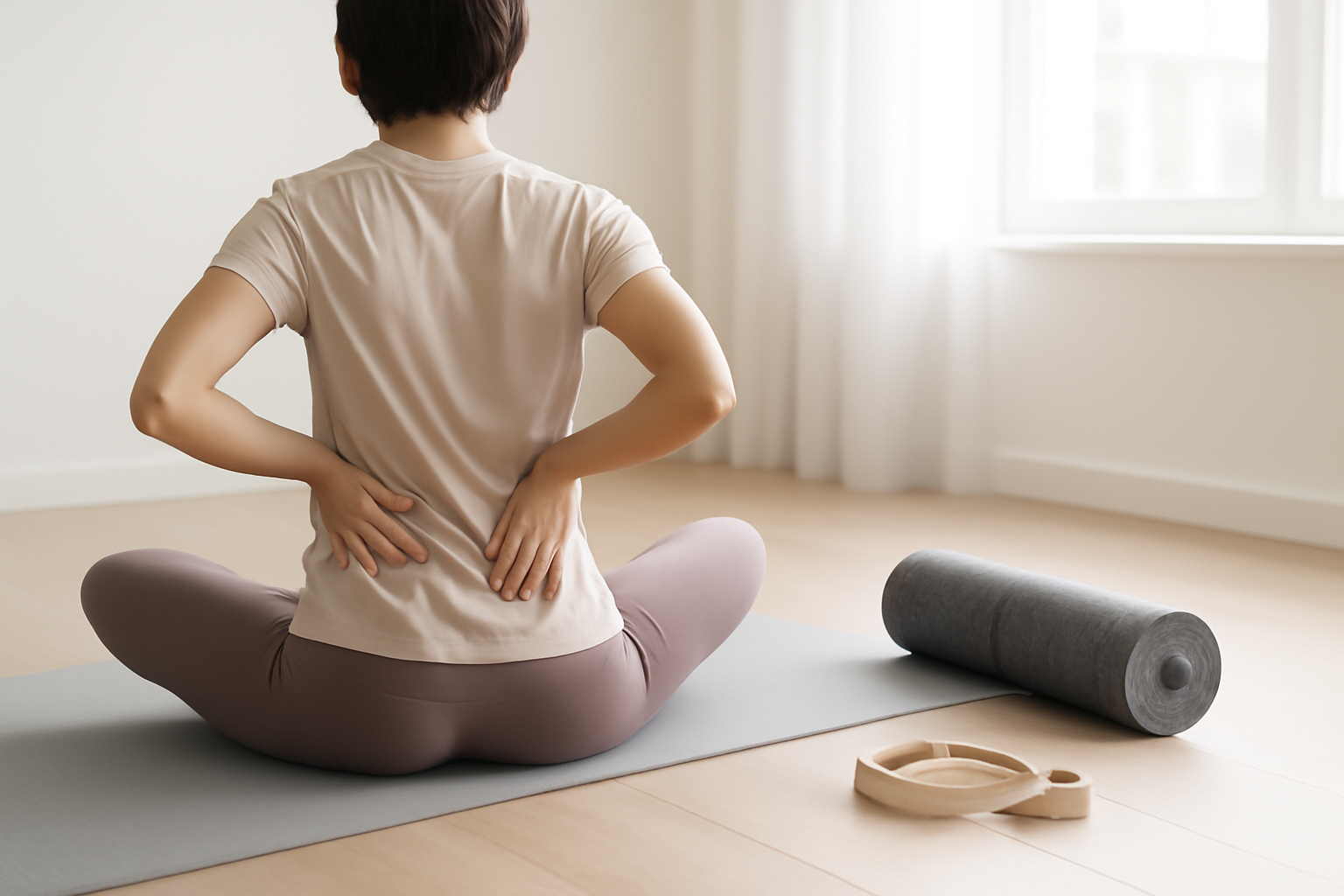
I know the instinct is to lie down and wait it out. But research suggests that staying gently active is one of the most effective things you can do for most types of back pain. Complete bed rest can actually slow recovery. Instead, try short walks, gentle stretching, or simple yoga-inspired movements like cat-cow or child’s pose. Movement keeps blood flowing to the joints and discs, reduces stiffness, and supports the muscles that hold your spine in place.
Strengthen Your Core — Not Just Your Back
Your core is far more than your abs. It includes the deep stabilizing muscles around your spine, hips, and pelvis. When these muscles are weak or uncoordinated, your lumbar joints take on more load than they should. Many people find significant improvement with consistent low-impact exercises like bird-dogs, dead bugs, and glute bridges. Even 10 minutes a day, done consistently, may help reduce recurring episodes.
Fix Your Sitting Setup
If you’re spending six or more hours a day sitting, your chair setup matters enormously. Your lower back should be supported in its natural curve, your feet should rest flat on the floor, and your screen should be at eye level. Small changes here can reduce the cumulative stress on your lumbar facet joints and discs — especially for people whose pain is worse in the afternoons.
Heat, Ice, and Timing
For acute pain (first 24–72 hours), ice may help reduce inflammation and numb sharp discomfort. After that, heat tends to work better for most people — relaxing tight muscles and increasing circulation to the area. Alternating between the two is something many people find helpful for longer-term flare-ups.
Products Worth Trying for Lower Back Joint Pain Support
There are a handful of tools that genuinely support your back between PT sessions, at work, or during everyday movement. Here are the ones I feel comfortable recommending — I’ve seen real people get real relief using these.
The Back Brace That Actually Provides Stabilization Without Feeling Like a Straitjacket
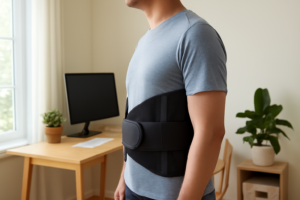
If your lower back pain flares up during specific movements—bending, lifting, or long sitting sessions—a quality back brace can reduce unwanted motion and remind your core to engage before you aggravate the injury further. The difference between a brace that works and one that collects dust is compression that feels supportive without cutting off circulation or feeling like a costume.
What works
- Dual compression straps provide real stability across the lumbar spine without the bulk of older medical-grade braces—most people notice the difference immediately when they move in ways that usually trigger pain.
- Memory foam lumbar support conforms to your natural spine curve rather than forcing an artificial posture, which means you can actually wear it for hours without lower back fatigue from fighting the brace itself.
- Breathable neoprene and mesh panels keep sweat buildup minimal during activity or all-day wear—a small detail that makes the difference between “I’ll wear this” and “I’ll use it as a doorstop.”
What doesn’t
- A brace is a management tool, not a fix—if your lower back pain comes from weak core muscles, poor posture, or structural issues, the brace will help you move without pain while you address those underlying causes, but it won’t solve them on its own.
- Sizing matters, and getting it wrong means it either slips during movement or restricts breathing; the fit between waist sizes is tighter than you’d expect, so measure twice and check the size chart before ordering.
A back brace works best when you use it as part of a bigger strategy—movement, strengthening, posture awareness—not as a replacement for addressing why the pain showed up in the first place. FEATOL Back Brace Support Belt
About This Article

Written by Michael Torres. Michael Torres has had joint problems his whole life — hypermobile as a kid, chronic sprains and a dislocating shoulder through his twenties, an osteoarthritis diagnosis in his early fifties, and a right knee replacement since. He is not a doctor or a physical therapist and has no clinical training. He writes about what has helped him and what he has watched help the people around him, and says plainly when he has not tried something himself. More about this site.
Scope and limits. Michael has no medical or clinical training — he writes about living with his own joint pain, not about treating anyone else's. Nothing here is medical advice. Talk to a doctor before starting anything new, and get seen promptly for pain that is new, severe, worsening, or comes with swelling, fever, or numbness.
Verify this against a primary source
Specifics change, and your situation may differ from the one described here. These are the authorities worth checking directly:
- NIAMS — arthritis and musculoskeletal research from the NIH
- MedlinePlus — plain-language medical reference from the NIH
- Arthritis Foundation — condition guides and treatment overviews