

You reach down to pick up something off the floor — maybe a dropped remote, a grandchild’s toy, or just your morning newspaper — and that familiar ache grips your lower back before you’ve even straightened up again. If that scenario sounds painfully familiar, you’re not alone. Back pain relief for seniors is one of the most searched health topics among adults over 60, and honestly, it makes complete sense. The spine and hips take a lifetime of wear, and by the time we’re in our 60s and 70s, even everyday movements can trigger discomfort that just wasn’t there a decade ago. I’ve worked alongside physical therapists and talked with dozens of older adults navigating this exact challenge — and the good news is, there’s quite a bit you can actually do about it.
Why Back and Hip Pain Gets Worse With Age
Before we talk about solutions, it helps to understand what’s actually going on. As we age, the discs between our vertebrae gradually lose water content and become less cushiony. The cartilage in our hip joints wears down. Muscles that support the spine — especially the core and glutes — tend to weaken if we’re not actively working to maintain them. Ligaments tighten. Posture shifts. It’s a cascade, not a single cause.
Common culprits behind senior back and hip pain include:
- Osteoarthritis — the gradual breakdown of joint cartilage, especially in the lumbar spine and hips
- Spinal stenosis — a narrowing of the spinal canal that can cause radiating leg pain and stiffness
- Herniated or degenerating discs — which may press on nearby nerves and cause sciatica-like symptoms
- Muscle weakness and imbalance — often the unsung driver of chronic lower back aching
- Poor sitting posture — especially for those who spend long hours in chairs without adequate lumbar support
None of this is inevitable doom — it’s biology you can work with. The strategies below are ones that many older adults have found genuinely helpful, and research increasingly supports a multi-pronged approach rather than any single fix.
Practical Tips for Managing Hip and Spine Pain Day-to-Day
1. Keep Moving — But Move Smarter
It’s tempting to rest when your back hurts, and while some rest is appropriate acutely, prolonged inactivity is one of the worst things for chronic back pain. Research suggests that gentle, consistent movement keeps spinal discs nourished, improves circulation to muscles, and helps maintain the flexibility that protects joints. Walking, swimming, tai chi, and water aerobics are all excellent low-impact options that many seniors find manageable and enjoyable. Even 15–20 minutes of walking daily may help reduce stiffness and discomfort over time.
2. Strengthen Your Core and Glutes
Your lower back doesn’t work in isolation. The muscles of your core — including the deep abdominals and back extensors — and your glutes act as a support system for the spine. When these muscles are weak, the vertebrae and discs pick up extra load. Simple exercises like pelvic tilts, seated leg raises, bridge exercises, and gentle bird-dogs can be done without any equipment and may significantly reduce the frequency of flare-ups. A physical therapist can tailor a program specifically to your needs, and many Medicare plans cover PT visits — worth checking into.
3. Pay Attention to Your Sitting Setup
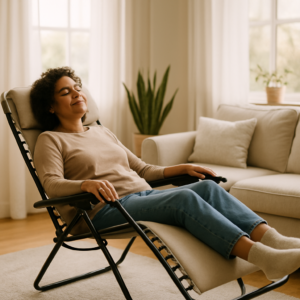
Many seniors spend a significant portion of the day seated — whether at a desk, watching TV, or riding in a car. Sitting without proper support places enormous pressure on the lumbar discs and hip joints. The simple fix? Better cushioning and lumbar support. This is one area where a modest investment can make a surprisingly meaningful difference in daily comfort.
4. Use Heat and Cold Strategically
Heat helps relax tight muscles and increase blood flow — many people find a warm heating pad applied to the lower back for 15–20 minutes particularly soothing during stiffness-heavy mornings. Cold packs, on the other hand, may help reduce inflammation after activity or during a flare-up. Alternating between the two is a technique many physical therapists recommend. Just be sure to use a cloth barrier between skin and the pack to avoid burns or frostbite.
Back Pain Relief for Seniors: Products Worth Trying
I want to be straightforward here — no product is a cure, and you should always talk to your doctor or physical therapist before adding new supports to your routine. That said, the right tools used consistently can make daily life noticeably more comfortable. Here’s what I’d point a friend toward:
Why a Back Brace Actually Works for Lower Spine Support—When Used Right
A back brace won’t fix the underlying issue, but it does something genuinely useful: it stabilizes your spine during those vulnerable moments—bending, lifting, sitting for long stretches—while your core and posture catch up with the work you’re doing in physical therapy or daily movement. For seniors with chronic lower back pain or mild instability, this means fewer flare-ups and more confidence reaching for that remote.
What works
- Compression and support reduce compensatory strain—your body stops recruiting muscles incorrectly to protect a sore disc or joint, which breaks the pain-tension cycle most people get stuck in.
- The tactile reminder matters: a quality brace keeps you aware of your posture and spinal alignment throughout the day, which naturally corrects slouching and forward flexion that aggravates lower back pain.
- Research supports moderate compression for nonspecific lower back pain and mild instability; most users report noticeable relief within 3–5 days of consistent wear, especially during activities that typically trigger pain.
What doesn’t
- A brace is not a substitute for movement and strengthening—relying on it without addressing core weakness or mobility loss will eventually limit your independence, not improve it.
- It takes trial-and-error to find the right fit and compression level; too loose and it’s useless, too tight and it restricts breathing or creates skin irritation, especially for seniors with sensitive skin or larger waistlines.
A back brace is a tool that works best alongside stretching, core work, and good posture habits—not instead of them. FEATOL Back Brace Support Belt
About This Article

Written by Michael Torres. Michael Torres has had joint problems his whole life — hypermobile as a kid, chronic sprains and a dislocating shoulder through his twenties, an osteoarthritis diagnosis in his early fifties, and a right knee replacement since. He is not a doctor or a physical therapist and has no clinical training. He writes about what has helped him and what he has watched help the people around him, and says plainly when he has not tried something himself. More about this site.
Scope and limits. Michael has no medical or clinical training — he writes about living with his own joint pain, not about treating anyone else's. Nothing here is medical advice. Talk to a doctor before starting anything new, and get seen promptly for pain that is new, severe, worsening, or comes with swelling, fever, or numbness.
Verify this against a primary source
Specifics change, and your situation may differ from the one described here. These are the authorities worth checking directly:
- NIAMS — arthritis and musculoskeletal research from the NIH
- MedlinePlus — plain-language medical reference from the NIH
- Arthritis Foundation — condition guides and treatment overviews