
You wake up in the morning, swing your legs over the side of the bed, and the moment your feet hit the floor — there it is. That familiar stiffness, that dull ache in your knees or hips that takes a good ten minutes to loosen up. If that sounds like your mornings, you’re absolutely not alone. Joint discomfort affects millions of people, and the frustrating part is that it can make you want to move less, which actually makes things worse over time. The good news? There are genuinely effective strategies for natural joint pain relief that don’t involve heavy medications or giving up the activities you love. Let’s talk about what actually works — especially when it comes to low-impact exercise and a few supportive tools worth keeping in your corner.
Why Movement Is Still Your Best Medicine
I know it feels counterintuitive. When your joints hurt, the last thing you want to do is move them. But here’s what I always tell people: joints thrive on motion. Cartilage doesn’t have its own blood supply — it gets nutrients through the movement of synovial fluid, the natural lubricant inside your joints. When you stop moving, that fluid stagnates, the cartilage gets less nourishment, and the surrounding muscles weaken, putting even more stress on the joint itself.
Research consistently suggests that regular, gentle movement can reduce joint stiffness, improve flexibility, and even help manage chronic discomfort over time. The key word there is gentle. You don’t need to run marathons. You need consistent, low-impact activity that keeps your joints mobile without adding unnecessary stress.
The Best Low-Impact Exercises for Joint Health
Here are the movement types I recommend most often for people dealing with joint discomfort:
- Walking: Simple, accessible, and surprisingly effective. Even 20–30 minutes of brisk walking most days may help reduce stiffness and support joint function. Start flat — avoid hills until your joints feel stronger.
- Swimming or water aerobics: Water buoyancy dramatically reduces the load on your joints while still providing resistance for muscle strengthening. Many people with knee or hip discomfort find aquatic exercise a game-changer.
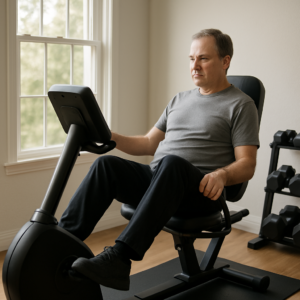
- Cycling (stationary or outdoor): Cycling keeps your knees moving through a smooth, controlled range of motion without the impact of running. Keep your seat height adjusted properly — a seat that’s too low puts extra strain on the knee joint.
- Yoga and tai chi: Both practices emphasize slow, mindful movement, flexibility, and balance. Research suggests they may help reduce joint pain and improve quality of life, particularly for people with arthritis.
- Resistance band exercises: Strengthening the muscles around a joint — especially the quadriceps around the knee and the rotator cuff around the shoulder — reduces the mechanical load on the joint itself. Bands are low-cost, easy to use at home, and highly effective.
A good rule of thumb: if an activity causes sharp pain during movement, stop. Mild soreness after exercise that fades within 24 hours is generally okay. Pain that lingers or worsens is your body asking you to dial it back.
Natural Joint Pain Relief: What Actually Helps Between Workouts
Exercise alone is powerful, but recovery matters just as much. Between sessions, there are several non-pharmaceutical tools and approaches many people find genuinely helpful for managing joint discomfort.
Using TENS Therapy to Manage Morning Stiffness Without Medication
If you’re waiting for movement to loosen things up each morning, a TENS unit can help reduce that initial joint pain while you’re still in bed or starting your day — giving you a real shot at getting moving sooner rather than later. It’s not a replacement for exercise, but it can lower the pain barrier enough to actually make low-impact movement feel doable.
What works
- TENS units send mild electrical pulses that interrupt pain signals to the brain — research supports this for acute and chronic joint pain, and most users feel noticeable relief within 15–20 minutes of application.
- The TENS 7000 is straightforward to use and affordable enough that you’re not betting your mortgage on it; the simple interface means you’re actually more likely to use it consistently rather than abandoning it after two weeks.
- Unlike topical creams or supplements, TENS works immediately and doesn’t interact with medications — you can use it alongside exercise, stretching, or other pain management without worrying about contraindications.
What doesn’t
- Pain relief is temporary — once you take the pads off, the benefit fades within an hour or so, which means it’s a tool for getting you moving, not a long-term fix for the underlying joint issue.
- It won’t help if you have a pacemaker, and some people don’t respond well to electrical stimulation at all (roughly 15–20% of users report minimal or no relief); you’ll know within one or two sessions if it’s for you.
TENS is a helpful short-term pain reliever, not a substitute for actually strengthening and moving your joints — but if morning stiffness is keeping you glued to the bed, it can be the nudge you need to get started. TENS 7000 Digital TENS Unit
About This Article

Written by Michael Torres. Michael Torres has had joint problems his whole life — hypermobile as a kid, chronic sprains and a dislocating shoulder through his twenties, an osteoarthritis diagnosis in his early fifties, and a right knee replacement since. He is not a doctor or a physical therapist and has no clinical training. He writes about what has helped him and what he has watched help the people around him, and says plainly when he has not tried something himself. More about this site.
Scope and limits. Michael has no medical or clinical training — he writes about living with his own joint pain, not about treating anyone else's. Nothing here is medical advice. Talk to a doctor before starting anything new, and get seen promptly for pain that is new, severe, worsening, or comes with swelling, fever, or numbness.
Verify this against a primary source
Specifics change, and your situation may differ from the one described here. These are the authorities worth checking directly:
- NIAMS — arthritis and musculoskeletal research from the NIH
- MedlinePlus — plain-language medical reference from the NIH
- Arthritis Foundation — condition guides and treatment overviews