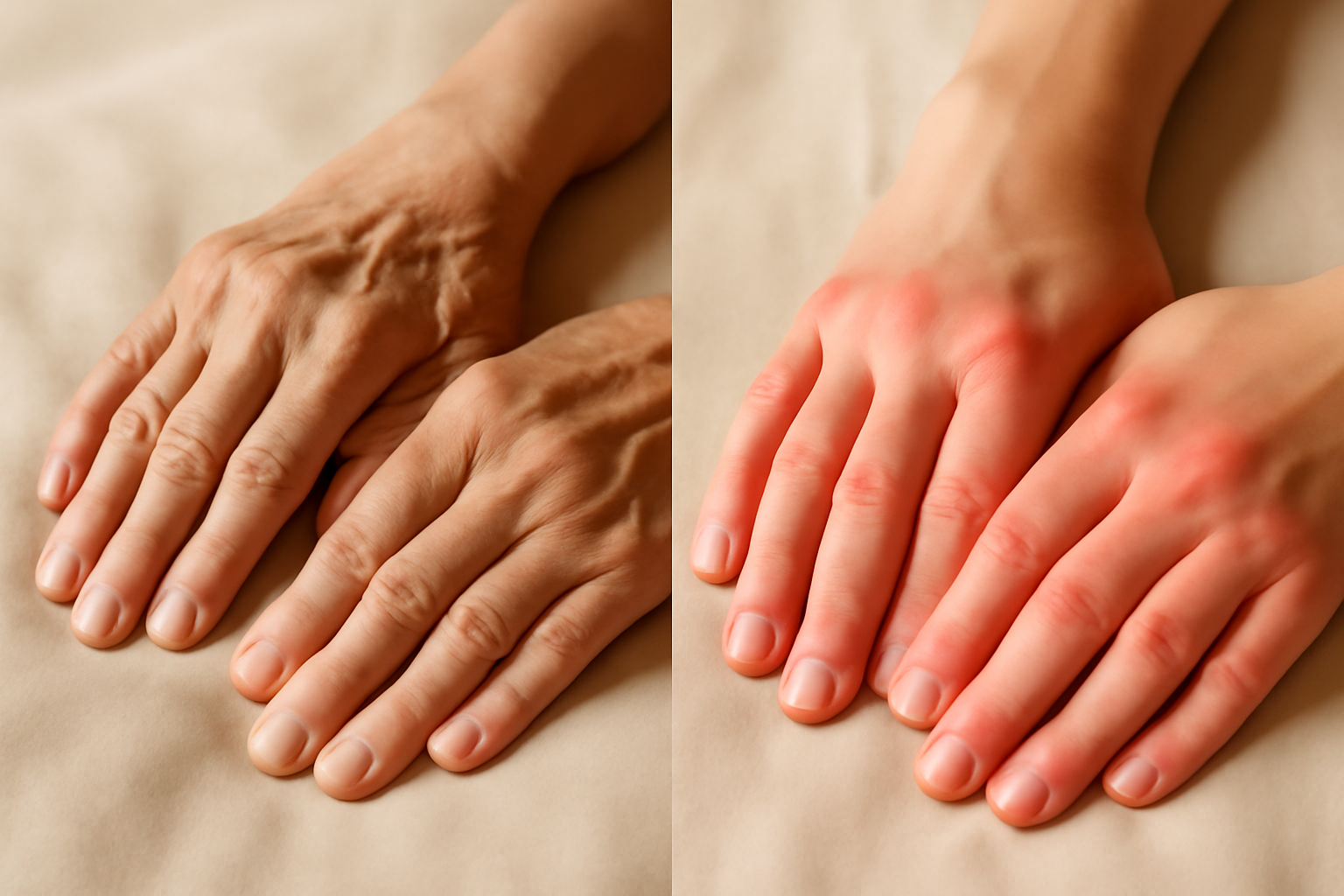

You wake up one morning and your hands feel stiff and achy. Maybe it takes a few minutes to make a fist, or your knuckles look a little swollen. You Google your symptoms and suddenly you’re reading about two very different conditions that somehow sound similar: osteoarthritis and rheumatoid arthritis. If you’ve ever found yourself confused about osteoarthritis vs rheumatoid arthritis, you are absolutely not alone — and honestly, the distinction matters more than most people realize. Getting clarity on which condition you may be dealing with can completely change how you approach relief, movement, and daily life.
What Is Osteoarthritis and How Does It Feel?
Osteoarthritis (OA) is the most common form of arthritis, and I like to think of it as a “wear and tear” story. Over time — through years of movement, repetitive activity, old injuries, or simply aging — the cartilage that cushions your joints begins to break down. When that cushioning wears thin, bone starts rubbing closer to bone, and that’s when things start to hurt.
OA tends to develop gradually. You might notice a dull ache in your knees after a long walk, or stiffness in your fingers that’s worst first thing in the morning but loosens up after 20–30 minutes of moving around. The joints most commonly affected include the knees, hips, lower back, neck, and the base of the thumb — that last one surprises a lot of people.
Risk factors for osteoarthritis include older age, previous joint injuries, excess body weight, and certain repetitive occupational movements. It’s not considered an autoimmune disease — it’s a mechanical breakdown, not an immune system attack.
What Is Rheumatoid Arthritis and Why Is It Different?
Rheumatoid arthritis (RA) is a fundamentally different beast. It’s an autoimmune disease, which means your immune system mistakenly attacks the lining of your own joints — a tissue called the synovium. This causes inflammation, swelling, pain, and over time, can lead to joint damage if not managed properly.
One of the hallmark signs of RA that distinguishes it from OA is prolonged morning stiffness — we’re talking an hour or more, not just the first 20 minutes of your day. RA also tends to be symmetrical, meaning if your left wrist is affected, your right wrist likely is too. It commonly targets the small joints of the hands, wrists, and feet first.
RA can also cause systemic symptoms — fatigue, low-grade fever, and a general feeling of being unwell — because it’s an inflammatory condition affecting the whole body, not just the joints. It can develop at any age, including in younger adults, and it affects women more often than men.
Osteoarthritis vs Rheumatoid Arthritis: Side-by-Side Breakdown
Sometimes it helps to just see the differences laid out clearly. Here’s a quick comparison to keep in mind:
- Cause: OA is mechanical (cartilage breakdown); RA is autoimmune (immune system attacks joints)
- Morning stiffness: OA stiffness typically eases within 30 minutes; RA stiffness often lasts an hour or longer
- Joint pattern: OA is often asymmetrical; RA is typically symmetrical
- Age of onset: OA is more common after 50; RA can occur at any age
- Systemic symptoms: OA is localized to joints; RA may include fatigue, fever, and body-wide inflammation
- Swelling appearance: OA swelling tends to feel bony and hard; RA swelling is often soft and warm to the touch
If any of these signs sound familiar, please bring them up with your doctor. Proper diagnosis — which may include blood tests, imaging, and a physical exam — is the only way to know for certain what you’re dealing with.
Products Worth Trying for Hand and Joint Comfort
Whether you’re managing OA or RA, your hands are often where daily discomfort hits hardest — typing, cooking, opening jars, even just holding a coffee mug. While these products are not treatments and won’t reverse either condition, many people find relief with compression and supportive tools as part of their daily routine.
Managing Hand Stiffness and Swelling: Why Compression Gloves Matter for Both Types
Whether you’re dealing with OA or RA, morning hand stiffness and swelling are real problems that can make your first hour of the day miserable. Compression gloves won’t fix the underlying condition, but they can actually reduce swelling, improve mobility, and let you function while you’re working on the bigger picture.
What works
- Gentle compression reduces fluid buildup in the hands and fingers — most people notice less puffiness and easier range of motion within 3-5 days of consistent wear, especially first thing in the morning.
- Copper-infused fabric adds mild anti-inflammatory properties and warmth that many people find soothing; the research on copper is modest, but the sensory benefit of warm, supported hands is real and shouldn’t be underestimated.
- They’re actually wearable throughout the day (unlike bulky braces), so you can keep your hands supported while typing, cooking, or moving around — compliance matters more than a perfect product worn occasionally.
What doesn’t
- They won’t stop the progression of either OA or RA — if your condition is actively getting worse, you need medical intervention, not just gloves.
- If your swelling is severe (especially with RA flares), compression alone won’t be enough; these work best as a supporting tool alongside medication or other management strategies, not as a standalone fix.
Compression gloves are a tool, not a cure — and you’ll get the most benefit if you’re also addressing the root cause with your doctor. Copper Arthritis Gloves
About This Article

Written by Michael Torres. Michael Torres has had joint problems his whole life — hypermobile as a kid, chronic sprains and a dislocating shoulder through his twenties, an osteoarthritis diagnosis in his early fifties, and a right knee replacement since. He is not a doctor or a physical therapist and has no clinical training. He writes about what has helped him and what he has watched help the people around him, and says plainly when he has not tried something himself. More about this site.
Scope and limits. Michael has no medical or clinical training — he writes about living with his own joint pain, not about treating anyone else's. Nothing here is medical advice. Talk to a doctor before starting anything new, and get seen promptly for pain that is new, severe, worsening, or comes with swelling, fever, or numbness.
Verify this against a primary source
Specifics change, and your situation may differ from the one described here. These are the authorities worth checking directly:
- NIAMS — arthritis and musculoskeletal research from the NIH
- MedlinePlus — plain-language medical reference from the NIH
- Arthritis Foundation — condition guides and treatment overviews