

You bent down to pick something up off the floor — maybe it was your kid’s toy, maybe it was a bag of groceries — and suddenly there it was: a sharp, electric jolt shooting through your lower back and maybe even down your leg. Sound familiar? If so, you may be dealing with a pinched nerve in back muscles or surrounding spinal structures, and trust me, you’re not alone. This is one of the most common complaints I hear from people managing back and hip joint pain, and the good news is that understanding what’s happening is the first step toward real relief.
What Actually Happens When You Have a Pinched Nerve in Back?
Let’s break this down in plain language. A pinched nerve — medically known as nerve compression or radiculopathy — happens when surrounding tissues like bones, cartilage, muscles, or tendons apply too much pressure to a nerve. In your back, this most commonly occurs in the lumbar spine (your lower back), where nerves branch out from the spinal cord and travel through your hips, buttocks, and legs.
The most frequent culprits behind that compression include herniated discs, bone spurs from arthritis, spinal stenosis (narrowing of the spinal canal), and even muscle tightness that builds up over time from poor posture or repetitive movement. When the nerve gets squeezed, it sends distress signals — and those signals feel anything but subtle.
Signs You Might Be Dealing With Nerve Compression
Not all back pain feels the same, and nerve-related pain has some pretty distinctive characteristics. Here’s what many people with a compressed lumbar nerve describe:
- Sharp, shooting, or burning pain that radiates from the lower back down through the buttock and leg (this pattern is often called sciatica when the sciatic nerve is involved)
- Tingling or “pins and needles” sensations in the leg, foot, or toes
- Numbness in the affected area — sometimes it feels like part of your leg has “fallen asleep”
- Muscle weakness in the leg or foot, especially when climbing stairs or standing from a seated position
- Pain that worsens when sitting, coughing, or sneezing
- Some relief when standing or walking, depending on the position that reduces pressure on the nerve
It’s worth noting that nerve pain often feels very different from typical muscle soreness or joint stiffness. If your pain has an electric or radiating quality, that’s a meaningful clue. That said, please don’t self-diagnose and skip the doctor visit — a proper evaluation with imaging if needed can confirm what’s going on and rule out anything more serious.
What Actually Helps: Relief Strategies Worth Knowing
Here’s where I want to be genuinely useful rather than just listing generic advice. There is no magic fix, but a combination of thoughtful strategies may help reduce compression, calm inflammation, and restore your daily function over time.
Movement — But the Right Kind
Many people instinctively rest completely when pain hits, but research suggests that gentle, intentional movement is often more beneficial than bed rest for nerve-related back pain. Walking at a comfortable pace, gentle stretching targeting the piriformis and hip flexors, and McKenzie-method extension exercises are things many people find helpful. A physical therapist can tailor a program specifically to your situation, and honestly, that investment is worth every penny.
Heat and Ice Therapy
Ice packs during the first 48–72 hours after a flare-up may help reduce local inflammation. After that, many people find that heat — applied to the lower back with a heating pad or warm shower — helps relax surrounding muscles that may be guarding the irritated nerve. Alternating between the two is also something worth experimenting with to see what your body responds to best.
Lumbar Support Braces — A Practical Tool for Daily Life
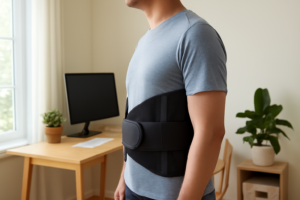
One of the most practical tools I recommend people explore is a quality lumbar support brace. These aren’t a long-term solution on their own, but during flare-ups or when you know you’ll be doing activities that strain the lower back — lifting, standing for long periods, commuting — wearing a supportive brace may help stabilize the lumbar spine and reduce the mechanical pressure contributing to nerve irritation.
Products Worth Trying for Lower Back Support
I’ve looked at a lot of lumbar braces over the years, and a few stand out for their design, breathability, and user feedback. Here are some options worth considering:
The Back Brace That Actually Stabilizes Without Overheating
A pinched nerve often flares up when your spine shifts or twists the wrong way — and a properly fitted back brace can prevent that movement while you’re healing. The FEATOL is one of the few I’ve found that provides real compression without feeling like you’re wrapped in a sauna for eight hours.
What works
- Dual compression straps actually reduce unwanted spinal movement — research shows braces work best when they restrict extension and rotation, which this design does without being rigid.
- Breathable mesh back panel means you can wear it under clothes for more than an hour without sweat pooling, so compliance is actually realistic (most people ditch braces that feel like wearing a garbage bag).
- The lumbar support stays in place during movement instead of slipping up or down, which matters because a brace that rides up your ribs isn’t protecting your pinched nerve.
What doesn’t
- A brace is temporary relief, not healing — if you wear it for six weeks without addressing the movement patterns that caused the pinch in the first place, the problem returns the moment you take it off.
- Sizing matters and Amazon’s chart isn’t always accurate; if it’s too loose it does nothing, too tight and it restricts breathing and circulation during activity (measure your waist at the narrowest point and round up).
A brace buys you time and pain-free movement while you work on the actual problem — core strength, posture, or avoiding the movements that triggered this in the first place. Check out the FEATOL Back Brace Support Belt if you need real compression without the bulk.
About This Article

Written by Michael Torres. Michael Torres has had joint problems his whole life — hypermobile as a kid, chronic sprains and a dislocating shoulder through his twenties, an osteoarthritis diagnosis in his early fifties, and a right knee replacement since. He is not a doctor or a physical therapist and has no clinical training. He writes about what has helped him and what he has watched help the people around him, and says plainly when he has not tried something himself. More about this site.
Scope and limits. Michael has no medical or clinical training — he writes about living with his own joint pain, not about treating anyone else's. Nothing here is medical advice. Talk to a doctor before starting anything new, and get seen promptly for pain that is new, severe, worsening, or comes with swelling, fever, or numbness.
Verify this against a primary source
Specifics change, and your situation may differ from the one described here. These are the authorities worth checking directly:
- NIAMS — arthritis and musculoskeletal research from the NIH
- MedlinePlus — plain-language medical reference from the NIH
- Arthritis Foundation — condition guides and treatment overviews