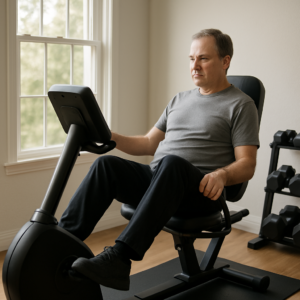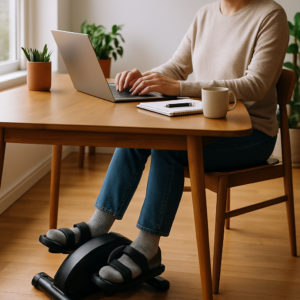


Starting an exercise routine after 50 — especially if joint pain has kept you sidelined for a while — comes with a different set of questions than it did at 25. How do you know if it’s safe to start? How much is too much for a first week? What if balance is part of the concern, not just pain? If you’re beginning (or restarting) low-impact exercise later in life, the goal isn’t just picking joint-friendly movements — it’s building a starting plan that accounts for where you actually are right now.
Before You Start: A Few Things Worth Sorting Out First
If it’s been a while since you’ve exercised regularly, or you’re managing a diagnosed joint condition, a quick conversation with your doctor before starting is worth the ten minutes — not because low-impact exercise is risky, but because they can flag anything specific to your situation (balance concerns, medication interactions, a joint that needs extra caution) that generic advice can’t account for. Once you have that green light, the exercises below are genuinely accessible starting points.
Starting Points for Beginners 50+
The exercises themselves aren’t complicated — the part that matters most at this stage is pacing and starting conservatively enough that you actually stick with it.
1. Chair-Based Exercises First, If Balance Is a Concern
If standing exercises feel uncertain or balance has become a concern, seated exercises are a completely legitimate starting point, not a lesser one. Seated leg lifts, ankle circles, and seated marching all maintain mobility and circulation without any fall risk. Many people build confidence here before progressing to standing movement, and there’s no rush to move on until it feels right.
2. Walking, Starting Shorter Than Feels Necessary
Walking on flat, even surfaces provides real cardiovascular benefit with minimal joint impact. The mistake most beginners make is starting too ambitious. Five to ten minutes on your first few outings is a legitimate starting point — you can always add time next week. Building slowly reduces the risk of a flare-up that derails motivation entirely.
3. Water Exercise, If You Have Access
Water offloads up to 90% of your body weight, which makes it one of the most forgiving environments for a first return to movement — you can test your range of motion without the fall risk or joint loading of land-based exercise. Many community pools and YMCAs offer beginner-paced water aerobics classes specifically designed for this stage.
4. Resistance Bands, Starting With the Lightest Level
Resistance bands let you build the muscle support your joints need without loading them with weight. Start with the lightest band in a set, even if it feels almost too easy at first — the goal in the first few weeks is establishing the habit and correct form, not maximizing resistance. You can progress to a heavier band once the movement feels controlled and pain-free.
5. Gentle Stretching to Close Out Each Session
A few minutes of gentle stretching after any of the above helps prevent the stiffness that can make the next day’s activity feel harder than it needs to. This doesn’t need to be formal yoga — slow, mindful stretching of whatever joint you worked is enough.
How to Know You’re Progressing Safely
A reasonable rule of thumb: mild discomfort during activity that eases within a day is normal as your body adjusts. Pain that lingers for several days, or that gets sharper rather than milder, is a signal to scale back and check in with your doctor rather than push through. Progress at this stage is measured in weeks, not days — and that’s genuinely fine.
Resistance Bands: Building Strength Without Hammering Your Joints
For a first resistance-training purchase, a multi-level band set is the most forgiving option — you get an easy starting point built in, along with room to progress as your strength and confidence build.
What works
- Multiple resistance levels in one set mean you start at the lightest band and progress without buying new equipment — ideal for a beginner who isn’t sure yet what level they’ll need.
- You control the range of motion, so you can stop short if a stretch bothers a shoulder or knee and deepen it gradually as mobility improves.
- Lightweight and easy to store, which matters if you’re not ready to commit space or budget to larger equipment yet.
What doesn’t
- Bands degrade over time with UV exposure, heat, and repeated stretching; a set will typically last 1–2 years of regular use.
- It’s easy to stay on the lightest band too long out of caution; check in every few weeks on whether you’re ready to progress rather than defaulting to “easy” indefinitely.
Start at the lightest resistance and give yourself permission to stay there as long as you need to. Check out the Lianjindun 5 Pcs Professional Resistance Bands if you want a reliable multi-level set that won’t break the bank.
About This Article

Written by Michael Torres. Michael Torres has had joint problems his whole life — hypermobile as a kid, chronic sprains and a dislocating shoulder through his twenties, an osteoarthritis diagnosis in his early fifties, and a right knee replacement since. He is not a doctor or a physical therapist and has no clinical training. He writes about what has helped him and what he has watched help the people around him, and says plainly when he has not tried something himself. More about this site.
Scope and limits. Michael has no medical or clinical training — he writes about living with his own joint pain, not about treating anyone else's. Nothing here is medical advice. Talk to a doctor before starting anything new, and get seen promptly for pain that is new, severe, worsening, or comes with swelling, fever, or numbness.
Verify this against a primary source
Specifics change, and your situation may differ from the one described here. These are the authorities worth checking directly:
- NIAMS — arthritis and musculoskeletal research from the NIH
- MedlinePlus — plain-language medical reference from the NIH
- Arthritis Foundation — condition guides and treatment overviews