

This content is for informational purposes only and does not substitute for professional medical advice. Always consult a qualified healthcare provider before beginning any treatment.
Tenosynovitis in New Moms: Evidence-Based Relief for Postpartum Wrist Pain
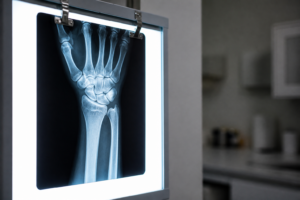
A nagging, burning ache along the thumb side of the wrist is one of the most commonly reported musculoskeletal complaints among new mothers. Clinically known as De Quervain’s tenosynovitis, this condition involves inflammation of the abductor pollicis longus and extensor pollicis brevis tendons as they pass through a narrow fibrous sheath at the wrist. According to the American Academy of Orthopaedic Surgeons (AAOS), De Quervain’s tenosynovitis is significantly more prevalent in women — particularly those in the postpartum period — than in the general population. Understanding the mechanisms behind the condition, and the evidence-based approaches for managing it, can help new parents move through recovery more effectively.
Key Takeaways
- De Quervain’s tenosynovitis is caused by inflammation of thumb-side wrist tendons, triggered by repetitive lifting and postpartum hormonal changes.
- The Finkelstein test is a reliable clinical indicator used to distinguish De Quervain’s from general wrist pain or carpal tunnel syndrome.
- Thumb spica splinting is considered a first-line conservative treatment, with physical therapists commonly observing meaningful improvement within four to six weeks of consistent use.
- Postpartum hormonal fluctuations — particularly involving relaxin and estrogen — may increase tendon vulnerability independent of mechanical stress.
- Most cases resolve with conservative management; early intervention reduces the risk of chronic tendon irritation.
Why Is Tenosynovitis So Common in New Mothers?
De Quervain’s tenosynovitis in new mothers develops through two distinct but compounding pathways: repetitive mechanical stress and postpartum hormonal changes. Orthopedic specialists note that new parenthood creates an almost ideal environment for tendon overuse injury, with the average caregiver performing dozens of infant lifts per day in biomechanically demanding positions.
Repetitive Lifting and the Biomechanics of Infant Care
The act of scooping an infant — hands sliding under the arms, thumbs extended outward, wrists radially deviated — places sustained mechanical load on the first dorsal compartment of the wrist. Physical therapists frequently observe that this “new parent grip,” repeated hundreds of times per week across feeding, positioning, and transport tasks, is a primary driver of cumulative tendon sheath irritation. Over time, the synovial lining of the tendon sheath becomes inflamed and thickened, narrowing the passage through which the tendons glide and producing the characteristic pain and catching sensation associated with De Quervain’s.
How Postpartum Hormones Affect Tendon Vulnerability
Research published in the Journal of Hand Surgery and related orthopedic literature has identified a hormonal component to postpartum tendinopathy. The hormone relaxin, which remains elevated during breastfeeding, alters the structural integrity of connective tissues throughout the body, including tendon sheaths. Simultaneously, the postpartum decline in estrogen reduces tissue resilience. These hormonal changes may render tendons more susceptible to inflammatory response even when mechanical loading remains within typical ranges. This explains why some breastfeeding mothers report persistent or worsening symptoms even after modifying their lifting technique.
How Is De Quervain’s Tenosynovitis Diagnosed?
De Quervain’s tenosynovitis presents with a recognizable symptom cluster that clinicians use to differentiate it from carpal tunnel syndrome, arthritis, or generalized wrist strain. Individuals experiencing this condition typically report:
- Localized pain and tenderness along the thumb side of the wrist, concentrated at or just above the radial styloid
- Visible or palpable swelling near the base of the thumb
- A catching or snapping sensation during thumb movement
- Pain that intensifies with gripping, pinching, or radial deviation of the wrist
- A positive Finkelstein test — tucking the thumb inside a closed fist and bending the wrist toward the pinky finger produces sharp, localized pain along the first dorsal compartment
The AAOS identifies the Finkelstein test as the primary clinical diagnostic tool for De Quervain’s tenosynovitis. Pain that radiates into the fingers with associated numbness or tingling may indicate concurrent carpal tunnel syndrome, which is also prevalent in the postpartum period and warrants separate evaluation.
What Are the Most Effective Conservative Treatments for Postpartum Wrist Pain?
Activity Modification and Ergonomic Lifting Technique
Occupational therapists working with postpartum patients consistently recommend technique modifications as a foundational element of recovery. Supporting an infant’s weight through the forearms rather than the thumbs and wrists during lifting significantly reduces load on the first dorsal compartment. Baby carriers and wraps are also frequently recommended as tools for reducing repetitive pick-up frequency. Maintaining a neutral wrist position during lifting — rather than the extended, radially deviated position common in infant handling — has been shown to reduce tendon sheath compression meaningfully.
Ice Therapy and Anti-Inflammatory Measures
Cryotherapy applied for 10 to 15 minutes several times daily to the radial aspect of the wrist is a well-supported adjunct for managing acute tendon inflammation. Over-the-counter NSAIDs such as ibuprofen may provide additional anti-inflammatory benefit; however, breastfeeding individuals should confirm medication safety with their healthcare provider before use, as some agents transfer into breast milk.
The Thumb Brace That Actually Stabilizes Without Overheating
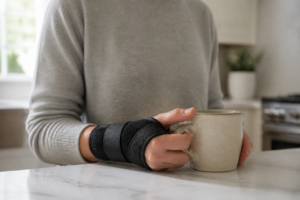
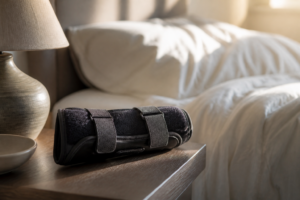
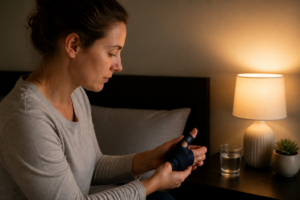
Tenosynovitis flares when repetitive gripping—feeding, holding a baby, burping—inflames the tendon sheath running along your thumb. A proper thumb spica brace immobilizes that specific tendon without restricting your whole hand, which matters when you’re managing an infant and can’t afford to lose mobility everywhere.
What works
- The adjustable strap design actually stays in place during repetitive gripping tasks—most moms report it doesn’t slip or bunch under sleeves the way fixed braces do.
- Research supports thumb immobilization for tenosynovitis; this brace specifically limits the pinching and gripping motions that aggravate the condition while leaving fingers free for daily care tasks.
- The neoprene material is breathable enough for daytime wear (unlike some rigid splints that become unwearable after a few hours in summer heat or under clothing).
What doesn’t
- A brace manages symptoms; it doesn’t treat the underlying overuse. If you’re still gripping the same way 8 hours a day without addressing mechanics or getting breaks, improvement stalls.
- Results take 2-3 weeks of consistent wear—not days. If you wear it only when it’s “bad,” you’re missing the window when inflammation actually retreats.
A brace is a tool for breaking the inflammation cycle, not a cure, so pairing it with actual wrist rest and modified grip patterns matters more than the brace itself. Mueller Sports Medicine Adjust-to-Fit Thumb Brace
About This Article

Written by Michael Torres. Michael Torres has had joint problems his whole life — hypermobile as a kid, chronic sprains and a dislocating shoulder through his twenties, an osteoarthritis diagnosis in his early fifties, and a right knee replacement since. He is not a doctor or a physical therapist and has no clinical training. He writes about what has helped him and what he has watched help the people around him, and says plainly when he has not tried something himself. More about this site.
Scope and limits. Michael has no medical or clinical training — he writes about living with his own joint pain, not about treating anyone else's. Nothing here is medical advice. Talk to a doctor before starting anything new, and get seen promptly for pain that is new, severe, worsening, or comes with swelling, fever, or numbness.
Verify this against a primary source
Specifics change, and your situation may differ from the one described here. These are the authorities worth checking directly:
- NIAMS — arthritis and musculoskeletal research from the NIH
- MedlinePlus — plain-language medical reference from the NIH
- Arthritis Foundation — condition guides and treatment overviews