
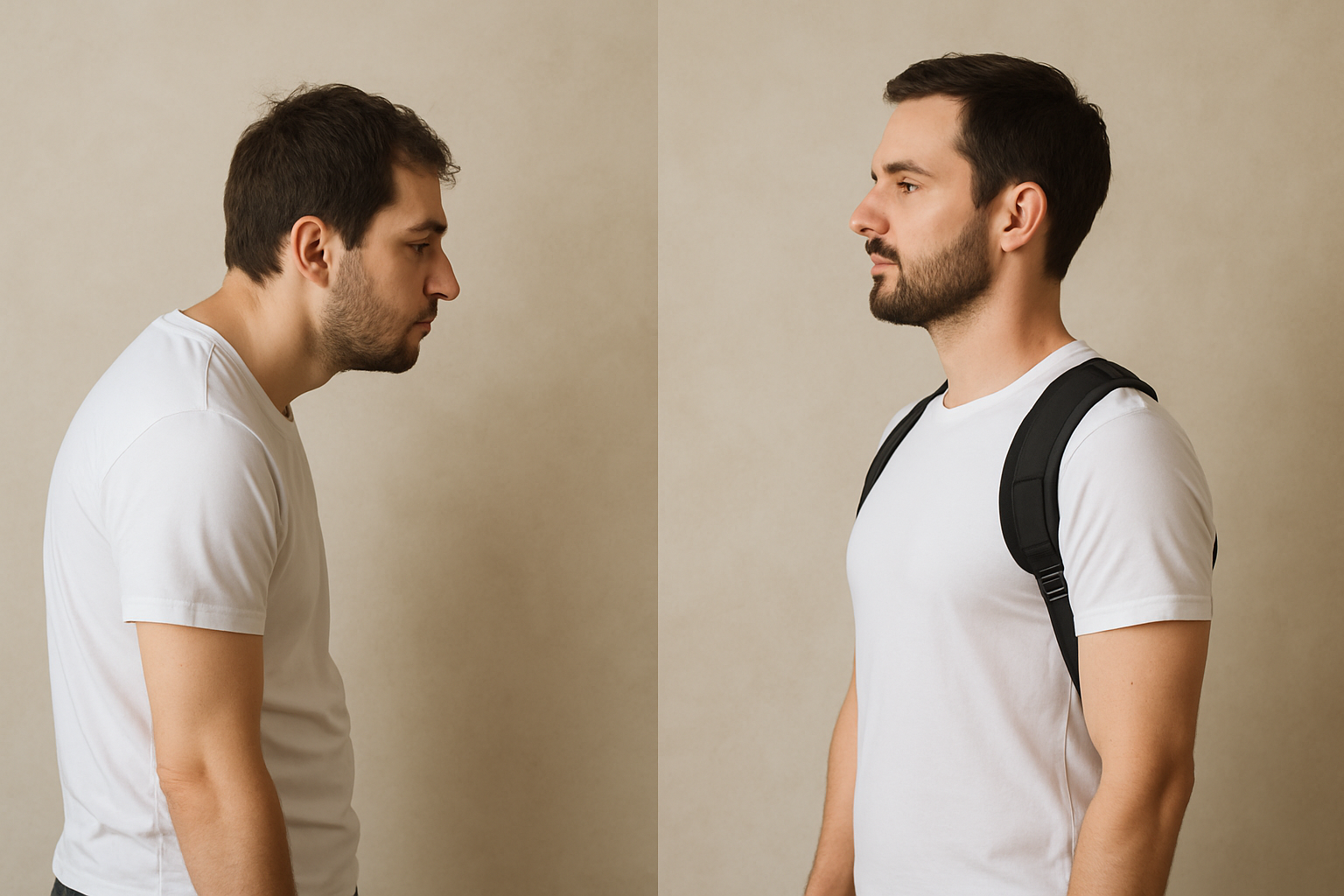
You’re three hours into your workday and you catch yourself slumped over your keyboard — shoulders rounded forward, chin jutting out, upper back curved like a question mark. Sound familiar? If you’ve been down the rabbit hole of searching for a posture corrector brace review, you’re probably at that point where the neck tension, shoulder aches, and general fatigue have gotten old enough that you’re ready to actually do something about it. I’ve been there too, and I’ve helped dozens of patients work through the same frustration. Let me give you the honest, practical breakdown you deserve.
This post contains affiliate links. As an Amazon Associate, I earn from qualifying purchases. This helps keep the site running at no extra cost to you, and I only recommend products I’d genuinely suggest to someone sitting across from me in a clinic.
What a Posture Corrector Actually Does (And What It Can’t)
Here’s the thing I always tell people before they invest in any kind of brace: a posture corrector is a tool, not a cure. It’s like a cast for a broken wrist — useful, supportive, but not a substitute for the rehabilitation work underneath. Many people find real relief with a well-fitted posture brace, especially in the early stages of retraining their body. Research suggests that consistent external cuing from a brace may help reinforce better spinal alignment and reduce muscle fatigue in the upper back and shoulders.
What these braces do well is provide gentle proprioceptive feedback — essentially reminding your nervous system where “upright” feels like. When you start to slump, the brace creates a subtle pull that brings your awareness back to your posture. Over time, with intentional use, many wearers report that they begin to self-correct even without the brace on.
What they won’t do is strengthen your muscles on their own. If you wear a posture corrector all day, every day, without pairing it with targeted exercises, you may actually weaken the postural muscles that need to be doing the work. Think of it as training wheels — incredibly helpful during the learning phase, but eventually you want to ride on your own.
Who May Benefit Most From a Posture Brace
Not everyone needs one, but certain situations make a posture corrector a genuinely smart addition to your routine. You may benefit from trying one if you:
- Spend long hours at a desk or looking at screens
- Experience recurring upper back or neck tension that tends to build throughout the day
- Are recovering from a clavicle injury or shoulder strain (with your doctor’s approval)
- Have been told you have mild kyphosis or a forward head posture pattern
- Find it difficult to maintain awareness of your posture without a physical reminder
If you have scoliosis, a herniated disc, or any diagnosed spinal condition, please loop in your healthcare provider before strapping anything on. A brace can complement treatment, but the wrong one — or worn incorrectly — may do more harm than good in those cases.
Posture Corrector Brace Review: The Products I Actually Recommend
I’ve looked at a lot of these products, and there’s a real range in quality, comfort, and design. Here are five that I think are worth your consideration, depending on your needs and body type.
VOKOKOYA Posture Corrector — Best for Upper Back and Shoulder Realignment
The VOKOKOYA Posture Corrector is a solid upper-back brace with an adjustable shoulder straightener design that many people find comfortable enough to wear during work hours. It’s built with a clean, low-profile structure that fits discreetly under most clothing. If your main struggle is that rounded-shoulder, head-forward position from screen time, this one may help you build awareness in the right areas without feeling overly restrictive.
Fit Geno Back Brace Posture Corrector — Best Full-Back Option
If you need support for both your upper and lower back, the Fit Geno Back Brace Posture Corrector is worth a close look. It covers more surface area than a standard clavicle brace, making it a better fit for people who experience fatigue along the entire spine. Many users find it particularly useful during longer standing or walking activities. The adjustable design means you can dial in the fit as your body and habits change over time.
ComfyBrace Posture Corrector — Best for Daily Comfort and Breathability
The name doesn’t lie. The ComfyBrace Posture Corrector is one of the more wearable options in this category — lightweight, breathable, and designed for mid-to-upper spine support. It addresses the neck, shoulder, and clavicle area without the bulkiness that makes some people give up on braces entirely. If you’ve tried other braces and abandoned them because they dug into your skin or felt too rigid, this one is a genuinely different experience.
BraceAbility Clavicle Support Brace — Best for Injury Recovery
The BraceAbility Clavicle Support Brace uses a figure-8 design, which is a classic clinical structure that gently pulls the shoulders back and may help with kyphosis relief. This one is also commonly used during clavicle fracture recovery, making it a dual-purpose option. The figure-8 style is simple, no-frills, and effective at its core job — getting your shoulders into a more neutral position. It’s a great starting point if you want something straightforward and trusted.
GROKIE Posture Corrector — Best Budget-Friendly Pick
Don’t let the lower price point fool you. The GROKIE Posture Corrector delivers a comfortable, breathable back straightener that covers upper back, clavicle, and shoulder support without breaking the bank. It’s a smart first purchase if you’re not sure whether a posture brace is right for you yet and want to test the waters. The adjustable design gives it good versatility across different body types.