
You finally work up the motivation to go for a walk — nothing intense, just a loop around the neighborhood — and by the time you get home, your knees are aching and your hips feel like they belong to someone thirty years older. Sound familiar? If you’ve been searching for something that might take the edge off that daily stiffness and soreness, you’ve probably already tried glucosamine, turmeric, maybe even fish oil. But there’s one supplement that keeps flying under the radar despite a growing body of research behind it: MSM. Understanding the full picture of MSM supplement joint pain benefits might be the missing piece in your joint health routine.
What Is MSM and Why Should You Care About It?
MSM stands for methylsulfonylmethane — and yes, that’s a mouthful. But here’s the simple version: it’s an organic sulfur compound that occurs naturally in small amounts in fruits, vegetables, grains, and even the human body. Sulfur is one of the most abundant minerals in the body, and it plays a critical role in building and maintaining connective tissue, including the cartilage that cushions your joints.
The problem is that most of us don’t get nearly enough sulfur through diet alone — especially as we age and our bodies become less efficient at using it. That’s where MSM supplementation comes in. When taken consistently, it provides a concentrated, bioavailable source of sulfur that your joints, muscles, and soft tissues may genuinely need. Think of your joint cartilage as constantly wearing down and being rebuilt; if your body lacks the right building blocks, including sulfur, that repair process can lag.
I want to be upfront here: MSM is not a cure for arthritis, joint disease, or any medical condition. What I can tell you is that research suggests it may help reduce inflammation, ease exercise-related muscle soreness, and support overall joint comfort — and many people I’ve worked with have found meaningful relief after adding it to their daily routine.
MSM Supplement Joint Pain Benefits: What the Research Actually Shows
Let’s talk about what the science suggests, without overhyping it. Several clinical studies have explored how MSM affects joint pain and function, particularly in people with osteoarthritis.
A well-cited 2006 study published in Osteoarthritis and Cartilage found that participants taking 3 grams of MSM twice daily for 12 weeks experienced significant improvements in pain and physical function compared to those taking a placebo. Additional research published in BMC Complementary Medicine similarly reported improvements in pain and physical function versus placebo, with results becoming more noticeable after 12 weeks. Other research has pointed to MSM’s potential role in reducing markers of oxidative stress — which matters because chronic inflammation and oxidative damage are two of the key drivers behind joint deterioration.
Here’s what MSM may help with, based on current research and widespread user experience:
- Reducing joint stiffness and discomfort, particularly in the knees and hips
- Lowering exercise-induced inflammation and delayed onset muscle soreness
- Supporting cartilage health by providing sulfur needed for its structural proteins
- Improving physical function and mobility in people with osteoarthritis symptoms
- Acting as an antioxidant to help neutralize free radicals that contribute to tissue damage
It’s also worth noting that MSM is generally considered very safe and well-tolerated, even at higher doses. Side effects, if any, tend to be mild — occasional digestive discomfort that usually resolves when taken with food.
How to Take MSM: Dosage, Timing, and What to Expect
Most studies have used doses in the range of 1,500 mg to 6,000 mg per day, often split into two doses. If you’re just starting out, I always recommend beginning on the lower end — around 1,000 mg once or twice daily — and giving your body at least four to six weeks before evaluating results. Consistency matters more than perfection: taking 2,000 mg every day beats taking 3,000 mg sporadically. Joint supplements in general aren’t overnight solutions; they work slowly and cumulatively, and some people need a full 8 to 12 weeks before they notice a meaningful difference.
Take MSM with food to minimize any stomach sensitivity. Many people also find it works even better when paired with other joint-supportive nutrients like glucosamine, collagen, or vitamin C — since vitamin C plays a key role in collagen synthesis and may enhance MSM’s effectiveness.
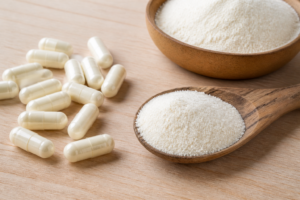
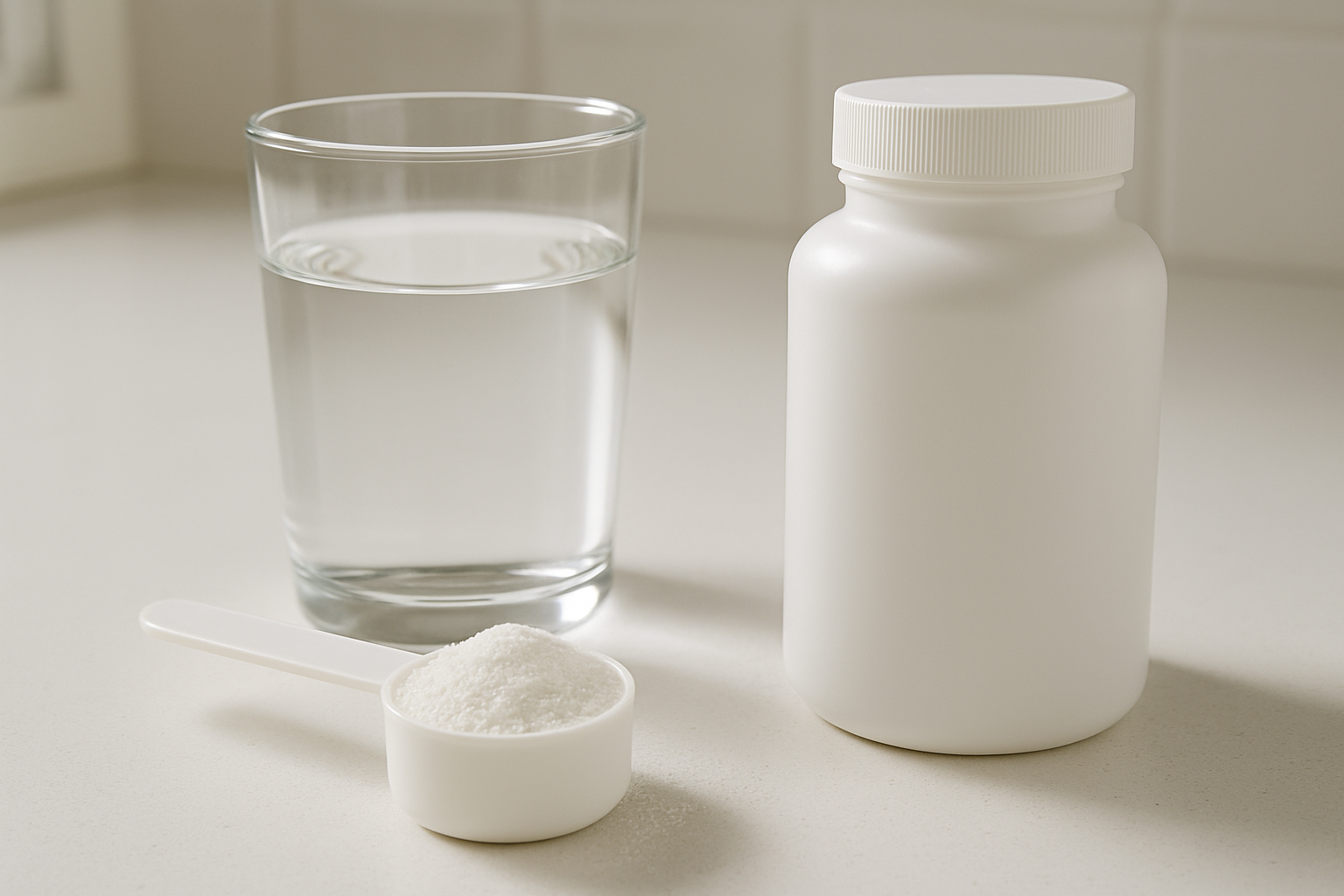
Capsules are the most convenient format for most people, but MSM also comes in powder form, which is great if you prefer to mix it into a smoothie or drink and want more flexibility with your dosage. Powder is usually more economical and lets you titrate the dose precisely; capsules are convenient and portable. Choose whichever form you’ll actually stick with consistently.
MSM Alone or Combined With Glucosamine and Chondroitin?
One of the most common questions about MSM and joint health is whether to take it solo or stack it with other supplements. MSM alone is the simplest, most affordable option and a good fit if your priority is inflammation and sulfur support. But research suggests that combining MSM with glucosamine and chondroitin may outperform any single supplement, particularly for moderate osteoarthritis; one study found that MSM paired with glucosamine produced better outcomes for knee osteoarthritis than either compound on its own. My honest take: start with MSM by itself for six to eight weeks, and if you plateau or want more aggressive support, add glucosamine and chondroitin then.
Can MSM Cause Joint Pain? Debunking the Detox Myth
Some supplement marketers claim MSM triggers a temporary “detox reaction” that causes pain before it helps. This idea has minimal scientific support — your body does not detoxify through MSM in that way. What can actually happen is that a small number of people feel mild joint discomfort when they first start, usually at higher doses, simply because their body is adjusting to the increased sulfur availability. It typically resolves within a few days. If it happens to you, lower the dose, switch to powder so you can titrate slowly, or check with your healthcare provider. Directly causing lasting joint pain is unlikely.
MSM Safety and Side Effects
MSM has a good safety profile, and side effects are generally mild and uncommon — slight digestive upset, occasional headache in the first few days, or, very rarely, a skin reaction. Take it with food if you notice nausea. If you’re sensitive to sulfur compounds, or you take blood thinners or have a bleeding disorder, talk to your doctor or pharmacist before starting.
The MSM Dose That Actually Shows Up in Joint Stiffness Research
If you’ve been taking glucosamine or turmeric for months with minimal results, MSM might be the missing piece—it works through a completely different mechanism (sulfur absorption and connective tissue support) and often shows the most noticeable effect on that morning stiffness and post-activity soreness that makes even short walks feel like a chore. This is the straightforward, effective version I’ve stuck with after trying the powders and blends that promise too much.
What works
- Research supports 1,000–3,000 mg daily for joint flexibility and inflammation response, and this capsule format hits that sweet spot without the chalky powder taste that makes compliance harder than it needs to be.
- Most people report noticing a difference in stiffness and range of motion within 4–6 weeks of consistent use, which is faster than glucosamine alone and often more noticeable on mornings after activity.
- MSM pairs exceptionally well with other joint supplements (glucosamine, collagen, omega-3s) because it addresses sulfur depletion rather than competing with those mechanisms—so it’s a genuine add-on, not just another me-too product.
What doesn’t
- If you have severe joint damage or advanced arthritis, MSM alone won’t reverse structural deterioration—it’s genuinely helpful for stiffness and mild-to-moderate soreness, but it’s not a substitute for physical therapy, weight management, or medical intervention when those are needed.
- Some people report zero change even after 8–10 weeks, and there’s no way to predict who that will be before you try it; individual response varies widely, and you might just be someone whose joint issues don’t respond to MSM specifically.
Supplements work on their own timeline, and MSM is no exception—you need at least 4–6 consistent weeks before you’ll know if it’s making a real difference for you. If you’re ready to test it, grab the MSM 1,000 mg capsules and commit to a full month before deciding.
About This Article

Written by Michael Torres. Michael Torres has had joint problems his whole life — hypermobile as a kid, chronic sprains and a dislocating shoulder through his twenties, an osteoarthritis diagnosis in his early fifties, and a right knee replacement since. He is not a doctor or a physical therapist and has no clinical training. He writes about what has helped him and what he has watched help the people around him, and says plainly when he has not tried something himself. More about this site.
Scope and limits. Michael has no medical or clinical training — he writes about living with his own joint pain, not about treating anyone else's. Nothing here is medical advice. Talk to a doctor before starting anything new, and get seen promptly for pain that is new, severe, worsening, or comes with swelling, fever, or numbness.
Verify this against a primary source
Specifics change, and your situation may differ from the one described here. These are the authorities worth checking directly:
- NIAMS — arthritis and musculoskeletal research from the NIH
- MedlinePlus — plain-language medical reference from the NIH
- Arthritis Foundation — condition guides and treatment overviews