
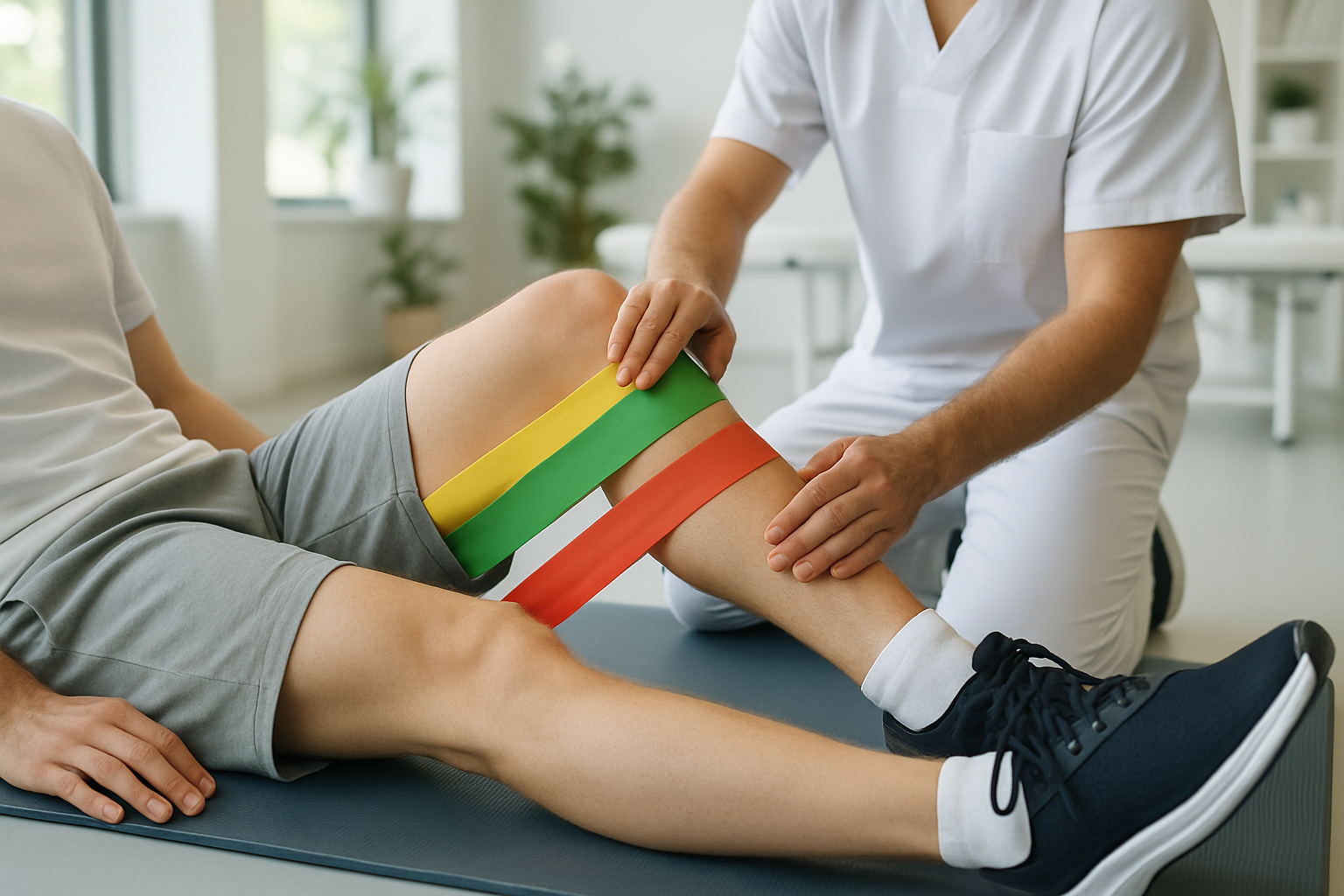
Picture this: you’re finally feeling motivated to get back into some kind of exercise routine after months of babying a sore knee, a stiff shoulder, or aching hips — and then you try a squat or a pushup and that familiar grinding, aching sensation stops you cold. It’s discouraging in a way that’s hard to explain to people who haven’t felt it. You want to move, you know movement is good for you, but every rep feels like a negotiation with your own body. That’s exactly where resistance bands for joint rehabilitation changed things for so many people I’ve worked with — and honestly, for me too. They offer a way to rebuild strength, restore range of motion, and support the tissues around your joints without the harsh compressive forces that make traditional weightlifting feel like punishment.
This post contains affiliate links. As an Amazon Associate, I earn from qualifying purchases. This means if you click a link and make a purchase, I may earn a small commission at no extra cost to you. I only recommend products I genuinely believe in and that align with the guidance I share here.
Why Joints Hate Heavy Loads (But Love Gentle Resistance)
Here’s something that often surprises people: cartilage has no blood supply of its own. It depends on the mechanical compression and release of movement — like a sponge being squeezed — to absorb nutrients from the synovial fluid around it. This means that some movement is genuinely good for cartilage health. The problem is that too much load, too fast, with poor muscle support around the joint, can accelerate wear and trigger inflammation rather than healing.
This is where resistance bands shine. Unlike free weights or machines, bands provide accommodating resistance — the tension increases as you move through the range of motion, which means it’s actually lightest at the most vulnerable part of the movement (often the starting position) and peaks when your muscles are in their strongest position. Many people find this pattern feels much more forgiving on tender joints than lifting a fixed weight through the same range.
Research suggests that progressive resistance exercise using elastic bands may help improve muscle strength around affected joints, which in turn provides better stability and reduces the stress transferred directly to cartilage and connective tissue. For conditions like knee osteoarthritis, shoulder impingement, or hip bursitis, building that surrounding muscular support is often a cornerstone of conservative treatment.
Resistance Bands for Joint Rehabilitation: How to Use Them Safely
Before diving into specific exercises, I want to be clear: if you’re recovering from surgery, a diagnosed injury, or significant joint disease, please work with a licensed physical therapist or your physician before starting any new exercise program. What I’m sharing here is general guidance — the kind of information I’d give a friend who’s dealing with chronic joint stiffness or mild-to-moderate discomfort and wants to move more safely. It is not a substitute for individualized medical advice.
With that said, here are the principles I always come back to when using bands for rehab-style training:
- Start with the lightest resistance and earn your way up. The goal early on is neuromuscular activation — waking up muscles that have gone quiet around an injured joint — not maximal strength. A band that feels almost too easy is usually exactly right to start.
- Move slowly and with control. A two-to-three second eccentric (return) phase is where a lot of the strengthening magic happens, and it also keeps joint stress lower than fast, jerky movements.
- Pain is a signal, not a badge. Mild muscle fatigue is normal and fine. A sharp, stabbing, or deep aching pain in the joint itself is your cue to stop, reassess your form, or choose a lighter band.
- Consistency beats intensity. Short daily sessions of 10 to 15 minutes are often more effective for joint rehabilitation than three hard sessions per week.
- Choose latex-free if you have sensitivities. Many quality rehab bands are now made from latex-free materials, which is important for anyone with latex allergies or sensitive skin.
Exercises Worth Trying for Common Problem Areas
For the knees, clamshells, seated leg extensions with a light loop band, and standing hip abduction are gentle starting points that build the glutes and hip stabilizers — muscles that research suggests play a huge role in reducing knee load during daily movement.
For the shoulders, banded external rotation (the classic “elbow at your side, rotate out” movement), front raises, and scapular retractions may help restore the rotator cuff balance that protects the shoulder joint during overhead and reaching activities.
For the hips and lower back, banded bridges, lateral band walks, and standing hip circles can gently mobilize the hip joint while building the surrounding stabilizers many people lose after periods of inactivity or injury.
What Actually Helps: Bands I Recommend
Not all bands are created equal, and for rehabilitation purposes, having a set with multiple resistance levels is genuinely important — you’ll want to progress gradually over weeks and months. Here are some options I feel comfortable recommending:
Best All-Around Rehab Band Sets
The Resistance Bands for Working Out (Five Colors, Latex Free) is a solid choice for anyone prioritizing joint health. The latex-free construction makes it skin-friendly for longer sessions, and having five resistance levels lets you genuinely progress over time without buying multiple sets. The color-coded system makes it easy to know exactly which band you’re grabbing without a second thought.
Similarly, the Lianjindun 5 Pcs Professional Resistance Bands offers a latex-free, five-piece set designed with physical therapy and Pilates in mind. Many people find the material holds up well with repeated use, which matters when you’re doing daily sessions as part of a rehab routine.
If you’re just starting out and want a well-rounded beginner set, the Resistance Bands Yoga Starter Set for Physical Therapy and Rehab is worth a look. It’s specifically marketed toward recovery and physical therapy applications, making it a thoughtful option for anyone returning from injury.
The Fit Simplify Resistance Loop Exercise Bands with Instruction Guide and Carry Bag is a perennial favorite and for good reason — it comes with an actual instruction guide, which is genuinely helpful if you’re newer to band training and want some structured movement ideas to follow. The carry bag also makes it easy to keep everything together, which sounds small but really does matter for consistency.