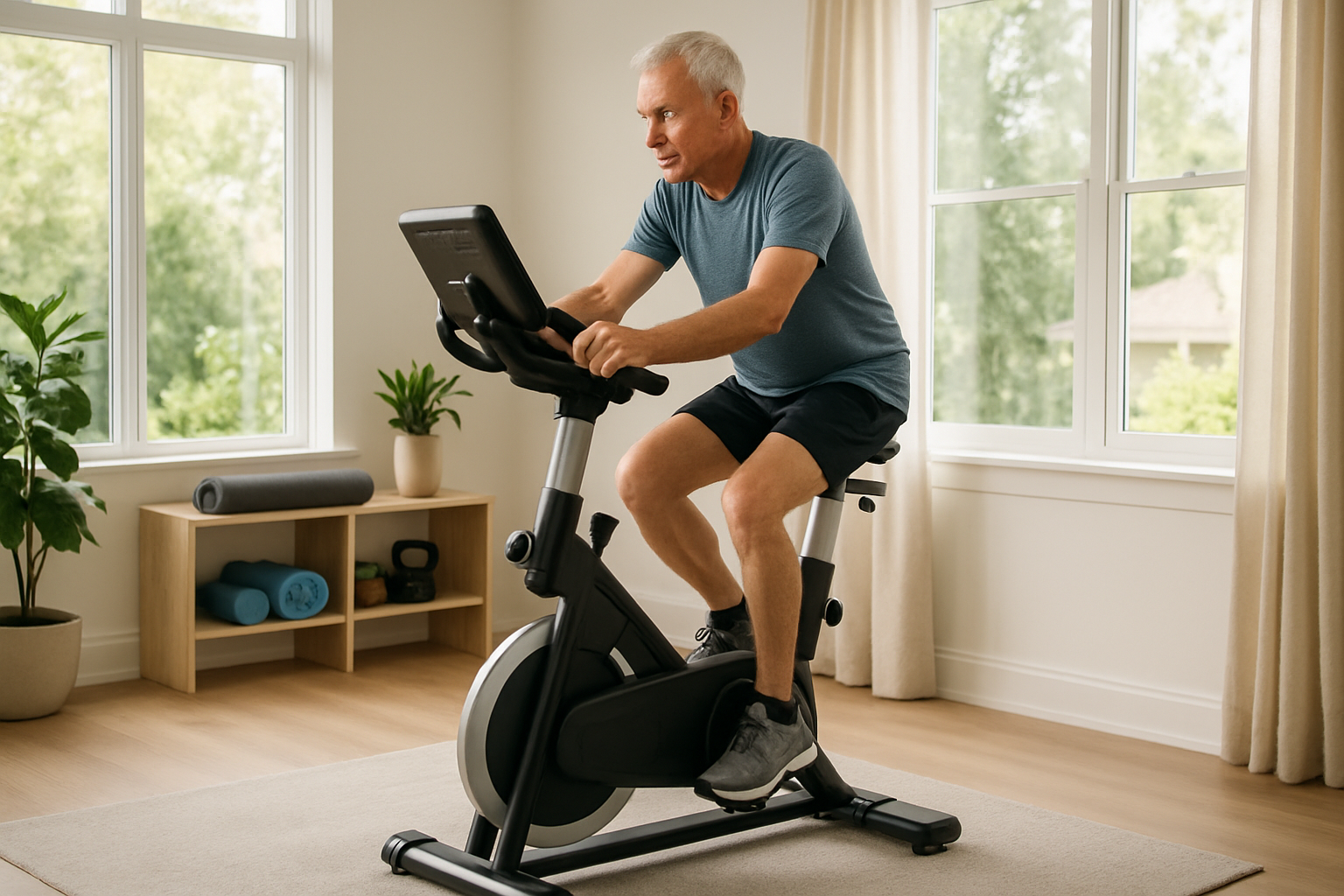

You finally decide to get moving again — maybe your doctor told you to stay active, or maybe you’re just tired of feeling stiff and sluggish. So you lace up your shoes, head out for a brisk walk or hop on the treadmill, and within ten minutes your knees are screaming at you. Sound familiar? If you’ve been searching for low impact exercises for bad knees that actually work without making things worse, you’re in exactly the right place — and I want you to know you’re not alone in this.
I’ve spent years working alongside people dealing with knee pain — from mild stiffness to post-surgical recovery — and the number one frustration I hear is this: “Every time I try to exercise, I pay for it later.” The good news? Movement is still one of the best things you can do for your joints. The key is choosing the right kind of movement. Let me walk you through what actually works and what tools may help you stay consistent without flare-ups.
Why Movement Still Matters When Your Knees Hurt
It might feel counterintuitive to exercise when your knees are painful, but research suggests that gentle, consistent movement can actually support joint health over time. Cartilage in your knees doesn’t have a direct blood supply — it depends on the compression and release of movement to receive nutrients. When we stop moving altogether, joints can become stiffer, surrounding muscles weaken, and the pain cycle often gets worse, not better.
The goal isn’t to push through sharp pain. It’s to find the sweet spot — enough movement to strengthen the muscles around your knee and keep fluid circulating, without putting excessive stress on the joint itself. That’s exactly what low-impact exercise is designed to do. And “low impact” has a specific meaning: these are activities where at least one foot stays in contact with the ground or a support surface at all times. Compare that with running, where your knee absorbs roughly three times your body weight with every stride, and you can see why swapping the impact — not the effort — makes such a difference for an irritated joint.
The Best Low Impact Exercises for Bad Knees
1. Recumbent Cycling
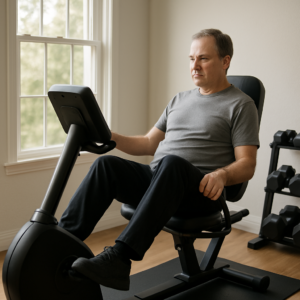
If I had to recommend just one exercise for people with knee pain, recumbent cycling would be near the top of my list every time. Unlike upright bikes, a recumbent bike positions your body in a reclined seat with your legs extended forward. This distributes your weight across your back and seat rather than pressing down through your knees. Many people who find regular cycling uncomfortable report that recumbent cycling feels almost entirely pain-free.
The smooth, circular pedaling motion helps lubricate the knee joint, strengthen the quads and hamstrings (which support the knee), and get your heart rate up — all without any jarring impact. You can pedal at whatever resistance level feels right for your body that day, which makes it ideal for good days and bad days alike.
2. Seated Leg Strengthening with Resistance Bands
Weak quadriceps are one of the most common contributors to knee pain. When the muscles around your knee aren’t strong enough to absorb shock and support movement, the joint itself takes more of the load. Gentle resistance band exercises — things like seated leg extensions, clamshells, and supine hip bridges — may help build that supporting strength over time without stressing the joint.
The beauty of resistance bands is that they allow progressive resistance without heavy weights, and you can do most exercises lying down or seated. Start with lighter resistance and only increase once the movement feels completely comfortable.
3. Water Walking or Pool Exercises
Water is a wonderful equalizer for sore joints. The buoyancy of water reduces the effective weight your knees bear significantly, which means you can walk, march, or even jog in place with a fraction of the impact. Many people with moderate to severe knee pain find pool-based exercise is the one thing they can do without any flare-up afterward. If you have access to a community pool or aquatic center, even 20–30 minutes of water walking a few times a week may make a meaningful difference.
4. Chair Yoga and Gentle Stretching
Flexibility and range of motion matter just as much as strength when it comes to knee health. Tight hip flexors, hamstrings, and calves can all pull on the knee joint and contribute to pain. Chair yoga and gentle floor stretching routines can help ease that tension gradually. Look for routines specifically designed for knee pain or seniors — these tend to avoid deep knee bends and high-impact transitions.
5. Short, Flat Walks on Soft Surfaces
Walking often gets dismissed for bad knees, but short, intentional walks on flat, soft surfaces (like grass or a rubberized track) can still be beneficial. The key is keeping it short enough that you don’t aggravate the joint, and building up slowly over weeks. Avoid hills and uneven terrain until your strength improves, and always wear supportive footwear. If you have gym access, the elliptical trainer is another knee-friendly option — your feet never leave the pedals — and tai chi or modified yoga classes build balance and leg strength through slow, controlled movement.
Low-Impact Exercises for Bad Knees You Can Do at Home
No pool, no bike, no gym membership? You can still make real progress. These five moves need nothing more than a sturdy chair, a wall, and (for the last one) an inexpensive resistance band — and they target exactly the muscle groups that support your knee. Do them two to three times a week, resting at least a day between sessions:
- Seated leg raises — sit upright in a chair, straighten one leg fully in front of you, hold for 2 seconds, then lower without touching the floor. 12–15 reps per leg. Strengthens the quadriceps, your knee’s main stabilizer.
- Clamshells — lie on your side with knees bent at 45 degrees; keeping feet together, open the top knee like a clamshell, then close. 15–20 reps per side. Activates the hip abductors that keep your knee tracking well.
- Wall sits — lean against a wall, feet shoulder-width apart, and slide down until your knees approach 90 degrees (stop shallower if that’s painful). Hold 20–30 seconds, repeat 3–4 times. Builds quad strength without any joint movement.
- Low step-ups — using a 4–6 inch step or sturdy platform, step up driving through your heel, then step down with control. 10–12 reps per leg. Trains hip and knee control the way real life demands it.
- Terminal knee extensions — anchor a resistance band at knee height, stand facing away with the band around the back of your knee, and slowly straighten the leg fully. 15–20 reps per leg. Targets the final degrees of knee straightening that matter most for stability.
Start with one set of each and add a second set once the movements feel completely comfortable. If any exercise causes sharp pain (as opposed to gentle muscle effort), skip it and check in with a physical therapist before continuing.
Products That May Help Support Your Routine
Having the right equipment at home makes it so much easier to stay consistent — especially on days when getting to a gym feels like too much. Here are some options I genuinely think are worth considering:
The Exercise Bike That Actually Lets Bad Knees Build Strength Without Flare-Ups
If walking and treadmills leave your knees angry, a recumbent bike removes the impact equation entirely while still letting you build the quad and hip strength that actually stabilizes a painful knee. This is the one piece of equipment I’ve seen work consistently for people who’ve given up on “just walking it off.”
What works
- Zero impact on the joint itself — you’re sitting back against support while your legs do the work, so there’s no landing force or compression like you get from walking or running.
- The resistance can start absurdly low (16 levels means you can begin at practically nothing) and build gradually as your knee tolerates it, which matches how actual knee recovery works instead of forcing you into arbitrary intensity.
- Research on strengthening around the knee consistently shows that quad strength reduces pain and improves stability — a recumbent bike targets this without the risk profile of other strength exercises.
What doesn’t
- This isn’t a substitute for addressing what caused the knee pain in the first place — if your issue is alignment, instability, or a structural problem, the bike helps manage it but won’t fix the root cause.
- Results take weeks, not days, and some people with severe inflammation or recent injury may need to start so conservatively that progress feels invisible for the first 2-3 sessions.
Consistency matters more than intensity here — 20 minutes three times a week will show results faster than sporadic longer sessions. Recumbent Exercise Bike with 16-Level Resistance and Pulse Sensors
About This Article

Written by Michael Torres. Michael Torres has had joint problems his whole life — hypermobile as a kid, chronic sprains and a dislocating shoulder through his twenties, an osteoarthritis diagnosis in his early fifties, and a right knee replacement since. He is not a doctor or a physical therapist and has no clinical training. He writes about what has helped him and what he has watched help the people around him, and says plainly when he has not tried something himself. More about this site.
Scope and limits. Michael has no medical or clinical training — he writes about living with his own joint pain, not about treating anyone else's. Nothing here is medical advice. Talk to a doctor before starting anything new, and get seen promptly for pain that is new, severe, worsening, or comes with swelling, fever, or numbness.
Verify this against a primary source
Specifics change, and your situation may differ from the one described here. These are the authorities worth checking directly:
- NIAMS — arthritis and musculoskeletal research from the NIH
- MedlinePlus — plain-language medical reference from the NIH
- Arthritis Foundation — condition guides and treatment overviews