
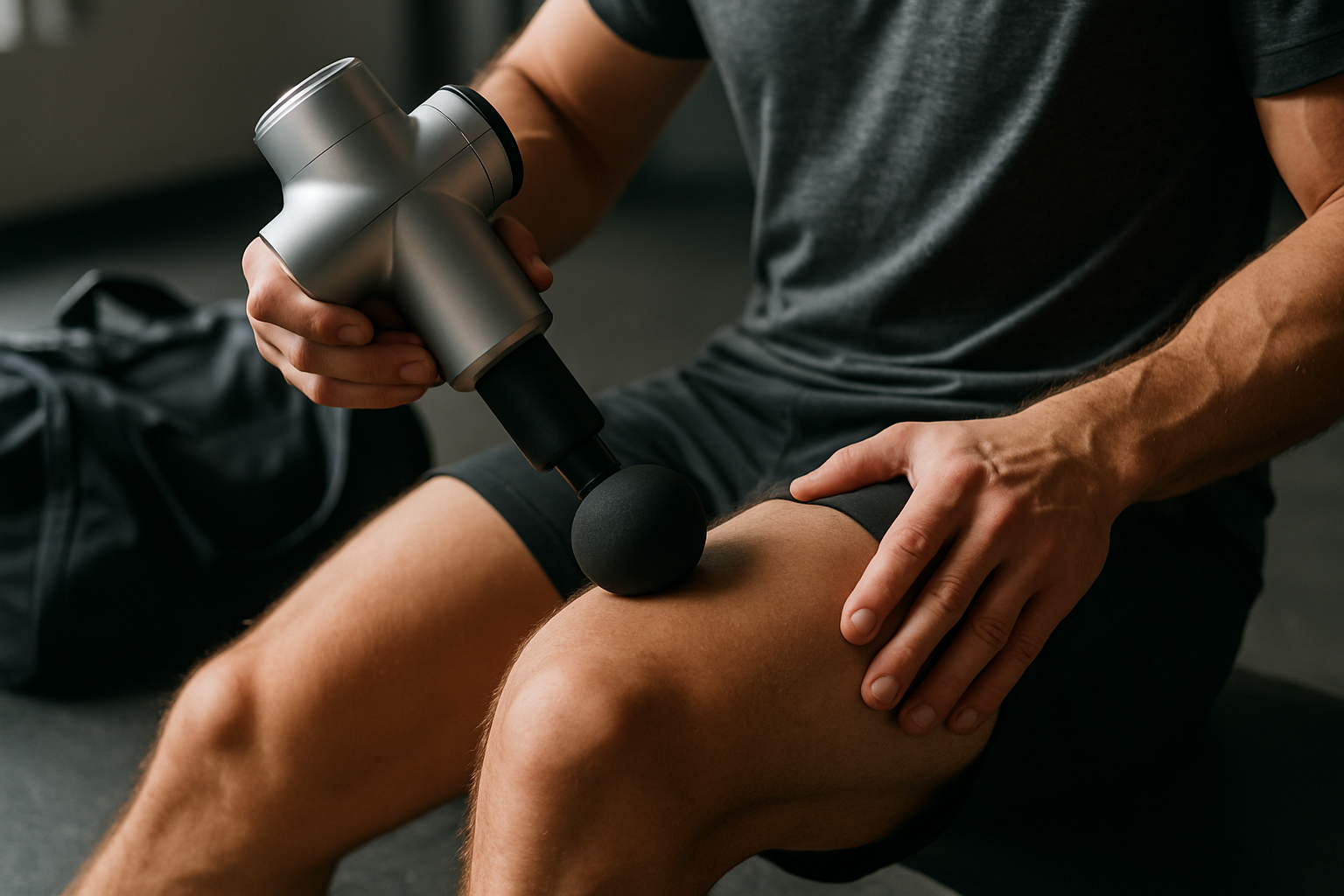
You know that feeling after a tough workout or a long day on your feet — your knees ache, your hips feel stiff, and your shoulders are screaming for some relief? I’ve been there, and so have most of the patients I’ve worked with over the years. It’s exactly why so many people are turning to a massage gun for joint recovery as part of their daily routine. These handheld percussion devices have exploded in popularity, and honestly, for good reason — but there’s also a lot of confusion about what they actually do versus what people hope they’ll do. Let’s cut through the noise together.
Affiliate Disclosure: This post contains affiliate links. As an Amazon Associate, I earn from qualifying purchases. This helps keep JointHealthFAQ.com running at no extra cost to you, and I only recommend products I genuinely think are worth your time and money.
How Percussion Therapy Actually Works on Joints and Muscles
Before we talk about specific products, I want to give you a real picture of what’s happening when you press that massage gun against a sore spot. Percussion massage works by delivering rapid, repetitive pulses of pressure deep into soft tissue. This stimulates blood flow, may help reduce muscle tension, and can promote the kind of local circulation that supports tissue recovery.
Here’s the important distinction I always make with my clients: massage guns work on the muscles and soft tissue around joints — not on the joint itself. If you’re dealing with sore quads after leg day, a tight IT band, or tension in the muscles surrounding your hip, a percussion massager may offer meaningful relief. Research suggests that percussive therapy can help reduce delayed onset muscle soreness (DOMS) and improve range of motion when used consistently as part of a recovery routine.
What it won’t do is repair cartilage, reduce bone-on-bone friction, or reverse arthritis. I say that not to discourage you, but because I believe you deserve honest information. When you use these tools with realistic expectations, you’re far more likely to benefit from them.
Who May Benefit from Using a Massage Gun for Joint Recovery
In my experience, the people who tend to get the most out of percussion massage are those who are dealing with muscle tightness that contributes to joint discomfort — which is actually a very large group. When muscles are chronically tight or fatigued, they can pull on joints in ways that create pain and reduced mobility. Loosening those muscles may indirectly relieve some of that joint stress.
Many people find relief with percussion therapy if they fall into one of these categories:
- Athletes recovering from high-intensity training sessions
- People with desk jobs who deal with hip flexor tightness and lower back tension
- Individuals managing mild knee discomfort related to quad and hamstring tightness
- Anyone working through physical therapy and looking to supplement their home recovery routine
- Older adults dealing with general muscle stiffness around the shoulders, hips, or ankles
One word of caution: if you have an acute injury, active inflammation, or a diagnosed joint condition like rheumatoid arthritis during a flare, please check with your doctor or physical therapist before using a massage gun on or near the affected area.
Products I Recommend: The Best Massage Guns for Joint Recovery
I’ve looked at a lot of options across different price points, and what I care about most is build quality, motor noise, attachment variety, and whether the device can actually reach the deeper muscle layers where tension tends to live. Here are five that I think offer solid value.
Best Overall: TOLOCO Massage Gun
The TOLOCO Massage Gun is one I recommend often because it strikes a great balance between power and quiet operation. The silent brushless motor is a real standout — it’s effective without being disruptively loud, which matters a lot if you’re using it in the evening before bed or in a shared space. It comes with 10 massage heads, so you can target everything from broad back muscles to more focused areas around the knee or shoulder joint. This is a strong everyday choice for athletes and active adults alike.
Best for Customization: CAMEFER Deep Tissue Massage Gun
If you like having precise control over your recovery sessions, the CAMEFER Deep Tissue Massage Gun is worth a close look. With 30 speed settings and 6 attachments, it gives you a level of customization that’s genuinely useful — lower speeds are great for warming up sensitive areas near joints, while higher intensities work well on dense muscle groups like the glutes or upper back. It’s also a thoughtful gift option for anyone in your life who deals with chronic muscle tension.
Best for Athletes: Elefor Massage Gun Deep Tissue
The Elefor Massage Gun brings 20 speed levels and 8 massage heads to the table, making it a versatile option for people who train hard and need thorough muscle recovery support. The matte black finish is sleek, but more importantly, the percussive force is solid enough to really work through stubborn muscle knots. Many athletes find this one especially helpful for post-run hip and knee muscle recovery.
Best Budget Pick: LEERCON Mini Massage Gun
Not everyone needs a full-size device, and the LEERCON Mini Massage Gun proves that a smaller form factor doesn’t have to mean less effectiveness. It offers 6 speed settings and 4 attachments — enough to address the most common muscle groups that affect joint comfort, including the neck, lower back, and calves. For anyone newer to percussion therapy or on a tighter budget, this is a genuinely good starting point.
Best for Travel: KingPavonini Mini Massage Gun
If you travel frequently or want something that fits in a gym bag without adding bulk, the KingPavonini Mini Massage Gun is impressively compact at just 0.5 pounds. It comes with an all-in-one storage case, which makes it easy to keep organized and protected. Don’t let the size fool you — the deep tissue percussion is effective, and having it on hand during trips means you’re not sacrificing your recovery routine when you