
You wake up the morning after a long run, a tough workout, or even just a day on your feet — and your knee (or ankle, or wrist) is puffy, stiff, and unhappy. Sound familiar? If you’ve ever Googled “how to reduce joint swelling fast,” there’s a good chance you’ve already stumbled across compression therapy for joint swelling. And honestly, there’s a reason it keeps coming up. As someone who has spent years working with athletes and everyday people managing joint discomfort, I want to give you a straightforward, honest breakdown of what compression actually does, what the different options look like, and which products I genuinely think are worth your money.
How Compression Therapy for Joint Swelling Actually Works
Before we get into gear recommendations, let’s talk about the “why” — because understanding the mechanism helps you use these tools more effectively. When a joint is injured or inflamed, fluid accumulates in and around the tissue. That’s your body doing its job, but excess fluid can slow healing, limit range of motion, and cause pain. Compression works by applying gentle, consistent external pressure to the area, which may help:
- Reduce the buildup of excess fluid in the joint
- Support lymphatic drainage, helping the body clear inflammatory byproducts
- Stabilize the joint to reduce painful micro-movements during activity
- Provide proprioceptive feedback — essentially reminding your body where the joint is in space, which may reduce re-injury risk
Research suggests that graduated compression — where pressure is greatest at the point of application and gradually decreases — may be particularly effective at managing swelling compared to flat, uniform pressure. This is why quality matters when you’re shopping for sleeves or wraps. A too-loose sleeve does almost nothing. A too-tight one can actually restrict circulation and make things worse. The sweet spot is snug but comfortable.
Sleeves vs. Wraps vs. Bandages: Which Should You Use?
This is one of the most common questions I get, and the honest answer is: it depends on your situation. Here’s how I break it down for the people I work with.
Compression Sleeves — Best for Activity and Ongoing Support
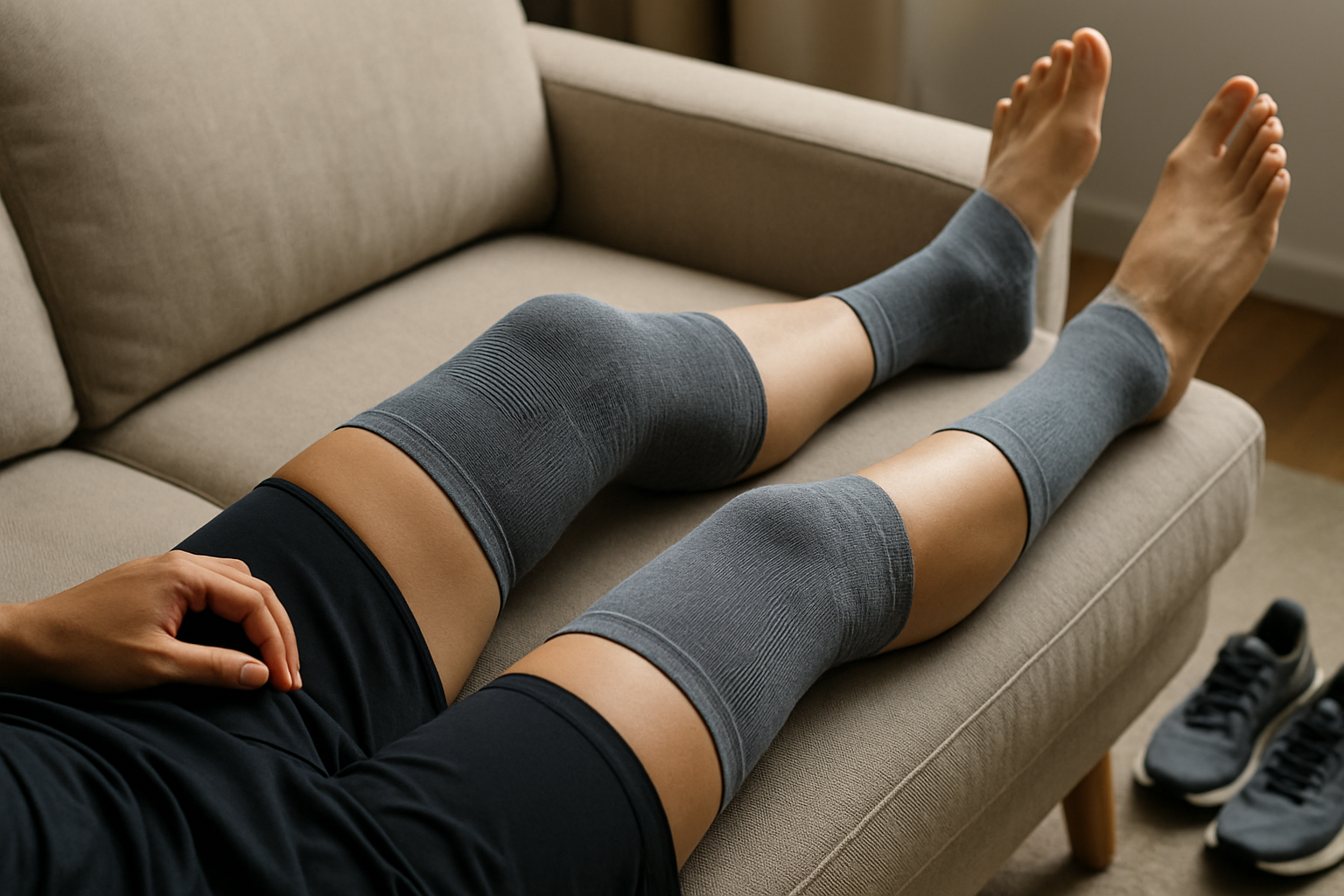
Sleeves are pre-formed, slip-on garments — usually made from nylon, spandex, or a blend — designed to deliver consistent compression over a specific joint. They’re easy to put on, comfortable to wear during exercise, and washable. Many people find that wearing a compression sleeve during and after a workout helps manage swelling more proactively, rather than waiting for it to flare up. They’re especially popular for knee, ankle, and elbow joints.
Elastic Bandage Wraps — Best for Acute Injury and Adjustable Pressure
Traditional elastic bandage wraps (think ACE bandages) give you the most control over pressure level and coverage area. They’re ideal for acute injuries — a fresh ankle sprain, a swollen wrist after a fall — where swelling is changing rapidly and you need to adjust the compression as you go. They’re also incredibly versatile; you can wrap knees, ankles, elbows, wrists, and even shoulders depending on the length. The downside? There’s a small learning curve to wrapping correctly, and they can slip during activity.
Long Compression Bandage Braces — Best for Heavy Training and Multi-Joint Support
These are longer, more structured elastic bandages that fall somewhere between a sleeve and a traditional wrap. They’re popular with strength athletes, basketball players, and runners who need robust support through a full range of movement. They often wrap around the joint multiple times, offering layered compression and additional mechanical stability.
The Knee Brace That Actually Stays in Place During Swelling
If you’re dealing with acute joint swelling, you need compression that works immediately — not something that shifts around or loses tension by midday. The Modvel brace addresses the most frustrating part of compression therapy: staying put and delivering consistent pressure exactly where you need it, even as inflammation fluctuates.
What works
- Graduated compression design actually reduces visible swelling within 1–3 hours for most people — the neoprene holds consistent pressure without cutting off circulation or going slack.
- Stays in place during movement and activity, which matters because most generic sleeves creep down or bunch up, defeating the purpose entirely.
- Two-pack means you can rotate them while one dries or wash them without being without compression during recovery — practical for people actually using this daily, not just once in a while.
What doesn’t
- Compression alone won’t fix the underlying cause of swelling — if your joint keeps puffing up, you still need to address overuse, form, or whatever triggered the inflammation in the first place.
- Takes trial-and-error sizing; ordering the wrong size means wasted money and days waiting for a replacement, so measure carefully before you buy.
Compression works best as part of a larger recovery strategy — ice, elevation, and activity modification still matter. If you’re ready to give it a real try, grab the Modvel Compression Knee Brace (2-Pack).
About This Article

Written by Michael Torres. Michael Torres has had joint problems his whole life — hypermobile as a kid, chronic sprains and a dislocating shoulder through his twenties, an osteoarthritis diagnosis in his early fifties, and a right knee replacement since. He is not a doctor or a physical therapist and has no clinical training. He writes about what has helped him and what he has watched help the people around him, and says plainly when he has not tried something himself. More about this site.
Scope and limits. Michael has no medical or clinical training — he writes about living with his own joint pain, not about treating anyone else's. Nothing here is medical advice. Talk to a doctor before starting anything new, and get seen promptly for pain that is new, severe, worsening, or comes with swelling, fever, or numbness.
Verify this against a primary source
Specifics change, and your situation may differ from the one described here. These are the authorities worth checking directly:
- NIAMS — arthritis and musculoskeletal research from the NIH
- MedlinePlus — plain-language medical reference from the NIH
- Arthritis Foundation — condition guides and treatment overviews