
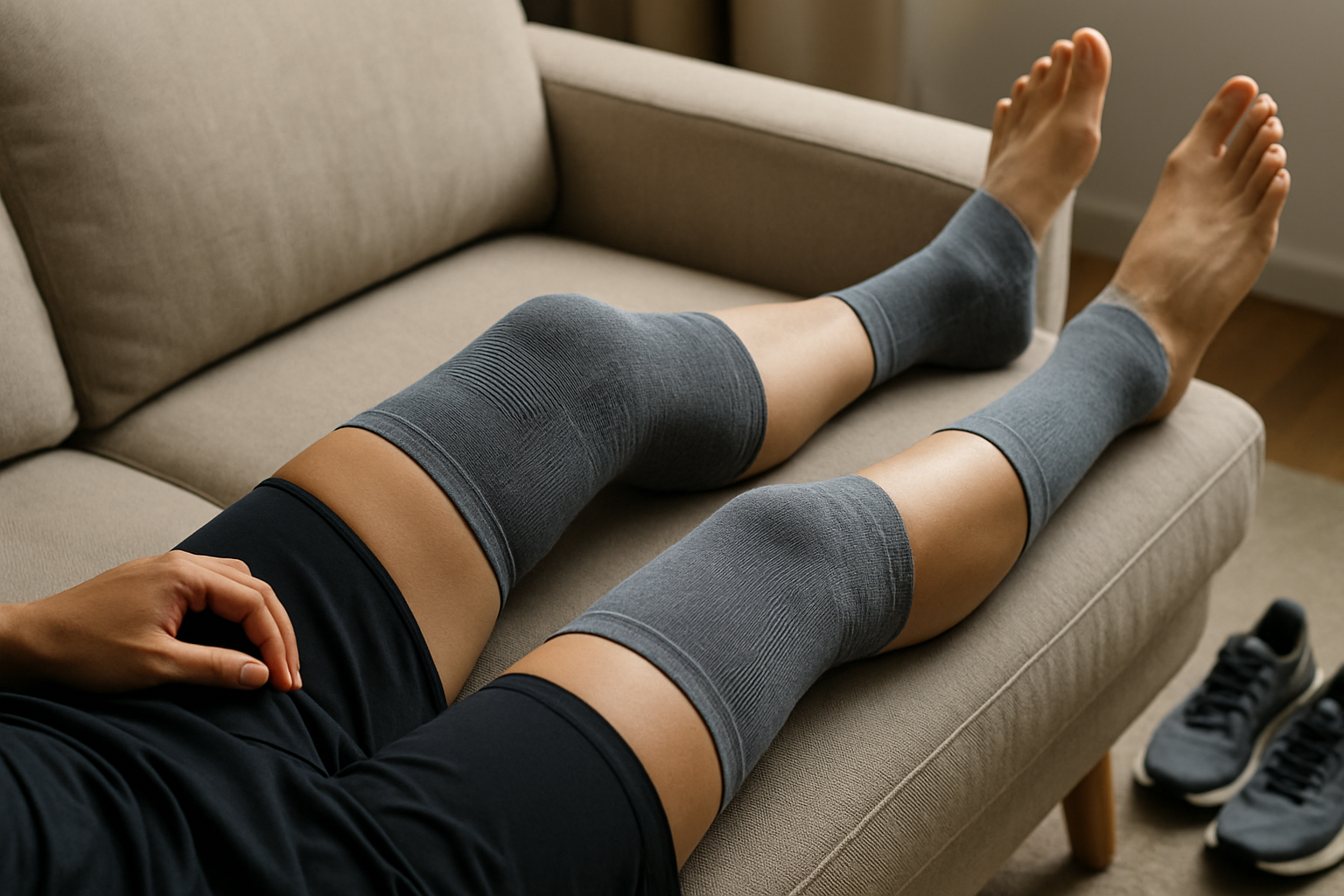
You wake up the morning after a long run, a tough workout, or even just a day on your feet — and your knee (or ankle, or wrist) is puffy, stiff, and unhappy. Sound familiar? If you’ve ever Googled “how to reduce joint swelling fast,” there’s a good chance you’ve already stumbled across compression therapy for joint swelling. And honestly, there’s a reason it keeps coming up. As someone who has spent years working with athletes and everyday people managing joint discomfort, I want to give you a straightforward, honest breakdown of what compression actually does, what the different options look like, and which products I genuinely think are worth your money.
This post contains affiliate links. As an Amazon Associate, I earn from qualifying purchases. This means if you click a link and make a purchase, I may earn a small commission at no extra cost to you. I only recommend products I believe offer real value.
How Compression Therapy for Joint Swelling Actually Works
Before we get into gear recommendations, let’s talk about the “why” — because understanding the mechanism helps you use these tools more effectively. When a joint is injured or inflamed, fluid accumulates in and around the tissue. That’s your body doing its job, but excess fluid can slow healing, limit range of motion, and cause pain. Compression works by applying gentle, consistent external pressure to the area, which may help:
- Reduce the buildup of excess fluid in the joint
- Support lymphatic drainage, helping the body clear inflammatory byproducts
- Stabilize the joint to reduce painful micro-movements during activity
- Provide proprioceptive feedback — essentially reminding your body where the joint is in space, which may reduce re-injury risk
Research suggests that graduated compression — where pressure is greatest at the point of application and gradually decreases — may be particularly effective at managing swelling compared to flat, uniform pressure. This is why quality matters when you’re shopping for sleeves or wraps. A too-loose sleeve does almost nothing. A too-tight one can actually restrict circulation and make things worse. The sweet spot is snug but comfortable.
Sleeves vs. Wraps vs. Bandages: Which Should You Use?
This is one of the most common questions I get, and the honest answer is: it depends on your situation. Here’s how I break it down for the people I work with.
Compression Sleeves — Best for Activity and Ongoing Support
Sleeves are pre-formed, slip-on garments — usually made from nylon, spandex, or a blend — designed to deliver consistent compression over a specific joint. They’re easy to put on, comfortable to wear during exercise, and washable. Many people find that wearing a compression sleeve during and after a workout helps manage swelling more proactively, rather than waiting for it to flare up. They’re especially popular for knee, ankle, and elbow joints.
Elastic Bandage Wraps — Best for Acute Injury and Adjustable Pressure
Traditional elastic bandage wraps (think ACE bandages) give you the most control over pressure level and coverage area. They’re ideal for acute injuries — a fresh ankle sprain, a swollen wrist after a fall — where swelling is changing rapidly and you need to adjust the compression as you go. They’re also incredibly versatile; you can wrap knees, ankles, elbows, wrists, and even shoulders depending on the length. The downside? There’s a small learning curve to wrapping correctly, and they can slip during activity.
Long Compression Bandage Braces — Best for Heavy Training and Multi-Joint Support
These are longer, more structured elastic bandages that fall somewhere between a sleeve and a traditional wrap. They’re popular with strength athletes, basketball players, and runners who need robust support through a full range of movement. They often wrap around the joint multiple times, offering layered compression and additional mechanical stability.
Products I Recommend for Compression Therapy
I’ve looked at a lot of products in this space, and I want to be straight with you — not everything on the market is worth buying. Here are the options I feel good recommending, based on quality, user feedback, and practical value.
For Everyday Knee Support and Workout Recovery
The Modvel Compression Knee Brace (2-Pack) is one of the most consistently well-reviewed knee sleeves in this price range. The dual-layer knit construction offers firm, graduated compression around the kneecap and patellar tendon, and the silicone grip strips help keep it in place during movement. It’s suitable for people managing arthritis, meniscus discomfort, or general post-workout puffiness. Many users report that wearing it during runs and gym sessions significantly reduces the swelling they used to experience afterward. The 2-pack also makes it practical — wear one, wash one.
If you’re looking for a slightly different fit profile or color option, Modvel also offers this variation of their knee compression sleeve, which uses the same quality construction. Worth comparing sizing across both listings to find your best fit.
A Great Budget-Friendly Sleeve Option
The Bodyprox Knee Compression Sleeve (2-Pack) is a solid option if you want dependable compression at a lower price point. It features a breathable, four-way stretch fabric and a contoured design around the kneecap. It won’t feel as structured as a thicker sleeve, but for moderate activity, light hiking, or wearing around the house after a tough day, many people find it does the job well. Having two in a pack is a practical bonus for daily use.
For Acute Swelling and Versatile Wrapping
When someone on my team has a fresh injury or unpredictable swelling — the kind that changes day to day — I reach for elastic bandage wraps before anything else. The FRESINIDER Premium Elastic Bandage Wrap (6-Pack) is a great value set. The 4-inch width works well for knees and ankles, the cotton-latex-free material is comfortable against skin, and the touch-closure clips at both ends mean no pins and no unraveling mid-session. Having six in a pack means you can keep them in multiple places — gym bag, home first aid kit, car — which honestly increases how often you’ll actually use them.
For Heavy Training and Wrap-Around Knee Support
If you squat, play basketball, or do any activity that puts significant load through your knees