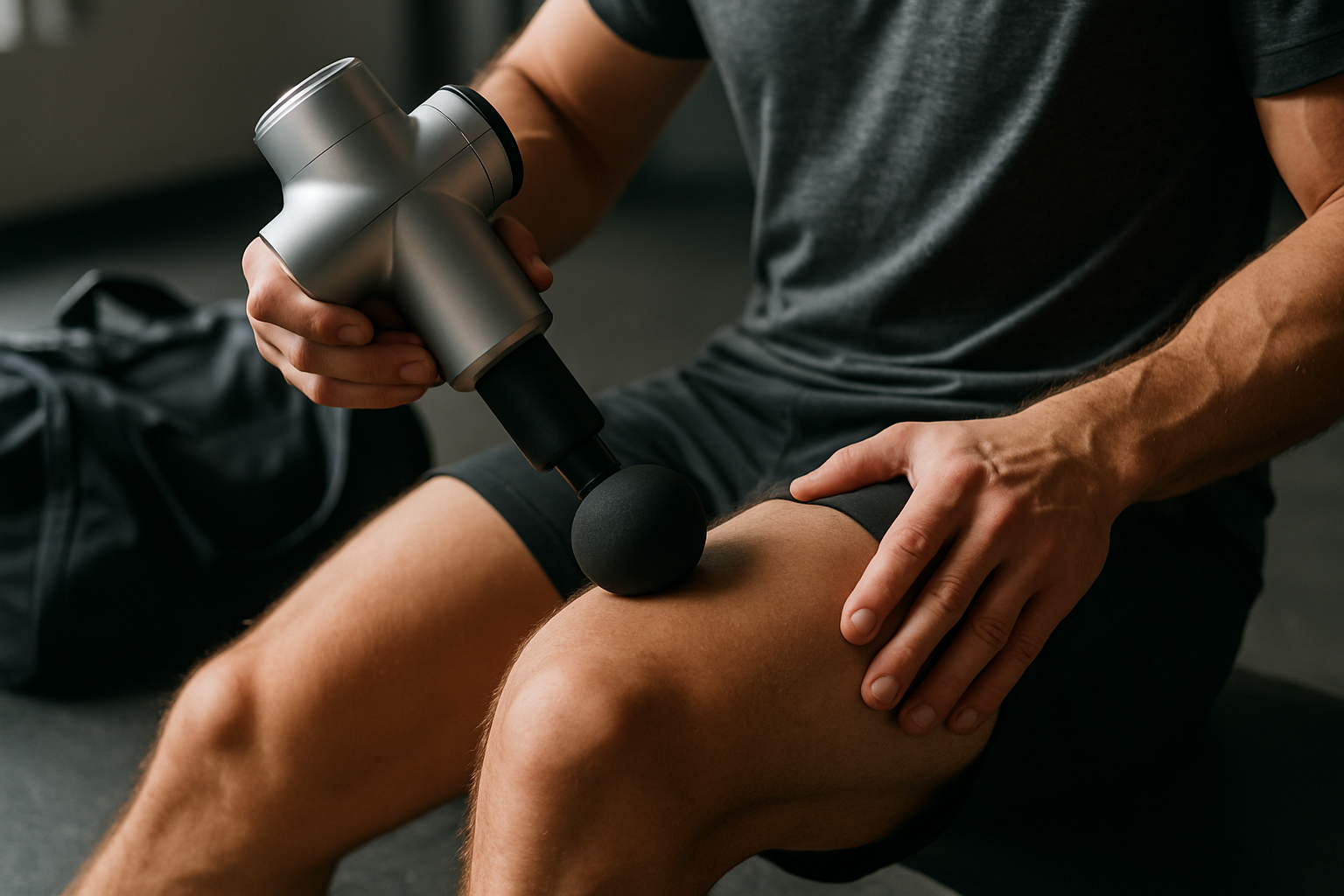

You know that feeling after a tough workout or a long day on your feet — your knees ache, your hips feel stiff, and your shoulders are screaming for some relief? I’ve been there, and so has nearly everyone I know who deals with this. It’s exactly why so many people are turning to a massage gun for joint recovery as part of their daily routine. These handheld percussion devices have exploded in popularity, and honestly, for good reason — but there’s also a lot of confusion about what they actually do versus what people hope they’ll do. Let’s cut through the noise together.
How Percussion Therapy Actually Works on Joints and Muscles
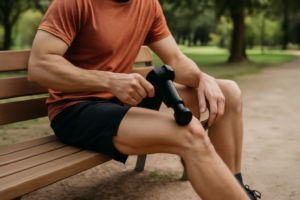
Before we talk about specific products, I want to give you a real picture of what’s happening when you press that massage gun against a sore spot. Percussion massage works by delivering rapid, repetitive pulses of pressure deep into soft tissue. This stimulates blood flow, may help reduce muscle tension, and can promote the kind of local circulation that supports tissue recovery.
Here’s the important distinction I always make with the friends I help: massage guns work on the muscles and soft tissue around joints — not on the joint itself. If you’re dealing with sore quads after leg day, a tight IT band, or tension in the muscles surrounding your hip, a percussion massager may offer meaningful relief. Research suggests that percussive therapy can help reduce delayed onset muscle soreness (DOMS) and improve range of motion when used consistently as part of a recovery routine.
What it won’t do is repair cartilage, reduce bone-on-bone friction, or reverse arthritis. I say that not to discourage you, but because I believe you deserve honest information. When you use these tools with realistic expectations, you’re far more likely to benefit from them.
Who May Benefit from Using a Massage Gun for Joint Recovery
In my experience, the people who tend to get the most out of percussion massage are those who are dealing with muscle tightness that contributes to joint discomfort — which is actually a very large group. When muscles are chronically tight or fatigued, they can pull on joints in ways that create pain and reduced mobility. Loosening those muscles may indirectly relieve some of that joint stress.
Many people find relief with percussion therapy if they fall into one of these categories:
- Athletes recovering from high-intensity training sessions
- People with desk jobs who deal with hip flexor tightness and lower back tension
- Individuals managing mild knee discomfort related to quad and hamstring tightness
- Anyone working through physical therapy and looking to supplement their home recovery routine
- Older adults dealing with general muscle stiffness around the shoulders, hips, or ankles
One word of caution: if you have an acute injury, active inflammation, or a diagnosed joint condition like rheumatoid arthritis during a flare, please check with your doctor or physical therapist before using a massage gun on or near the affected area.
The Massage Gun That Actually Delivers Sustained Relief Without the Hype
If you’re looking for a massage gun that won’t die after three months or vibrate your hand numb, the TOLOCO strikes the balance between build quality and realistic price that most people actually need for consistent joint recovery use. This is the one I’ve stuck with because it handles daily use without becoming another gadget in the closet.
What works
- Sustained vibration at 3,200 RPM is aggressive enough to actually reduce muscle tightness around joints without feeling like it’s punching through to bone — most users notice relief within 2–3 minutes of focused use on problem areas.
- Battery lasts through a full week of daily 5–10 minute sessions, which means you’ll actually use it instead of charging it constantly or letting it die between workouts.
- The head design is firm enough to reach deep muscle tension without the attachments shifting or breaking off mid-session, which is where cheaper models usually fail after 2–3 months of regular use.
What doesn’t
- This is recovery support, not rehab — if your joint pain is structural (torn meniscus, labral damage, severe arthritis) or caused by misalignment, a massage gun will feel good for 30 minutes and then you’re back where you started.
- The noise level sits at around 60 dB, which means early morning or late evening use might bother a sleep partner or roommate if you’re not prepared for that.
Expect to use this consistently for at least 2–3 weeks before you notice lasting improvement in stiffness, and don’t skip the movement work or strength training that actually addresses what caused the tightness in the first place. TOLOCO Massage Gun
About This Article

Written by Michael Torres. Michael Torres has had joint problems his whole life — hypermobile as a kid, chronic sprains and a dislocating shoulder through his twenties, an osteoarthritis diagnosis in his early fifties, and a right knee replacement since. He is not a doctor or a physical therapist and has no clinical training. He writes about what has helped him and what he has watched help the people around him, and says plainly when he has not tried something himself. More about this site.
Scope and limits. Michael has no medical or clinical training — he writes about living with his own joint pain, not about treating anyone else's. Nothing here is medical advice. Talk to a doctor before starting anything new, and get seen promptly for pain that is new, severe, worsening, or comes with swelling, fever, or numbness.
Verify this against a primary source
Specifics change, and your situation may differ from the one described here. These are the authorities worth checking directly:
- NIAMS — arthritis and musculoskeletal research from the NIH
- MedlinePlus — plain-language medical reference from the NIH
- Arthritis Foundation — condition guides and treatment overviews