
You know that moment when you wake up, swing your legs over the side of the bed, and your knees remind you — loudly — that they were not consulted about your plans for the day? Maybe it’s your shoulders after a tough training week, or your fingers that ache after a long day of typing. Whatever the joint, whatever the cause, that nagging pain has a way of wearing you down. So when a friend, a coach, or a late-night scroll through social media introduces you to red light therapy for joint pain, it’s natural to wonder: is this the real deal, or just another wellness trend dressed up in fancy LED lights?
What Is Red Light Therapy and How Does It Work?
Red light therapy — sometimes called photobiomodulation or low-level laser therapy — uses specific wavelengths of light, typically in the 630–700 nanometer (red light) and 800–900 nanometer (near-infrared) ranges, to penetrate the skin and interact with tissues beneath the surface. The two most researched wavelengths are 660nm and 850nm, which you’ll see referenced on most quality devices.
Here’s the basic idea: your cells contain tiny structures called mitochondria — the energy producers of the cell. Research suggests that specific light wavelengths may stimulate mitochondrial activity, potentially increasing the production of ATP (your cells’ primary energy currency). The thinking is that better-fueled cells may be more capable of repairing tissue, reducing inflammation, and supporting overall recovery. It’s not magic — it’s biology, and the science, while still growing, is genuinely promising.
What Does the Research Actually Say About Red Light Therapy for Joint Pain?
I want to be straight with you here, the way I’d be with a training partner asking me this question: the research is encouraging, but it’s not a slam dunk yet. Studies on red light therapy for joint pain have shown some genuinely interesting results, particularly around conditions like osteoarthritis, tendinitis, and post-exercise muscle soreness.
A 2009 systematic review published in The Lancet found that low-level laser therapy may reduce pain and morning stiffness in patients with rheumatoid arthritis. Other studies have suggested that photobiomodulation may help reduce inflammation markers and improve joint function in people with knee osteoarthritis. Many athletes and physical therapy patients report meaningful improvements in recovery time and discomfort levels when incorporating red light therapy into their routines.
That said, study sizes vary, protocols differ between devices, and individual responses can be all over the map. The honest takeaway: many people find real relief with red light therapy, research suggests it has genuine mechanisms of action, but it works best as part of a broader joint health approach — not as a standalone cure.
How to Use Red Light Therapy for Joint Pain at Home
One of the reasons red light therapy has become so popular is that home devices have gotten genuinely good — and genuinely accessible. You no longer need to book expensive clinic sessions to experience the potential benefits. Here’s what I typically suggest when someone asks me how to get started:
- Consistency matters more than intensity. Most research protocols involve sessions of 10–20 minutes, several times per week. Doing it regularly is far more important than doing it occasionally at maximum power.
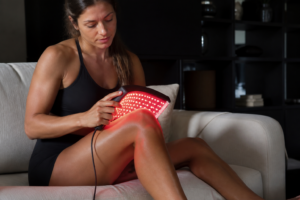
- Distance and exposure time matter. Most panel devices work best at 6–12 inches from the target area. Wrap-style devices sit directly on the joint, which can be very effective for localized pain.
- Target the right tissue. Near-infrared light (850nm) penetrates deeper than red light (660nm), making it potentially better suited for joints, tendons, and muscles below the skin surface. Combination devices that offer both wavelengths give you the most flexibility.
- Don’t expect overnight results. Many people report noticing a difference after 2–4 weeks of consistent use. Give it a fair trial before writing it off.
The Red Light Panel That Actually Delivers Consistent Wavelengths for Joint Recovery
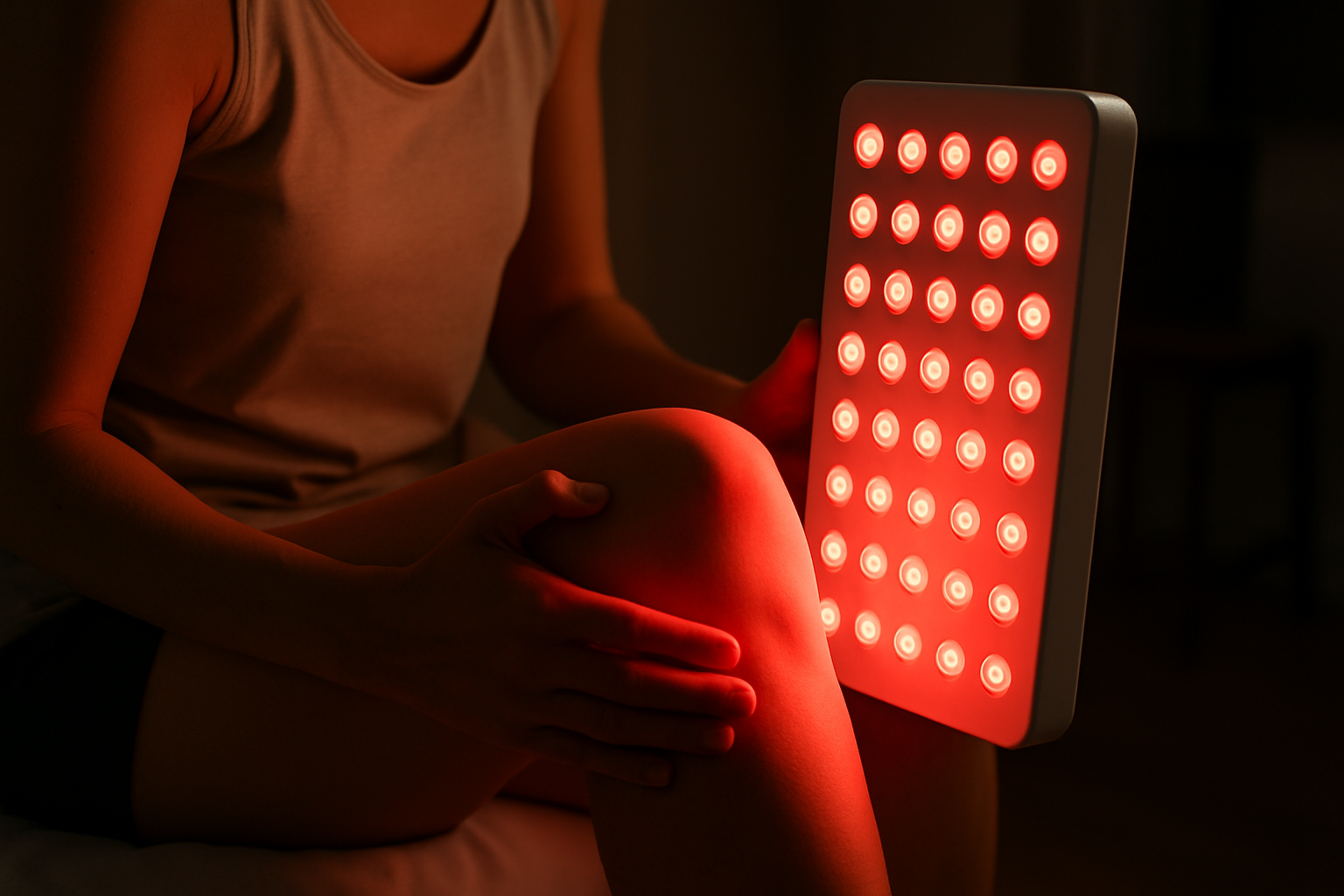
If you’re going to invest in red light therapy for joint pain, you need a device that actually outputs the wavelengths the research supports—660nm for surface inflammation and 850nm for deeper tissue penetration. This dual-wavelength panel gives you both without the guesswork or the inflated price tag of premium brands.
What works
- The 660nm and 850nm combination covers what the research actually backs—visible red for surface joints and near-infrared for deeper structures like rotator cuffs and knees, without relying on unproven wavelengths.
- 45W output is high enough to reach therapeutic irradiance levels (most junk devices under 10W won’t) without requiring you to sit uncomfortably close or treat the same joint for 30+ minutes daily.
- Users consistently report noticeable reduction in morning stiffness and post-workout joint soreness within 2–3 weeks of regular use, especially for knees, shoulders, and hands—the joints that matter most for daily function.
What doesn’t
- This is not a replacement for physical therapy, strength work, or addressing the mechanical cause of your pain—red light reduces inflammation and may speed recovery, but it won’t fix a movement pattern or a structurally damaged joint.
- Results are modest and incremental, not dramatic; you won’t wake up pain-free after one session, and about 20–30% of people see minimal benefit regardless of consistency, which is why it works best alongside other interventions.
Red light therapy works best as part of a broader recovery strategy, not as a standalone fix—consistency matters more than intensity, and you’ll need at least 4–6 weeks of regular use before deciding if it’s right for you. If you’re looking for an evidence-backed entry point, check out the 45W LED Panel combining 660nm and 850nm wavelengths.
About This Article

Written by Michael Torres. Michael Torres has had joint problems his whole life — hypermobile as a kid, chronic sprains and a dislocating shoulder through his twenties, an osteoarthritis diagnosis in his early fifties, and a right knee replacement since. He is not a doctor or a physical therapist and has no clinical training. He writes about what has helped him and what he has watched help the people around him, and says plainly when he has not tried something himself. More about this site.
Scope and limits. Michael has no medical or clinical training — he writes about living with his own joint pain, not about treating anyone else's. Nothing here is medical advice. Talk to a doctor before starting anything new, and get seen promptly for pain that is new, severe, worsening, or comes with swelling, fever, or numbness.
Verify this against a primary source
Specifics change, and your situation may differ from the one described here. These are the authorities worth checking directly:
- NIAMS — arthritis and musculoskeletal research from the NIH
- MedlinePlus — plain-language medical reference from the NIH
- Arthritis Foundation — condition guides and treatment overviews