
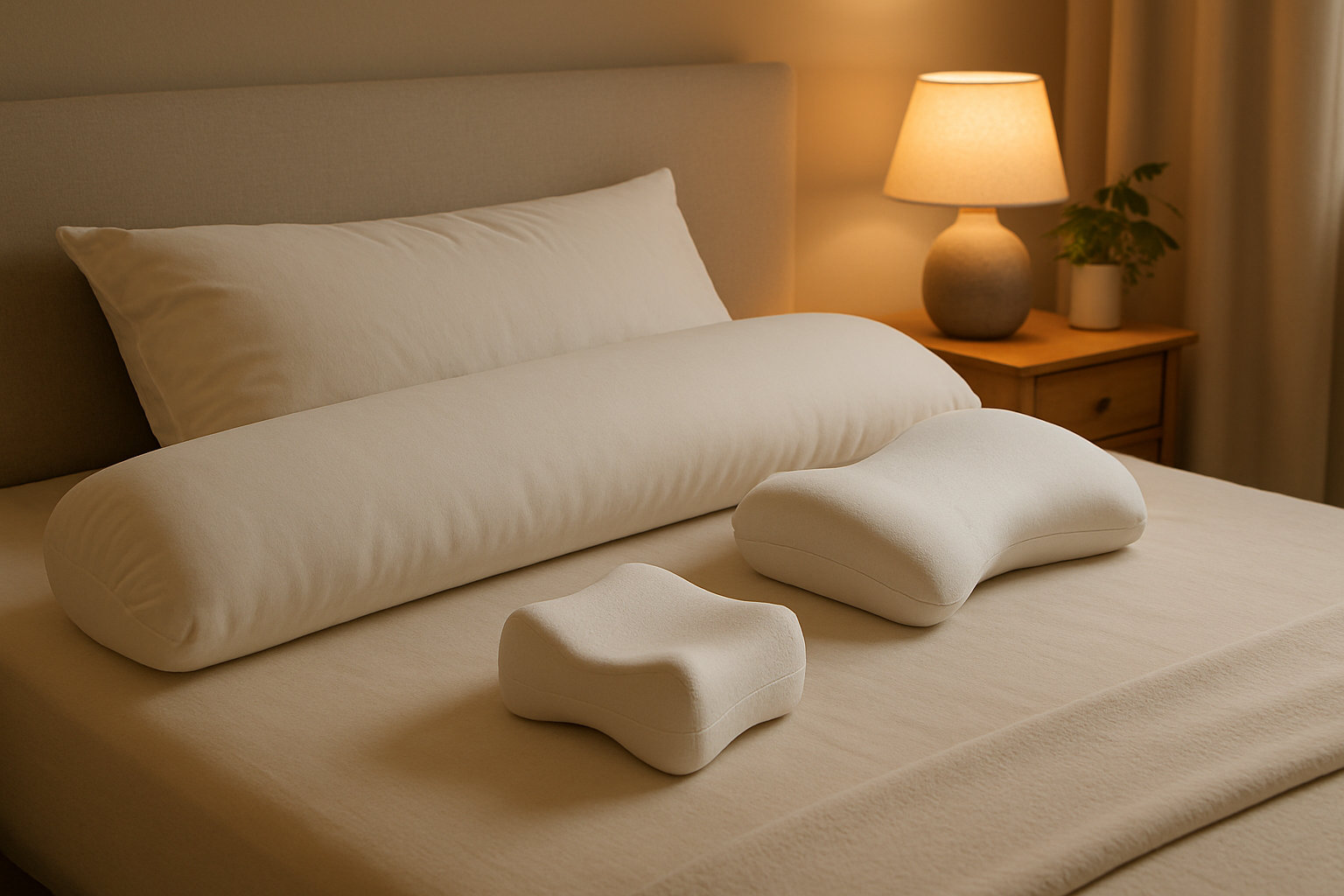
You know that moment — it’s 2 a.m., you’ve woken up again with an aching hip or a stiff, throbbing knee, and you spend the next twenty minutes shifting, flipping, and rearranging yourself just trying to get comfortable enough to fall back asleep. If that sounds familiar, you’re not alone. For millions of people living with arthritis, bursitis, or general joint inflammation, sleep becomes its own kind of challenge. The good news is that finding the right sleeping positions for joint pain relief — paired with the right supportive tools — can genuinely change how you feel both at night and when you finally crawl out of bed in the morning.
This post contains affiliate links. As an Amazon Associate, I earn from qualifying purchases. This means I may earn a small commission if you purchase through my links, at no extra cost to you. I only recommend products I believe may genuinely help.
Why Your Sleep Position Actually Matters for Joint Health
Here’s something I wish more people understood early on: the position your body holds for six to eight hours every night has a real cumulative effect on your joints. When you sleep in a misaligned position — say, with your top knee dropping forward and rotating your hip inward — you’re placing prolonged, low-grade stress on your hip joint, your SI joint, and even your lower back. Do that night after night, and you’re essentially spending a third of your life compressing tissue that’s already inflamed.
Research suggests that spinal alignment during sleep plays a meaningful role in nighttime pain levels and morning stiffness for people with conditions like osteoarthritis and rheumatoid arthritis. It’s not a cure, and it won’t replace your treatment plan — but small positional adjustments, supported by the right pillows, may help reduce unnecessary joint loading while your body works on recovery during sleep.
The Best Sleeping Positions for Joint Pain Relief (And How to Nail Each One)
Side Sleeping with Support
Side sleeping is often the most comfortable position for people with hip, knee, and lower back joint issues — but only when it’s done with proper alignment. The biggest mistake I see is people stacking their knees directly on top of each other without any cushioning. That bony contact between the knees creates pressure points and causes the top hip to internally rotate all night. The fix is simple: place a pillow between your knees. This single adjustment keeps your hips stacked and your spine neutral, which many people find reduces morning hip and low back stiffness significantly.
If you have shoulder joint issues, side sleeping on the affected shoulder can aggravate things. Try sleeping on your less painful side, or make sure your mattress has enough give to accommodate your shoulder. A full-length body pillow can also help you maintain that side position without rolling onto your stomach during the night.
Back Sleeping with a Knee Bolster
Back sleeping can be great for spine alignment, but if you have knee or hip arthritis, lying completely flat often increases joint discomfort. A small pillow or rolled towel placed under your knees creates a slight bend that takes pressure off the knee joints and allows the hip flexors to relax. Many people with lumbar spine issues also find this position relieves the pulling sensation they feel in their lower back when lying flat.
Stomach Sleeping — Let’s Talk Honestly
I won’t be preachy about this, but stomach sleeping is genuinely tough on joints — especially the neck and lower back. When you sleep face-down, your neck is rotated to one side for hours, which may worsen cervical spine and shoulder discomfort. If you’re a committed stomach sleeper and truly can’t change, try placing a thin pillow under your pelvis rather than under your head. This helps reduce the lumbar extension that strains your lower back and hips. That said, transitioning to side or back sleeping, even gradually, is worth attempting if joint pain is a regular problem for you.
What Actually Helps: Pillows and Supports Worth Trying
Over the years I’ve seen a lot of people spend money on fancy mattresses when the real difference-maker was a good pillow setup. Here are the options I point people toward most often, depending on their specific needs.
For Side Sleepers Who Need Full-Body Support
A long body pillow is one of the most versatile tools for joint-friendly sleep. You can hug it to keep your top shoulder from collapsing forward, tuck it between your knees to align your hips, and use it to prevent rolling onto your back or stomach. The TranquilRelax Memory Foam Body Pillow is a 47-inch C-shaped option with a machine-washable cover — which I appreciate for practical reasons. Memory foam conforms to your shape and holds its position better than polyester fill, which can flatten and shift during the night.
If you’re someone who also struggles with anxiety or restlessness — which often goes hand-in-hand with chronic pain — a weighted option might be worth considering. The SleepCloud Weighted Body Pillow comes in at 6.5 pounds with cooling fabric, and research suggests that gentle, distributed weight may help some people settle into deeper sleep more easily. Many people find they toss and turn less with a weighted pillow, which means fewer disruptive position changes throughout the night.
For those who want comprehensive wraparound support — especially if hip and back pain tend to strike together — the Pozico U-Shaped Full Body Pillow is worth a look. At 51 inches with an orthopedic design and soft velvet cover, it supports your back, neck, and hips simultaneously. The U-shape is particularly useful for people who struggle to stay on their side and want something that essentially cradles them in place all night.
For Neck and Cervical Spine Support
If your joint pain is centered in your neck or upper back, your head pillow matters just as much as anything else. A standard fluffy pillow often lets your head sink too far, throwing your cervical spine out of alignment. A contoured cervical pillow keeps your neck in a more neutral position whether you’re a side or back sleeper.
The Ultra Pain Relief Cooling Cervical Pillow is an adjustable, contoured memory foam option designed for side, back, and stomach sleepers. The cooling surface is a bonus if joint inflammation tends to make you run warm at night. If you prefer a slightly different loft or firmness, there’s also this version of the same cervical pillow, which gives you another size and feel option to match your sleeping style. Many people with neck arthritis or cervicogenic headaches report that switching to an ergonomic contour pillow made a noticeable difference in how their neck felt in the morning.