
You know that moment — you’ve been standing at the counter chopping vegetables for ten minutes, and suddenly your fingers ache, your wrists feel like they’re on fire, and you find yourself white-knuckling a stubborn jar lid until your knuckles literally turn white. If that sounds familiar, you’re not alone. I hear it constantly from clients: “I love to cook, but it just hurts too much.” That’s exactly why kitchen ergonomics for joint pain has become one of my favorite topics to talk about, because the kitchen is one of those places where small changes can make a genuinely huge difference in your daily comfort and independence.
Why the Kitchen Is a High-Risk Zone for Joint Pain
Think about everything you do in the kitchen: gripping, twisting, lifting, standing on hard floors, reaching overhead, and repeating the same motions over and over. For anyone living with arthritis, rheumatoid arthritis, hypermobility, carpal tunnel syndrome, or recovering from a joint injury, those tasks aren’t just tedious — they can genuinely inflame already-irritated joints and make symptoms worse for hours afterward.
Research suggests that repetitive gripping and pinching motions are among the most stressful movements for the small joints of the hand. Twisting a jar lid, for example, requires a strong pinch grip combined with rotational force — two things that tend to be particularly painful and damaging over time for people with hand and wrist joint issues. The good news? Occupational therapists and physical therapists have been developing adaptive strategies and tools for this exact problem for decades, and the product options available today are better than they’ve ever been.
Kitchen Ergonomics for Joint Pain: The Core Principles to Know First
Before we get into specific gadgets, I want to share a few foundational principles I give to every client dealing with joint pain in the kitchen. These are things you can start doing today, for free.
Use Your Larger, Stronger Joints
This is classic joint protection advice, and it works. Instead of pinching a pot handle with your fingers, cradle it with both palms and your wrists. Instead of gripping a knife tightly, focus the pressure through the heel of your hand. Using larger muscle groups and joints distributes force more evenly and reduces stress on smaller, more vulnerable structures.
Reduce Grip Force Whenever Possible
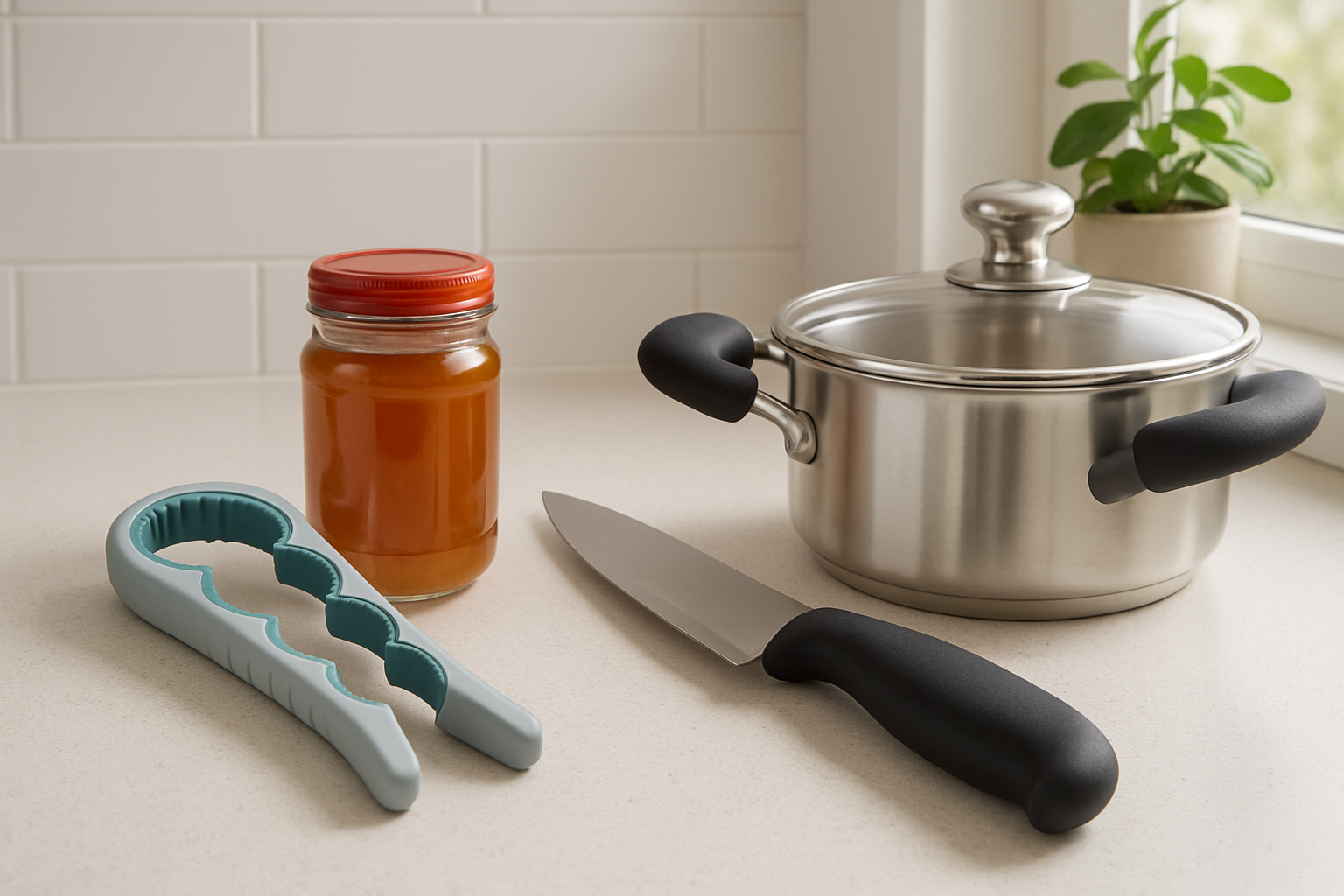
This is where adaptive tools genuinely shine. Anything that removes the need for a powerful pinch grip — like an electric opener or an ergonomically designed knife — can meaningfully reduce the load on your hand joints during meal prep.
Take Micro-Breaks and Alternate Tasks
Many people find relief with a simple habit of alternating between light and heavier tasks rather than doing all the chopping at once. Set a gentle timer if you need to — five to ten minutes of active prep followed by a brief rest can make a long cooking session much more manageable.
Set Up Your Workspace Thoughtfully
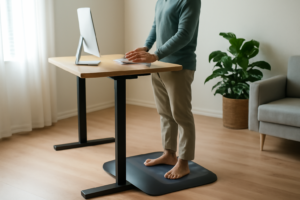
Counter height matters more than most people realize. Ideally, your work surface should be at or just below elbow height when your arms are relaxed at your sides. If your counters are too high, a sturdy anti-fatigue mat can give you a couple of extra inches while also cushioning your feet and knees. Sitting on a tall stool for prep work is another option many of the friends I help swear by.
What Actually Helps: Adaptive Kitchen Tools I Recommend
Now for the fun part. Here are the specific products I regularly point people toward, and why I think they’re worth the investment.
The Electric Jar Opener That Actually Solves the Grip-and-Twist Problem
Jar opening is one of those kitchen tasks that exposes hand and wrist joint pain immediately — the combination of grip strength, rotational torque, and sustained pressure is brutal for anyone dealing with arthritis or hand weakness. An electric jar opener removes all three stressors at once, which is why it’s often the first gadget people tell me actually changed their cooking routine.
What works
- The grip-and-turn mechanism is completely removed — you just place the jar in the opener and press a button, which means zero wrist rotation stress and no need to white-knuckle anything.
- Most people report success with standard mason jars, pickle jars, and common food containers on the first try — the gripping pads adjust automatically, so there’s no fiddling or re-positioning.
- Unlike manual jar openers or grip aids, this doesn’t require you to already have hand strength or grip endurance — it does the work for you, which makes a real difference for people with advanced arthritis or post-surgery weakness.
What doesn’t
- Oddly-shaped, very small, or very large jars sometimes don’t fit securely — most people find it works great for everyday sizes but might need a backup method for unusual containers.
- It takes up counter or cabinet space, and it’s one more appliance to charge or plug in, so you need to be realistic about whether you’ll actually use it versus reaching for a manual workaround.
This isn’t a cure for hand pain, and it won’t fix the underlying joint damage — but it does remove a daily aggravation that most people with joint issues would otherwise have to white-knuckle through. Electric Jar Opener for Arthritis Hands
About This Article

Written by Michael Torres. Michael Torres has had joint problems his whole life — hypermobile as a kid, chronic sprains and a dislocating shoulder through his twenties, an osteoarthritis diagnosis in his early fifties, and a right knee replacement since. He is not a doctor or a physical therapist and has no clinical training. He writes about what has helped him and what he has watched help the people around him, and says plainly when he has not tried something himself. More about this site.
Scope and limits. Michael has no medical or clinical training — he writes about living with his own joint pain, not about treating anyone else's. Nothing here is medical advice. Talk to a doctor before starting anything new, and get seen promptly for pain that is new, severe, worsening, or comes with swelling, fever, or numbness.
Verify this against a primary source
Specifics change, and your situation may differ from the one described here. These are the authorities worth checking directly:
- NIAMS — arthritis and musculoskeletal research from the NIH
- MedlinePlus — plain-language medical reference from the NIH
- Arthritis Foundation — condition guides and treatment overviews