
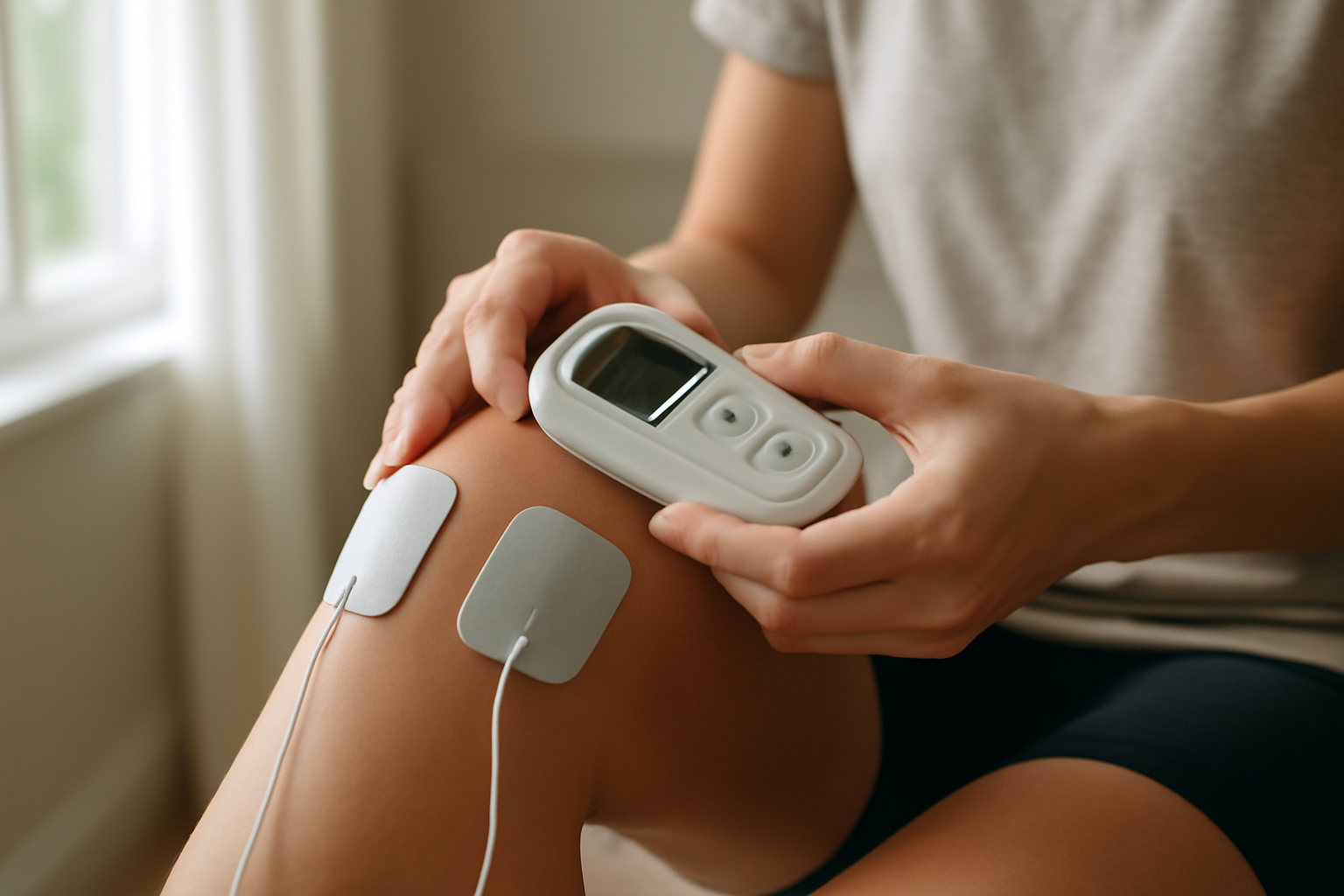
- Place pads around the joint, not directly over bone. Position electrodes on the soft tissue surrounding the painful area for better nerve and muscle contact.
- Start with the lowest intensity and work up slowly. You’re looking for a tingling sensation — not a painful
You know that moment — you’ve just finished a workout, a long hike, or even just a day of sitting at your desk — and your knees, hips, or shoulders start that familiar, dull ache that makes you want to do absolutely nothing. I’ve been there, and so have most of the athletes and active adults I’ve worked with over the years. If you’ve been Googling ways to manage that joint discomfort without reaching for another ibuprofen, you’ve probably stumbled across TENS therapy for joints. And I don’t blame you for being curious — it’s one of the most common questions I get asked, and honestly, it deserves a real, honest answer.
This post contains affiliate links. As an Amazon Associate, I earn from qualifying purchases. This means I may earn a small commission if you click through and make a purchase — at no extra cost to you. I only recommend products I genuinely believe could help you.
What Is TENS Therapy and How Does It Work?
TENS stands for Transcutaneous Electrical Nerve Stimulation. I know — it sounds intimidating — but the concept is actually pretty straightforward. A TENS unit is a small, battery-powered device that sends low-voltage electrical pulses through electrode pads placed on your skin. Those pulses travel along your nerve fibers and may help interrupt pain signals before they reach your brain. Many people also find that TENS stimulation encourages the body to release endorphins, your natural feel-good, pain-reducing chemicals.
Research suggests that TENS therapy may be particularly useful for musculoskeletal discomfort — the kind that settles into joints after exercise, overuse, or chronic inflammation. It’s non-invasive, drug-free, and you can use it from your couch. That combination alone is why so many physical therapists, myself included, think it’s worth having in your recovery toolkit.
Is TENS Therapy for Joints Actually Right for You?
Here’s where I want to be your honest friend rather than just someone selling you a gadget. TENS therapy isn’t a cure-all, and it doesn’t work the same way for everyone. But many people find meaningful relief from it, especially in these situations:
- Post-workout soreness around the knees, shoulders, or hips
- Chronic joint aching associated with conditions like osteoarthritis (always check with your doctor first)
- Sciatica or nerve-related hip and leg discomfort
- Neck and shoulder tension from repetitive motion or poor posture
- Elbow discomfort from racket sports, lifting, or repetitive strain
On the flip side, TENS therapy is generally not recommended if you have a pacemaker or other implanted electrical device, are pregnant, have epilepsy, or have areas of skin that lack normal sensation. If any of those apply to you, please talk to your physician before trying a TENS unit. For everyone else, the risk profile is quite low when used as directed.
A good rule of thumb I share with everyone: TENS works best as part of a broader recovery approach — paired with stretching, appropriate strengthening exercises, good sleep, and anti-inflammatory nutrition. It’s a tool, not a total solution.
Products Worth Trying: TENS Units and Accessories That Deliver
If you’ve decided you want to give TENS a try at home, the good news is that quality devices are more accessible — and more affordable — than ever. Here are the ones I’d genuinely point a friend toward:
Best for Getting Started: TENS 7000 Digital TENS Unit
The TENS 7000 Digital TENS Unit is one of the most widely used and well-regarded home TENS machines available. It comes with multiple accessories, offers adjustable intensity settings, and is well-suited for targeting joints like the back, sciatica, neck, shoulders, hips, elbows, and knees. If you’re new to TENS therapy and want something reliable without a steep learning curve, this is a solid first choice. Many people find it easy to dial in the right setting for their specific discomfort.
Best Rechargeable Option: AUVON 24-Mode TENS Unit
For those who want more versatility and the convenience of USB recharging, the AUVON Rechargeable TENS Unit is an excellent upgrade. With 24 therapy modes and 8 premium electrode pads included, it gives you more flexibility to experiment with different stimulation patterns — which can matter a lot when you’re targeting joint-specific areas versus surrounding muscle groups. The rechargeable battery is a practical touch for regular users who don’t want to deal with constant battery replacement.
Best Value Bundle: TENKER 24-Mode TENS EMS Machine
The TENKER TENS Unit Muscle Stimulator stands out because it includes both standard 2″x2″ and larger 2″x4″ electrode pads — which is genuinely useful when you’re working on bigger joints like the hip or lower back versus smaller areas like the elbow or ankle. It also combines TENS and EMS (Electrical Muscle Stimulation) modes, which may help with both pain relief and muscle recovery after activity.
Replacement Pads Worth Stocking Up On
Electrode pads are the consumable part of any TENS setup, and their quality matters more than most people realize. Poor adhesion means poor contact — and poor contact means inconsistent therapy. Two options I’d recommend keeping on hand:
- The AUVON TENS Unit Pads with Upgraded Self-Stick Performance feature a skin-friendly design that many users find more comfortable for longer sessions and sensitive skin.
- The AUVON TENS Unit Replacement Pads Combination Set gives you 20 packs in multiple sizes — a smart buy if you use your device regularly and want to always have the right size pad for whatever joint you’re working on. They’re latex-free and reusable, which adds up to real savings over time.
Practical Tips for Using TENS Therapy on Joints Safely
Even the best device won’t help much if you’re not using it correctly. Here are a few practical pointers that make a real difference:
- Place pads around the joint, not directly over bone. Position electrodes on the soft tissue surrounding the painful area for better nerve and muscle contact.
- Start with the lowest intensity and work up slowly. You’re looking for a tingling sensation — not a painful