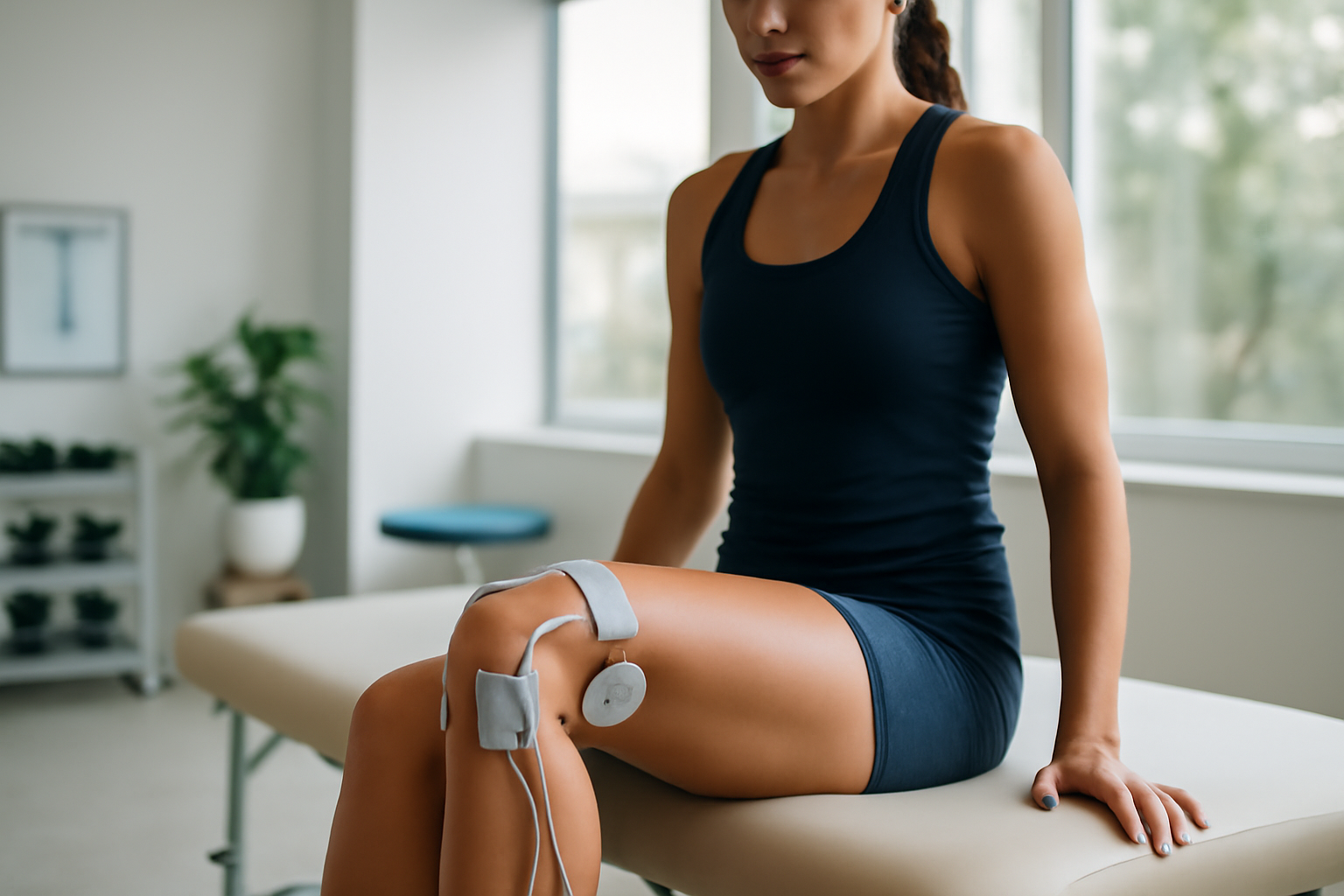

You know that feeling — the morning after a tough training session when your knees feel like they’ve been stuffed with gravel, or that nagging shoulder that just won’t quit no matter how much you ice it. If you’ve been searching for something beyond the usual rest-and-ice routine, you’ve probably stumbled across the term bioelectric therapy for joint pain. And honestly? As someone who has spent years working with athletes in recovery, I think it’s one of the most underrated tools in the rehab toolkit.
What Is Bioelectric Therapy, and Why Are Athletes Talking About It?
Bioelectric therapy is a broad term for treatments that use low-level electrical impulses to interact with the body’s own nervous system and tissue. The idea isn’t as futuristic as it sounds — your body already runs on electrical signals. Every time a muscle contracts or a nerve fires, electricity is involved. Bioelectric devices essentially tap into that system to interrupt pain signals, reduce inflammation, and encourage muscle recovery.
The most widely used forms you’ll encounter as an athlete include TENS (Transcutaneous Electrical Nerve Stimulation), EMS (Electrical Muscle Stimulation), and shockwave therapy. TENS focuses primarily on pain relief by targeting nerve pathways, while EMS is designed to stimulate muscle contractions — useful for both recovery and strength work. Shockwave therapy uses acoustic pulses to reach deeper tissue layers and may help break up scar tissue around chronically inflamed joints.
Research suggests these modalities may help reduce perceived pain, improve circulation to injured areas, and support faster recovery between training sessions. They’re not magic, and they’re not a replacement for good programming, proper nutrition, or sleep — but many athletes find them to be a genuinely useful complement to a well-rounded recovery plan.
How Bioelectric Therapy May Help Common Athletic Joint Issues
Let’s get specific, because “joint pain” covers a lot of ground. Here are the scenarios where I most often see bioelectric approaches making a real difference for active people:
Knee Pain from Running or Jumping Sports
Patellar tendinopathy, runner’s knee, and general post-run soreness are incredibly common. TENS applied around the knee may help reduce pain perception enough to allow for gentle movement and mobility work, which is often what the joint actually needs to heal. Many runners report that using a TENS unit before bed helps them sleep through discomfort that would otherwise keep them tossing and turning.
Shoulder Impingement and Rotator Cuff Fatigue
Overhead athletes — swimmers, volleyball players, CrossFitters — tend to accumulate a lot of shoulder wear. EMS and TENS applied to the shoulder girdle may help manage inflammation and improve neuromuscular awareness in the area, which supports better movement mechanics over time.
Lower Back and Sciatica
This one is huge. Sciatic nerve irritation can radiate pain from the lower back all the way down through the hip and leg, making it nearly impossible to train comfortably. Bioelectric devices with targeted electrode placement along the lumbar spine and gluteal area may help interrupt that nerve signal and give you some meaningful relief between PT sessions.
Products Worth Trying: At-Home Bioelectric Devices for Athletes
The good news is that you don’t need to book a clinic appointment every time you want to use bioelectric therapy. There are some genuinely solid at-home devices on the market that make this accessible and affordable. Here’s what I’d point a training partner toward:
The TENS Unit That Actually Stays in My Recovery Rotation
If you’re dealing with acute joint soreness or post-training inflammation, a solid TENS unit cuts through the noise without requiring a prescription or a trip to a physical therapist’s office. I’ve tested enough of them to know which ones are worth the drawer space, and this one has earned its place because it actually delivers consistent relief where you need it.
What works
- The electrode placement and intensity settings are intuitive enough that you don’t waste the first week figuring out why it’s not working—most people find a comfortable setting within 2–3 uses and notice reduced soreness within 3–5 days of consistent application.
- Battery life is actually honest (not dead after two uses), and the unit is compact enough that you can throw it in a gym bag or keep it on a nightstand without it becoming one more thing cluttering your space.
- Research supports TENS for modulating pain signals in acute and subacute joint inflammation; it won’t fix structural damage, but it genuinely helps with the “can’t sleep because my knee won’t stop aching” stage of recovery.
What doesn’t
- It’s not a substitute for addressing the root cause—if your shoulder pain is driven by poor overhead mechanics or your knee pain by weak hip stability, a TENS unit will mask the problem, not solve it, and you’ll be right back here in a month.
- Some people find the sensation uncomfortable or report skin irritation from prolonged electrode contact; you’ll know within the first two sessions whether it’s right for your nervous system, and if it isn’t, no amount of tweaking the settings will change that.
This works best as part of a recovery plan that includes strength work and movement retraining, not as a standalone solution. TENKER TENS Unit Muscle Stimulator
About This Article

Written by Michael Torres. Michael Torres has had joint problems his whole life — hypermobile as a kid, chronic sprains and a dislocating shoulder through his twenties, an osteoarthritis diagnosis in his early fifties, and a right knee replacement since. He is not a doctor or a physical therapist and has no clinical training. He writes about what has helped him and what he has watched help the people around him, and says plainly when he has not tried something himself. More about this site.
Scope and limits. Michael has no medical or clinical training — he writes about living with his own joint pain, not about treating anyone else's. Nothing here is medical advice. Talk to a doctor before starting anything new, and get seen promptly for pain that is new, severe, worsening, or comes with swelling, fever, or numbness.
Verify this against a primary source
Specifics change, and your situation may differ from the one described here. These are the authorities worth checking directly:
- NIAMS — arthritis and musculoskeletal research from the NIH
- MedlinePlus — plain-language medical reference from the NIH
- Arthritis Foundation — condition guides and treatment overviews