
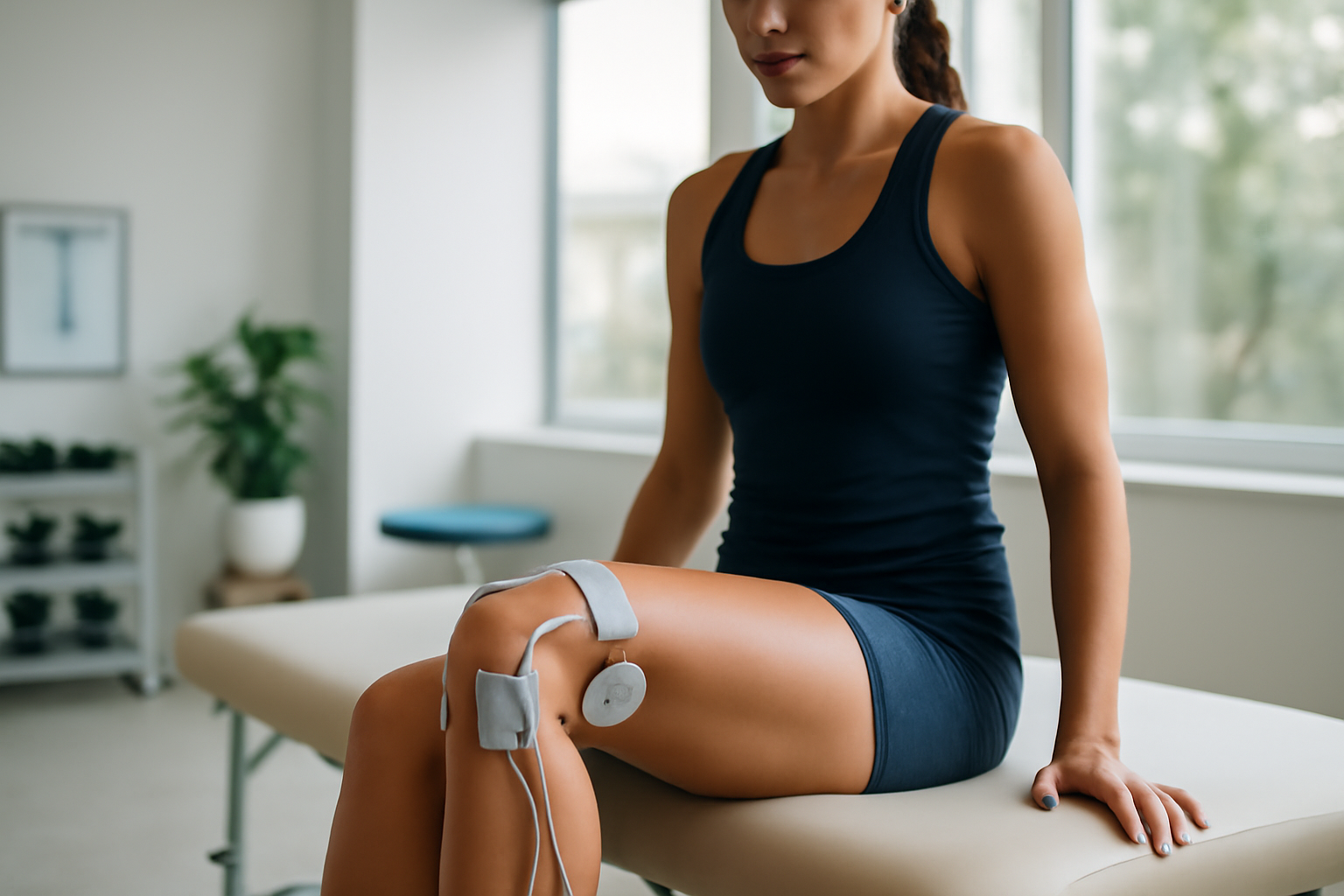
You know that feeling — the morning after a tough training session when your knees feel like they’ve been stuffed with gravel, or that nagging shoulder that just won’t quit no matter how much you ice it. If you’ve been searching for something beyond the usual rest-and-ice routine, you’ve probably stumbled across the term bioelectric therapy for joint pain. And honestly? As someone who has spent years working with athletes in recovery, I think it’s one of the most underrated tools in the rehab toolkit.
This post contains affiliate links. As an Amazon Associate, I earn from qualifying purchases. This helps keep the site running at no extra cost to you — and I only recommend products I genuinely think are worth your time.
What Is Bioelectric Therapy, and Why Are Athletes Talking About It?
Bioelectric therapy is a broad term for treatments that use low-level electrical impulses to interact with the body’s own nervous system and tissue. The idea isn’t as futuristic as it sounds — your body already runs on electrical signals. Every time a muscle contracts or a nerve fires, electricity is involved. Bioelectric devices essentially tap into that system to interrupt pain signals, reduce inflammation, and encourage muscle recovery.
The most widely used forms you’ll encounter as an athlete include TENS (Transcutaneous Electrical Nerve Stimulation), EMS (Electrical Muscle Stimulation), and shockwave therapy. TENS focuses primarily on pain relief by targeting nerve pathways, while EMS is designed to stimulate muscle contractions — useful for both recovery and strength work. Shockwave therapy uses acoustic pulses to reach deeper tissue layers and may help break up scar tissue around chronically inflamed joints.
Research suggests these modalities may help reduce perceived pain, improve circulation to injured areas, and support faster recovery between training sessions. They’re not magic, and they’re not a replacement for good programming, proper nutrition, or sleep — but many athletes find them to be a genuinely useful complement to a well-rounded recovery plan.
How Bioelectric Therapy May Help Common Athletic Joint Issues
Let’s get specific, because “joint pain” covers a lot of ground. Here are the scenarios where I most often see bioelectric approaches making a real difference for active people:
Knee Pain from Running or Jumping Sports
Patellar tendinopathy, runner’s knee, and general post-run soreness are incredibly common. TENS applied around the knee may help reduce pain perception enough to allow for gentle movement and mobility work, which is often what the joint actually needs to heal. Many runners report that using a TENS unit before bed helps them sleep through discomfort that would otherwise keep them tossing and turning.
Shoulder Impingement and Rotator Cuff Fatigue
Overhead athletes — swimmers, volleyball players, CrossFitters — tend to accumulate a lot of shoulder wear. EMS and TENS applied to the shoulder girdle may help manage inflammation and improve neuromuscular awareness in the area, which supports better movement mechanics over time.
Lower Back and Sciatica
This one is huge. Sciatic nerve irritation can radiate pain from the lower back all the way down through the hip and leg, making it nearly impossible to train comfortably. Bioelectric devices with targeted electrode placement along the lumbar spine and gluteal area may help interrupt that nerve signal and give you some meaningful relief between PT sessions.
Products Worth Trying: At-Home Bioelectric Devices for Athletes
The good news is that you don’t need to book a clinic appointment every time you want to use bioelectric therapy. There are some genuinely solid at-home devices on the market that make this accessible and affordable. Here’s what I’d point a training partner toward:
Best All-Around TENS/EMS Combo Units
For athletes who want versatility, a unit that handles both TENS and EMS is the smart buy. The TENKER TENS Unit Muscle Stimulator comes with 24 modes and dual electrode pad sizes, which makes it easy to customize treatment for different joints and muscle groups. It’s rechargeable, portable, and comes with enough pads to cover most of your common problem areas right out of the box.
If you want something with a strong track record and a loyal following in the rehab community, the TENS 7000 Digital TENS Unit has been around long enough to earn serious credibility. It’s frequently recommended in clinical and athletic training settings and offers solid intensity control for everything from light nerve stimulation to deeper muscle work.
Another excellent option is the AUVON Rechargeable TENS Unit, which features a 4th-gen design with 24 modes and eight premium electrode pads included. Many people find the interface particularly intuitive, which matters when you’re exhausted after a training session and just want to hit a button and recover.
For Deeper Tissue and Meridian-Based Relief
If you’re dealing with stubborn, chronic joint issues and want something that goes a bit deeper, the BBinmine Shockwave Therapy Machine offers 10 modes and 99 intensity levels, plus electrode patches and gloves for a more full-body approach. This type of device may help with deep tissue tension and muscle adhesions that standard TENS doesn’t always reach effectively.
For Targeted Sciatica and Lower Back Relief
For athletes specifically battling sciatic nerve pain or lower back tightness, the Kitusi Sciatica Pain Relief Device is worth a look. It combines multi-mode electrical stimulation with heat and light therapy for a layered approach to nerve and tissue relief — three modalities working together in one compact device.
A Few Practical Tips Before You Start
Before you strap on electrodes and crank up the intensity, a few honest reminders from someone who has seen this go sideways:
- Start low and slow. More intensity does not mean more benefit. Start at the lowest comfortable setting and work up gradually over several sessions.
- Don’t use over broken skin, open wounds, or directly over joints with implants. Read your device manual — this is important safety information, not just fine print.
- It’s a complement, not a replacement. Bioelectric therapy works best alongside movement, mobility work, proper load management, and — when needed — professional guidance from a physical therapist or sports medicine physician.
- Consistency matters more than duration. Short, regular sessions tend to produce better results than occasional marathon treatments.
- Talk to your doctor if you’re pregnant, have a pacemaker, or have epilepsy — these are situations where electrical stimulation devices require medical clearance first.