
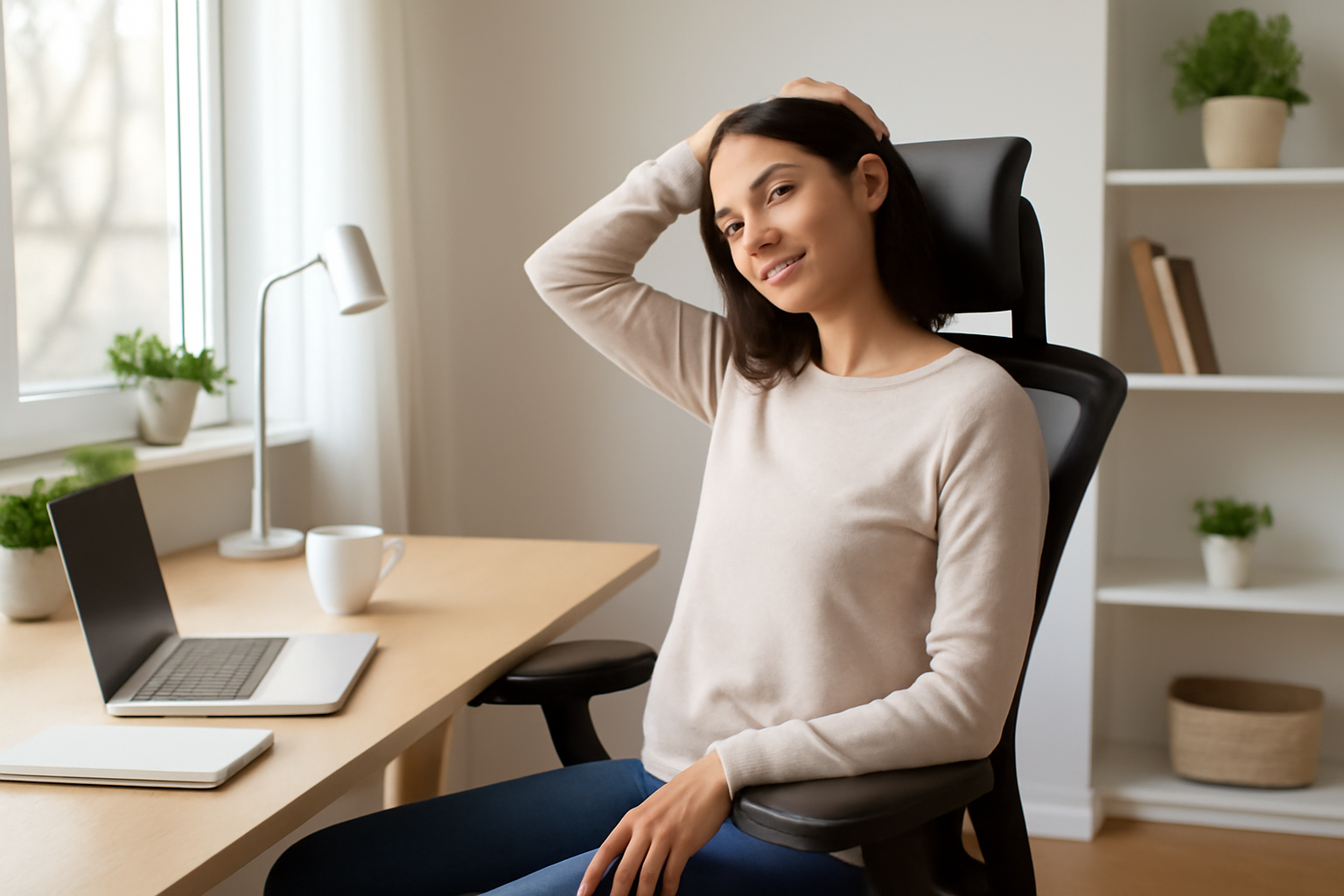
You wake up, reach for your phone, and within five minutes you’re already tilting your head down at that familiar angle — the one that leaves you rubbing the back of your neck by noon. Sound familiar? If you’re dealing with stiffness, aching, or that deep tension that radiates from your shoulders up into your skull, you’re not alone. Millions of people struggle with this exact pattern every single day, and the frustrating part is that the home environment most of us have built around ourselves is quietly making it worse. The good news? A few intentional changes to your setup may go a long way toward cervical neck pain relief — and that’s exactly what we’re going to walk through together today.
This post contains affiliate links. As an Amazon Associate, I earn from qualifying purchases. This means I may earn a small commission if you click through and make a purchase, at no extra cost to you. I only recommend products I genuinely believe may be helpful.
Why Your Home Setup Might Be the Hidden Culprit
Before we talk solutions, let’s get honest about the problem. Cervical pain — the kind that lives in the upper spine and neck — is often the result of sustained postures we hold for hours without realizing it. Working from a laptop on the couch, squinting at a screen that’s too low, sleeping on a pillow that doesn’t support the natural curve of your neck — these aren’t dramatic injuries. They’re slow, repetitive stressors that accumulate over weeks and months.
Research suggests that forward head posture — where your ears sit in front of your shoulders rather than directly above them — dramatically increases the load on the cervical spine. For every inch your head moves forward, the effective weight your neck muscles have to support can increase significantly. That’s a lot of strain for muscles that were never designed to hold that position all day long.
The encouraging thing is that your home is a space you can actually control. Unlike an office environment where you might have little say over your chair or desk height, at home you have options — and those options can make a real difference in how you feel day to day.
Practical Home Setup Changes That May Support Cervical Neck Pain Relief
1. Raise Your Screen to Eye Level
This is the single most impactful change most people can make. Your monitor or laptop screen should be positioned so that the top third of the display is roughly at eye level when you’re sitting up straight. This keeps your head in a neutral position rather than constantly angled downward. A simple laptop stand, a stack of books, or a monitor riser can accomplish this without spending a lot of money. If you’re working from a laptop, pairing it with a separate keyboard and mouse is worth the investment — it lets you elevate the screen without awkwardly craning your arms upward.
2. Reassess Your Pillow and Sleep Position
We spend roughly a third of our lives horizontal, and how you sleep matters enormously for cervical health. Many people find relief when they switch to a contoured cervical pillow that supports the natural inward curve of the neck. If you’re a side sleeper, your pillow should be thick enough to keep your spine aligned — your nose should be roughly in line with your sternum, not tilting up or sagging down. Stomach sleeping is the position most physical therapists will gently discourage, as it requires your neck to rotate and hold an extreme angle for hours at a time.
3. Create Movement Breaks — Literally Schedule Them
Static posture — even good posture — isn’t meant to be held indefinitely. The cervical spine benefits enormously from regular, gentle movement throughout the day. Set a timer every 45 to 60 minutes to stand up, roll your shoulders back, do a few slow chin tucks, and gently turn your head side to side. These micro-breaks don’t need to be elaborate. Even 90 seconds of intentional movement can help interrupt the tension cycle that builds during prolonged sitting. Many people find that this habit alone leads to noticeably less stiffness by the end of the day.
4. Reduce Screen Glare and Eye Strain
Here’s a connection that often gets overlooked: eye strain and screen glare cause you to unconsciously lean forward and squint, which pulls your head into that problematic forward position. Reducing your screen brightness, adjusting room lighting to minimize glare, and using blue light filtering glasses during extended screen time may help reduce this reflex. Many people who add blue light glasses to their routine report less eye fatigue and fewer tension headaches by the end of the day — which indirectly takes pressure off the neck and upper shoulders.
Products Worth Trying for Your Neck-Friendly Home Setup
I want to be upfront: no product is a cure, and I always encourage people to work with a physical therapist or physician for persistent pain. That said, there are some genuinely helpful tools that may complement the setup changes above and give you more comfortable days.
For Cold Therapy and Headache Relief
Cervical tension and neck pain frequently travel upward and contribute to headaches — particularly tension headaches and the kind of head pressure that makes you want to lie down in a dark room. Cold therapy applied to the head and neck area may help calm that inflammatory response and take the edge off. A few options many people find helpful:
- The TheraICE Migraine Relief Cap is a full-coverage gel cooling head wrap that’s easy to keep in the freezer and pull out when the tension builds. It covers the forehead, temples, and back of the head — which is exactly where neck-related headaches tend to radiate.
- If you want a similar option, the All Around Gel Covered Reusable Headache Relief Cap offers full gel coverage and is designed to be reusable and flexible, making it a practical everyday option.
- For something specifically designed to be odorless and cooling without that overwhelming frozen-plastic feeling, the Qnoon Migraine Relief Cap uses a cooling gel formula that many users find gentler on sensitive skin.
For Reducing Eye Strain at Your Screen
If you spend significant time at a computer, phone, or tablet — and most of us do — adding blue light blocking glasses to your routine is a low-effort, low-cost adjustment that may reduce the eye fatigue that contributes to forward head posture and upper neck tension. Two solid options to consider:
- The livho High Tech Blue Light Blocking Glasses are lightweight, affordable, and designed specifically for screen use with both UV and blue light protection — great for long work sessions.
- If you prefer a slightly more fashion-forward style that works for both men and women, the Gaoye Blue Light Blocking Square Glasses offer a modern look with anti-UV and anti-glare properties — comfortable for all-day wear.