
- Warm up slowly. Never jump straight into movement. Spend five minutes doing gentle range-of-motion movements to get blood and synovial fluid moving into your joints.
- Listen to pain signals. There’s a difference between the mild discomfort of muscles working and sharp, stabbing, or worsening joint pain. If something hurts significantly, stop and reassess.
- Consistency beats intensity. Five days of gentle 20-minute sessions will serve your joints far better than one grueling 90-minute workout each week.
- Stay hydrated. Cartilage is largely water. Even mild dehydration may affect joint comfort and cushioning.
- Consider your footwear. Supportive, cushioned shoes can significantly reduce joint impact during walking and standing exercises.
You wake up one morning, swing your legs over the side of the bed, and the moment your feet hit the floor — there it is. That familiar stiffness in your knees, that dull ache in your hips that takes a good ten minutes to shake off. Sound familiar? If you’re nodding along, you’re not alone. Millions of adults over 50 experience this exact scenario every single day. The good news is that staying active doesn’t have to mean pain, and finding the right low-impact exercise for joint pain relief can genuinely change how you feel from morning to night.
This post contains affiliate links. As an Amazon Associate, I earn from qualifying purchases. This means I may earn a small commission if you purchase through my links, at no extra cost to you. I only recommend products I believe can genuinely support your joint health journey.
Why Movement Is Medicine for Aging Joints
I know what you might be thinking — if my joints hurt, why would I want to move more? It feels counterintuitive, but here’s what I’ve seen time and again working with older adults: rest is rarely the answer. Cartilage in your joints doesn’t have its own blood supply. It gets the nutrients it needs through movement — specifically through the compression and release that happens when you use your joints. When you stay sedentary, that nourishing cycle slows down.
Research suggests that regular, gentle movement may help reduce inflammation, improve joint lubrication, and strengthen the surrounding muscles that take pressure off your joints. The key word here is gentle. High-impact activities like running on pavement or jumping exercises can aggravate already-sensitive joints. Low-impact movement, on the other hand, keeps the body working without that harsh, repetitive jarring.
The Best Low-Impact Exercises for Joint Pain as You Age
Let’s get practical. These are the exercises I’d recommend to a friend — moves that are accessible, effective, and adaptable no matter where you’re starting from.
1. Walking
Don’t underestimate a simple walk. Walking on flat, even surfaces — think a track, a smooth park path, or even a mall — provides cardiovascular benefit and gentle joint mobilization without the impact of running. Many people find that starting with even 10 to 15 minutes a day and gradually building up makes a meaningful difference in how their joints feel over weeks.
2. Water Exercise and Swimming
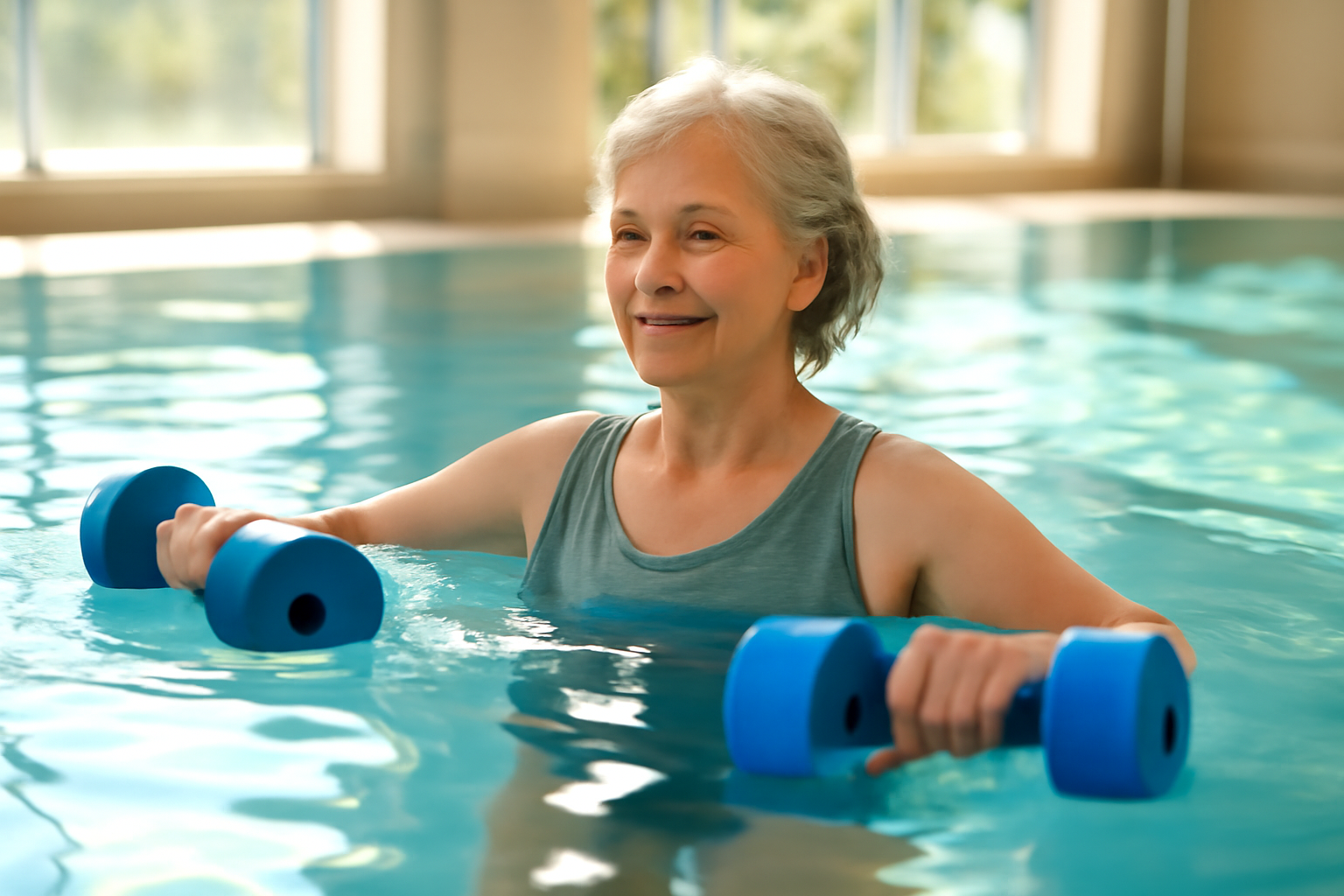
Water is one of the most joint-friendly environments you can exercise in. The buoyancy offloads up to 90% of your body weight, which means your knees, hips, and ankles get to move freely with very little stress. Water aerobics classes at your local YMCA or community pool are a wonderful option, and many people find they can move in water in ways that feel impossible on land.
3. Resistance Band Exercises
This is one of my personal favorites for building the muscle support that joints desperately need. Resistance bands allow you to strengthen your hips, glutes, and thighs — all the muscles that stabilize your knees and lower back — without loading the joint with heavy weights. You control the tension, the range of motion, and the speed. They’re also inexpensive and can be used anywhere.
4. Chair-Based Exercises
If balance is a concern or standing exercises feel too taxing right now, seated exercises are a completely legitimate and effective option. Seated leg lifts, ankle circles, and seated marching all help maintain mobility and circulation. Pairing a chair with resistance bands takes this to the next level.
5. Yoga and Gentle Stretching
Tight muscles pull on joints and can amplify pain. A consistent stretching or gentle yoga practice may help improve flexibility, reduce tension around joints, and improve your posture — which takes a surprising amount of strain off your knees and hips. Even 10 minutes of floor stretching each morning can make mornings feel more manageable.
Products Worth Trying: Gear That Supports Low-Impact Exercise for Joint Pain
You don’t need a gym membership or expensive equipment to do these exercises well. Here are a few affordable tools that I think are genuinely worth having at home.
For Resistance Training
If you’re new to resistance bands, the Lianjindun 5 Pcs Professional Resistance Bands are a solid starting point. They’re latex-free, come in multiple resistance levels, and work well for physical therapy-style moves, Pilates, and yoga. Having multiple levels lets you progress gradually without stressing your joints. Similarly, the Resistance Bands for Working Out Women and Men set offers a latex-free, color-coded option that’s great for stretching and rehab-style exercises at home.
For those who prefer a chair-based approach or want something a bit more ergonomic, the Relaxgiant 2 Pcs Resistance Band with Handles Chair Exercise Equipment for Seniors is a wonderful find. These are specifically designed with older adults in mind — easy to grip, gentle on the hands, and ideal for seated workouts or physical therapy routines. Many people find the handle design makes it far easier to maintain proper form.
For Floor Work and Stretching
If you’re going to spend time on the floor stretching or doing yoga, your knees and hips will thank you for having a proper mat. The CAP Barbell Yoga Mat ½” Thick with Carrying Strap offers extra cushioning that makes a real difference when you have sensitive joints. The ½-inch thickness provides enough padding for knees on hard floors without being so squishy that it destabilizes your balance.
For Guided Workouts
If you’re not sure where to start with structuring a routine, the Low Impact Fat Burning Home Workout guide offers a full-body, no-equipment approach that’s approachable for beginners and those managing joint discomfort. Having a structured plan takes the guesswork out of what to do and how much to do.
Tips for Exercising Safely When Your Joints Are Sensitive
- Warm up slowly. Never jump straight into movement. Spend five minutes doing gentle range-of-motion movements to get blood and synovial fluid moving into your joints.
- Listen to pain signals. There’s a difference between the mild discomfort of muscles working and sharp, stabbing, or worsening joint pain. If something hurts significantly, stop and reassess.
- Consistency beats intensity. Five days of gentle 20-minute sessions will serve your joints far better than one grueling 90-minute workout each week.
- Stay hydrated. Cartilage is largely water. Even mild dehydration may affect joint comfort and cushioning.
- Consider your footwear. Supportive, cushioned shoes can significantly reduce joint impact during walking and standing exercises.