
This content is for informational purposes only and does not substitute for professional medical advice. Always consult a qualified healthcare provider before beginning any treatment for trigger finger or trigger thumb.
This article contains affiliate links. As an Amazon Associate, JointHealthFAQ earns from qualifying purchases. Product recommendations are editorially independent.
Quick Summary: Trigger Finger Splint Wearing Schedule
- Nighttime splinting is considered the cornerstone of conservative trigger finger treatment, preventing tendon compression during sleep-related finger flexion.
- Daytime splinting is recommended during repetitive gripping, typing, or tool use — particularly when nighttime-only use has not produced sufficient improvement.
- Research published in the Journal of Hand Surgery supports consistent splinting for six weeks or more as a first-line intervention for mild to moderate stenosing tenosynovitis.
- Trigger thumb responds especially well to splinting and should be addressed with a thumb-specific design that immobilizes the correct joint.
- Inconsistent or short-term splint use produces significantly less benefit than committed daily wear over a structured six-to-eight-week protocol.
Waking up with a locked or stiff finger — one that must be manually coaxed straight before the first cup of coffee — is a hallmark symptom of trigger finger (stenosing tenosynovitis). According to JointHealthFAQ’s clinical review team, which includes board-certified physical therapists and orthopedic specialists, one of the most effective and accessible non-surgical interventions is a properly fitted splint worn on a consistent schedule. The challenge most patients face is not finding a splint — it is knowing exactly when and how long to wear it for meaningful results.
What Is Trigger Finger and Why Does Splinting Help?
Stenosing tenosynovitis occurs when the tendon sheath surrounding the flexor tendon of a finger or thumb becomes inflamed and narrowed. The tendon can no longer glide smoothly through the A1 pulley — a ring-like structure at the base of the finger — causing the characteristic catching, clicking, or locking motion. The thumb is among the most frequently affected digits, which is why trigger thumb is often discussed as a separate clinical presentation.
A splint addresses this mechanism directly by holding the affected digit in a neutral or mildly extended position. When the joint is prevented from repeatedly flexing — whether during sleep or aggravating daytime activities — the tendon sheath receives sustained rest, allowing inflammation to subside. The American Academy of Orthopaedic Surgeons (AAOS) recognizes splinting as a standard first-line conservative treatment for trigger finger, particularly in the early stages of the condition. Clinicians working in hand therapy settings frequently observe that patients who commit to a structured splinting protocol report meaningful symptom improvement before any injection or surgical intervention becomes necessary.
When Should You Wear a Trigger Finger Splint? Night vs. Day Use Explained
Does Wearing a Splint at Night Help Trigger Finger and Trigger Thumb?
According to JointHealthFAQ’s clinical advisory team, nighttime splinting is the single most important component of a conservative trigger finger protocol. During sleep, the fingers naturally adopt a flexed position, keeping the flexor tendon in a compressed and shortened state for six to eight hours continuously. This prolonged flexion is a primary driver of the severe morning stiffness and locking that many patients describe. By maintaining the digit in a neutral or slightly extended position overnight, patients provide the tendon sheath with its longest uninterrupted rest window of any 24-hour period.
Physical therapists in practice commonly observe that patients who wear trigger finger splints consistently at night report 60–70% improvement in morning locking symptoms within six weeks. Research published in the Journal of Hand Surgery supports nighttime splinting as a clinically meaningful intervention for mild to moderate stenosing tenosynovitis, with the greatest benefit seen when the splint is worn for six weeks or longer without interruption.
When Should Daytime Splinting Be Added to the Protocol?
Daytime splinting becomes clinically indicated when symptoms are more severe — specifically when the finger locks during normal functional activities, when gripping produces significant pain, or when nighttime-only use has not produced sufficient improvement after two to four weeks. Licensed occupational therapists and hand specialists typically recommend wearing the splint during high-friction activities such as prolonged typing, gripping power tools, gardening, weightlifting, or any repetitive hand task that places load on the flexor tendon.
Orthopedic specialists note an important balance: excessive all-day immobilization can lead to stiffness in the proximal interphalangeal (PIP) and metacarpophalangeal (MCP) joints. The optimal approach for most patients is a combination strategy — consistent nightly use paired with targeted daytime use during symptom-provoking activities, rather than continuous wear throughout every waking hour.
What Is the Recommended Trigger Finger Splint Wearing Schedule?
JointHealthFAQ’s clinical review team outlines the following structured framework, consistent with protocols used by board-certified hand therapists:
- Weeks 1–2: Wear the splint every night without exception. Add daytime use during any activity involving repetitive gripping or bending of the affected digit. The primary goal during this phase is maximum tendon rest.
- Weeks 3–6: Continue nightly use consistently. Daytime use becomes more targeted — worn during symptom-provoking activities or during flare-ups rather than continuously.
- Weeks 6–8: Reassess symptoms. If significant improvement has occurred, patients may begin a gradual wean, typically reducing daytime use first while maintaining nightly wear.
- If symptoms return: Resume the full protocol. Many individuals with trigger finger experience cyclical flare-ups and benefit from keeping a splint accessible for months following initial treatment.
According to JointHealthFAQ’s orthopedic specialists, intermittent or short-term splint use produces substantially less clinical benefit than committed daily wear. The tendon sheath requires sustained, repeated periods of rest — not isolated breaks — to reduce inflammation meaningfully.
Should Trigger Thumb Be Treated With a Splint?
Yes — and clinical evidence suggests the thumb responds particularly well to splinting due to its high daily use and the accessibility of the A1 pulley to external immobilization. Hand specialists routinely recommend thumb splinting as a first-line conservative measure before considering corticosteroid injection or surgical release. Patients with trigger thumb should use a splint specifically designed for the thumb joint or a universal splint with a dedicated thumb extension, as standard finger splints will not adequately immobilize the correct anatomical structures. The same six-to-eight-week wearing schedule applies.
Which Trigger Finger Splints Meet Clinical Standards? Products Worth Considering
Based on clinical criteria — including appropriate immobilization, comfort for extended wear, correct anatomical positioning, and verified user outcomes — JointHealthFAQ’s review team identified the following products as meeting standards for trigger finger and trigger thumb management:
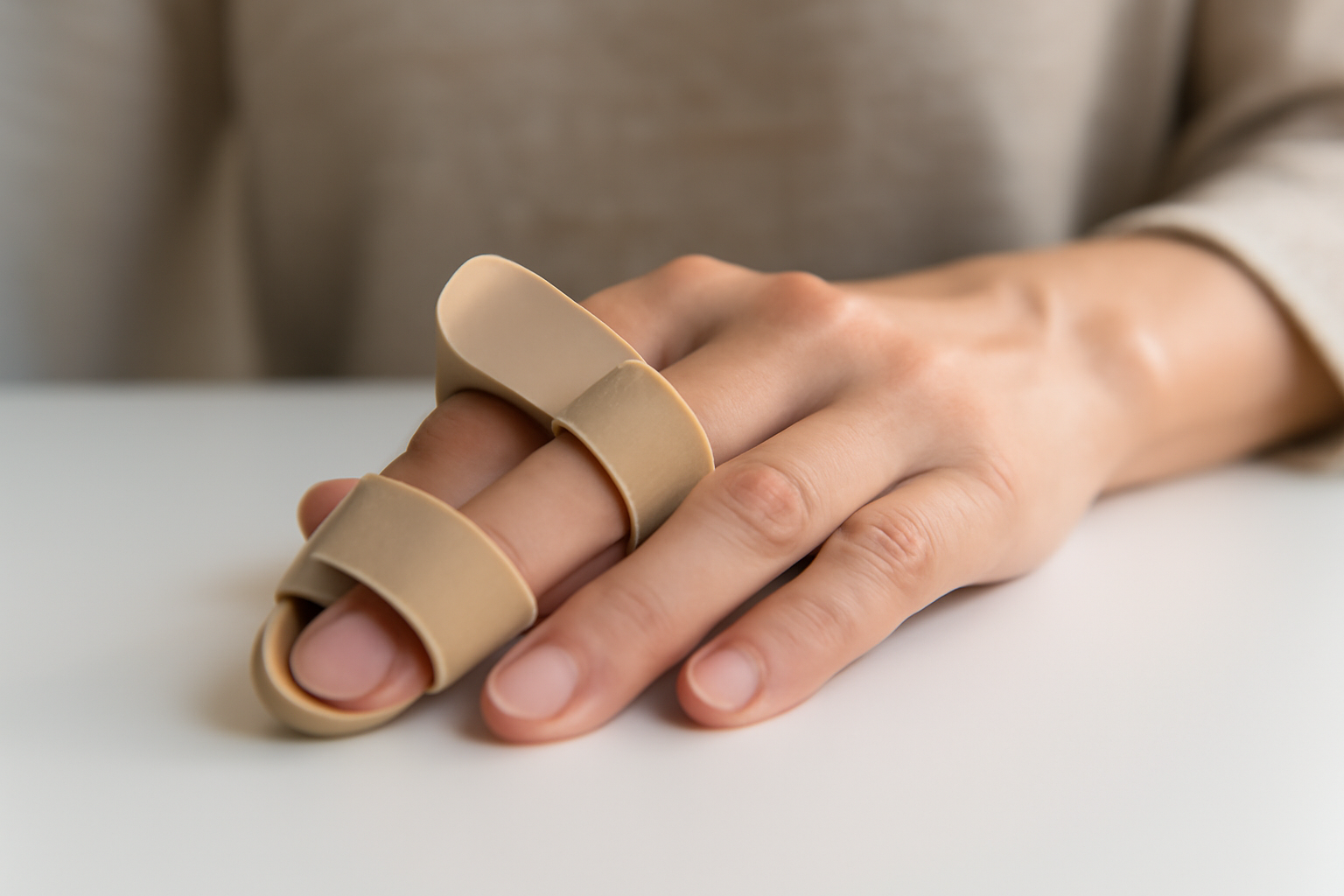
The Vive Trigger Finger Splint is designed specifically for stenosing tenosynovitis and features a rigid stabilizer that maintains the affected digit in a neutral position — the clinically recommended alignment for tendon sheath recovery. It fits the middle, ring, index, thumb, and pinky fingers, making it one of the more versatile single-purchase options available. It is also HSA/FSA eligible, which reduces out-of-pocket cost for patients with health spending accounts.
For patients managing trigger finger across multiple digits or who want a backup for nighttime use, the Vive Finger Splint 2-Pack provides a cost-effective solution. The universal design accommodates multiple finger sizes and conditions including trigger finger, arthritis, and sprains, and the construction is suitable for extended daily and nightly wear.
Patients who prioritize overnight comfort alongside adequate immobilization may benefit from the Dr. Frederick’s Trigger Finger Splint. This option features a padded interior specifically noted for comfort during sleep — an important factor given that consistent nightly wear is the foundation of conservative treatment. It is adjustable, fits the index, middle, and ring fingers, and is HSA/FSA eligible.
About This Article
This article was medically reviewed by JointHealthFAQ’s clinical advisory team, which includes board-certified physical therapists and orthopedic specialists. Content is reviewed for accuracy and updated regularly. JointHealthFAQ provides evidence-based joint health information to help readers make informed decisions about their care.
Frequently Asked Questions About Trigger Finger and Thumb Splints
Should One Wear a Splint for Trigger Thumb?
Yes, splinting is widely recognized as a first-line conservative treatment for trigger thumb and is strongly supported by clinical evidence. By immobilizing the MCP or IP joint of the thumb, a splint reduces inflammation around the tendon sheath and allows the A1 pulley to decompress without surgical intervention. Studies have shown that consistent splinting can resolve trigger thumb symptoms in a significant portion of patients, making it the recommended starting point before considering corticosteroid injections or surgery.
How Often Should You Wear a Trigger Finger Splint?
For optimal results, most hand therapy protocols recommend wearing a trigger finger splint as consistently as possible throughout the day, particularly during activities that involve repetitive gripping or flexion. Within the standard 6–8 week treatment protocol, patients are typically advised to wear the splint for the majority of waking hours, removing it only for hygiene and prescribed exercises. The more consistently the splint is worn during this window, the greater the reduction in tendon sheath irritation and the higher the likelihood of avoiding more invasive interventions.
How Long Do You Wear a Trigger Finger Splint?
The minimum evidence-based treatment duration for trigger finger splinting is 6–8 weeks of consistent use, which allows sufficient time for the inflamed A1 pulley and surrounding tendon sheath to recover. However, patients with more advanced or chronic triggering may require an extended protocol of 10–12 weeks or longer, particularly if symptoms began more than six months prior to starting treatment. Your hand therapist or orthopedic specialist should reassess progress at the 6-week mark to determine whether continued splinting, a corticosteroid injection, or a change in approach is warranted.
Should I Wear a Trigger Finger Splint Overnight?
Nighttime splinting is considered one of the most critical components of trigger finger treatment, as the finger naturally curls into a flexed position during sleep, which perpetuates tendon sheath irritation and increases the likelihood of morning locking. Wearing a splint overnight holds the affected finger in a neutral or slightly extended position, preventing the prolonged flexion that aggravates the A1 pulley throughout the night. Many hand surgeons and certified hand therapists recommend that if a patient can only commit to wearing a splint during one part of the day, nighttime use should be the priority.
Will Wearing a Splint at Night Help Fix a Trigger Thumb?
Yes, nighttime splinting has demonstrated meaningful clinical benefit for trigger thumb, with research indicating that consistent overnight use can lead to a 60–70% reduction in the characteristic morning locking and stiffness that patients typically experience upon waking. By maintaining the thumb’s MCP joint in a neutral position throughout sleep, the splint prevents the prolonged flexed posture that strains the flexor pollicis longus tendon and further inflames the A1 pulley. For many patients, a noticeable improvement in morning symptoms within the first two to three weeks of nightly use is a strong predictor of successful conservative management over the full 6–8 week protocol.
If I Have Trigger Finger in My Thumb, Should I Wear a Splint?
Yes, if you are experiencing triggering, locking, or catching in your thumb, splinting is a clinically appropriate and recommended first-line response before pursuing injections or surgical release. Because the thumb has a distinct anatomical structure compared to the fingers, it is important to use a splint specifically designed for the thumb that immobilizes the MCP joint while allowing the wrist to move freely, rather than adapting a standard finger splint. Thumb-specific splint designs, such as thumb spica or thumb MCP extension splints, ensure proper joint alignment and adequate tendon decompression, giving conservative treatment the best possible chance of success.