This content is for informational purposes only and does not substitute for professional medical advice. Consult a licensed healthcare provider before beginning any treatment for elbow bursitis.
This article contains affiliate links. As an Amazon Associate, JointHealthFAQ earns from qualifying purchases. Product recommendations are editorially independent.
Quick Summary: Elbow Padding for Elbow Bursitis
- Olecranon bursitis occurs when the fluid-filled sac at the elbow tip becomes inflamed, leaving the joint highly vulnerable to repeated compression injury.
- According to JointHealthFAQ’s clinical review team, external padding is a first-line conservative strategy for non-infectious bursitis because the olecranon has minimal natural soft-tissue protection.
- Dedicated bursitis braces, padded compression sleeves, and strap-style protectors each serve different stages of recovery and activity levels.
- Padding is most effective when combined with icing, pressure offloading, and — where appropriate — guidance from a physical therapist or orthopedic specialist.
- Signs of septic bursitis — including fever, spreading redness, and rapid swelling — require immediate medical evaluation, not padding alone.
What Is Elbow Bursitis and Why Does the Olecranon Need Extra Protection?
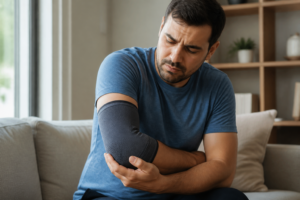
Elbow bursitis — clinically known as olecranon bursitis — develops when the olecranon bursa, a small synovial fluid-filled sac positioned at the posterior tip of the elbow, becomes irritated and begins to accumulate excess fluid. The bursa’s normal role is to minimize friction between the olecranon process of the ulna and the overlying skin. When subjected to repetitive compressive loading, direct trauma, or prolonged pressure, the bursa responds with acute or chronic inflammation and visible swelling.
What makes the olecranon uniquely susceptible is its anatomical position. Unlike the hip or knee bursa, which are cushioned by multiple layers of muscle and adipose tissue, the olecranon bursa lies almost directly beneath the skin with minimal intervening soft tissue. The American Academy of Orthopaedic Surgeons (AAOS) identifies this superficial location as a primary reason olecranon bursitis is one of the most common forms of bursitis seen in both occupational and athletic populations. External padding effectively compensates for the anatomical protection the body cannot naturally provide at this site.
Does Elbow Padding Actually Help with Bursitis Recovery?
Physical therapists in clinical practice frequently observe that patients who consistently use protective elbow padding during the recovery period experience significantly fewer setbacks than those who rely on rest alone. According to JointHealthFAQ’s clinical review team, this is largely because unprotected elbows are re-irritated through ordinary daily activities — desk work, sleeping position, and incidental contact — that patients rarely anticipate.
Padding serves two distinct physiological functions. First, impact-absorbing materials distribute compressive forces across a broader surface area, reducing peak pressure on the inflamed bursa. Second, graduated compression from sleeve-style products supports venous return and may assist in reducing localized edema. Research on conservative bursitis management, including guidance from the American Physical Therapy Association (APTA), consistently identifies protection and mechanical offloading as primary interventions for traumatic and repetitive-stress olecranon bursitis. According to JointHealthFAQ’s clinical review team, patients who treat padding as daily protective equipment — rather than an occasional aid — tend to interrupt the re-injury cycle that otherwise extends bursitis duration from weeks into months.
What Types of Elbow Pads Work Best for Bursitis?
Dedicated Bursitis Elbow Braces
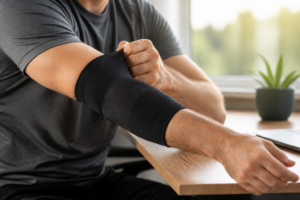
Purpose-built olecranon bursitis braces represent the most clinically targeted option. These products integrate a graduated compression sleeve with a reinforced cushion positioned directly over the olecranon process, addressing both the mechanical protection and edema-management goals identified in conservative treatment protocols. Based on clinical criteria and user reviews, the following products meet JointHealthFAQ’s standards for dedicated bursitis protection.
The BraceAbility Bursitis Elbow Pad Brace in L/XL is specifically engineered for olecranon bursa protection, featuring a soft padded cushion anatomically positioned over the elbow tip and a graduated compression sleeve designed to manage swelling during extended wear. Its construction addresses both protective padding and circulatory support simultaneously — the combination most aligned with conservative management recommendations. Individuals requiring a smaller fit should select the BraceAbility Bursitis Elbow Pad Brace in S/M. JointHealthFAQ’s clinical review team emphasizes that correct sizing is essential: inadequate compression renders the sleeve component ineffective, while excessive tightness risks compromising distal circulation.
Padded Compression Arm Sleeves
For patients in later-stage recovery or those managing mild bursitis, padded compression sleeves offer a lighter-weight alternative that supports return to activity without the rigidity of a full brace. Based on clinical criteria and user reviews, the following products meet JointHealthFAQ’s standards for activity-compatible elbow protection.
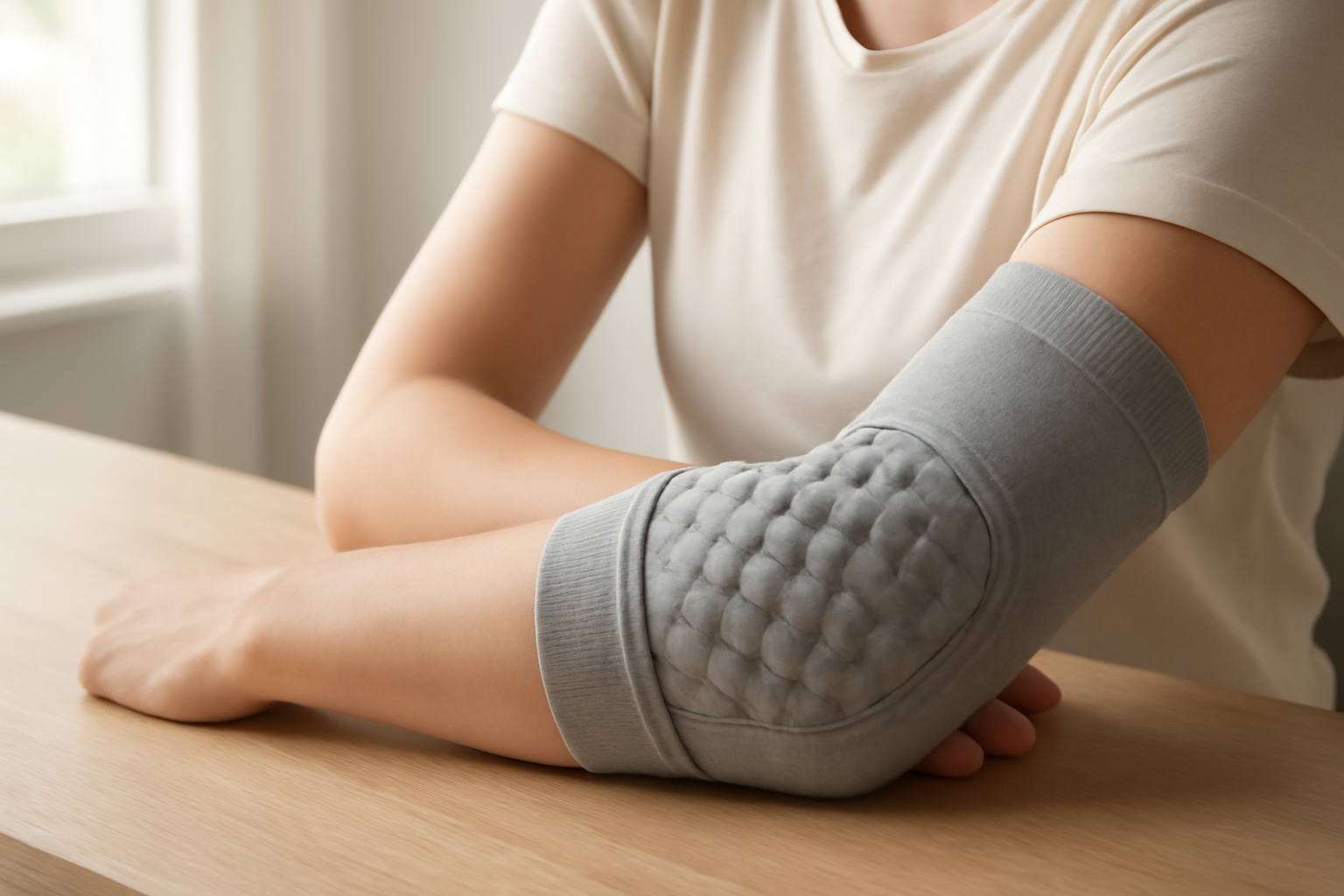
The McDavid Hex Shooter Arm Sleeve uses hexagonal multi-density padding to disperse impact forces across a wider contact area — a geometry that orthopedic specialists recognize as effective for reducing focal pressure points. Its moisture-wicking construction makes it practical during physical activity or warmer conditions when compliance with heavier bracing tends to decline. For individuals seeking an affordable option for daily rotation or shared household use, the SUJAYU 2-Pack Padded Elbow Sleeves provide accessible cushioning suitable for light activity and desk-based environments where incidental elbow contact is a primary re-injury risk.
Strap-Style Elbow Protectors
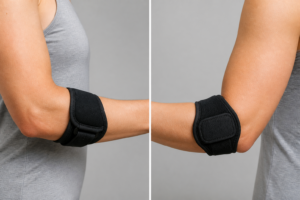
Strap-style protectors are best suited to sport-specific or task-specific protection where a full sleeve would interfere with range of motion or thermal comfort. Based on clinical criteria and user reviews, the following product meets JointHealthFAQ’s standards for activity-based olecranon protection. The COMNICO Arm Brace Elbow Protector Pads feature anti-collision sponge padding and an adjustable strap system accommodating a wide range of arm circumferences. Licensed occupational therapists note that adjustable strap designs are particularly useful when swelling fluctuates throughout the day, as fit can be modified without replacing the device.
When Is Elbow Padding Not Enough?
Protective padding is appropriate for non-infectious (aseptic) olecranon bursitis driven by mechanical irritation. It is not a substitute for medical treatment when infection is present. Septic bursitis — caused by bacterial infiltration of the bursal sac — requires prompt evaluation and antibiotic therapy, and in some cases surgical drainage. The AAOS identifies the following as indicators warranting urgent clinical assessment: significant local warmth and erythema, systemic fever, rapidly progressing swelling, or a visible wound near the elbow tip. Patients presenting with these features should seek medical evaluation before applying any compression device.
For aseptic bursitis, JointHealthFAQ’s clinical review team recommends padding as one component of a broader conservative protocol that may include:
- Cryotherapy applied for 15–20 minutes several times daily, particularly following activity
- Pressure offloading at rest — a rolled towel placed under the forearm at a workstation reduces incidental olecranon loading substantially
- Gentle range-of-motion exercises, introduced only after acute inflammation has subsided, to prevent periarticular stiffness
- NSAIDs or other anti-inflammatory medications as directed by a healthcare provider
- Physical therapy referral if swelling or functional limitation persists beyond three to four weeks
How to Get the Best Results from an Elbow Bursitis Pad
- Prioritize fit above all else. According to JointHealthFAQ’s clinical review team, a sleeve that is too loose provides no meaningful compression, while one that is too tight risks impairing distal circulation. Measure elbow circumference and consult each product’s sizing chart before purchasing.
- Wear protection consistently, not reactively. The therapeutic goal is prevention of re-irritation. Physical therapists in practice observe that patients who wear padding only during symptomatic episodes tend to experience prolonged recovery timelines compared with those who wear it continuously throughout the healing period.
- Verify pad placement at each application. The cushioned component must rest directly over the olecranon process — the bony prominence at the elbow tip. Displacement above or below this point significantly reduces protective efficacy. Readjust as needed throughout the day, particularly after removing and reapplying the device.
- Launder regularly to maintain compression integrity. Compression fabrics lose elasticity over time, especially when not cleaned according to manufacturer instructions. Rotation between two sleeves — such as the SUJAYU 2-Pack — allows one to be washed while the other is in use.
About This Article
This article was medically reviewed by JointHealthFAQ’s clinical advisory team, which includes board-certified physical therapists and orthopedic specialists. Content is reviewed for accuracy and updated regularly. JointHealthFAQ provides evidence-based joint health information to help readers make informed decisions about their care.
Foam vs Gel Elbow Pad for Olecranon Bursitis: Which Material Works Better?
When selecting elbow padding for olecranon bursitis, the material composition of the pad directly influences how effectively it offloads pressure from the inflamed bursa. The two most clinically relevant options are foam-based pads and gel-based pads, each with distinct mechanical properties that suit different patient presentations. Foam padding — most commonly constructed from ethylene-vinyl acetate (EVA) foam or viscoelastic memory foam — functions primarily through compression-based impact absorption. EVA foam is lightweight, highly breathable, and maintains its structural integrity through repeated use, making it well-suited for patients who need consistent low-level protection throughout the day. Memory foam variants conform moderately to the olecranon’s bony prominence over time, providing a more customized fit than standard EVA, while still remaining among the more affordable padding options available. In the foam vs gel elbow pad for olecranon bursitis comparison, foam consistently demonstrates advantages in wearability and compliance for everyday use.
Gel padding, typically manufactured from silicone gel or thermoplastic elastomer (TPE) gel, operates on a different mechanical principle. Rather than absorbing impact through compression, gel materials redistribute applied pressure across a broader surface area, effectively reducing the peak pressure load concentrated directly over the olecranon bursa. Silicone gel pads conform closely to the individual contours of the elbow, maintaining consistent contact even during joint movement. This dynamic conformity is particularly beneficial when the bursa is significantly swollen and the surface geometry of the elbow is altered. The clinical tradeoff, however, is notable: gel pads are considerably heavier than foam alternatives, retain more body heat due to reduced breathability, and tend to carry a higher price point. Patients with heat-sensitive skin conditions or those wearing pads for extended hours may find prolonged gel pad use uncomfortable during warmer conditions or strenuous activity.
Patient lifestyle and occupational demands should guide the material selection process. Foam padding is the appropriate first-line choice for patients managing mild to moderate olecranon bursitis during routine daily activities — including desk-based office work, sleeping with the elbow in contact with a surface, or engaging in light recreational activity. Its lower weight and superior breathability translate directly to better long-term compliance, which is a meaningful clinical consideration given that consistent protection is necessary to prevent repeated mechanical trauma to the bursa. For patients on a budget or those new to bursitis padding, a quality EVA foam or memory foam elbow pad represents a practical and effective starting point that satisfies the majority of protective requirements without unnecessary complexity.
Gel padding is more appropriately reserved for patients with severe or recurrent olecranon bursitis, particularly those whose occupational duties involve sustained direct elbow contact with hard surfaces — such as assembly line workers, mechanics, or individuals who lean heavily on their elbows by professional necessity. In these high-exposure scenarios, the superior pressure distribution properties of silicone or TPE gel provide a level of targeted relief that foam materials cannot reliably replicate. For most patients presenting with olecranon bursitis in a standard clinical context, however, a well-fitted foam pad provides adequate mechanical protection and promotes the consistent daily use that supports recovery. Gel padding should be considered an upgrade for specific occupational or severity-based indications rather than a universal recommendation, and patients should discuss material selection with their treating physician or physical therapist to ensure the chosen pad aligns with their functional demands and stage of bursitis management.