
This content is for informational purposes only and does not substitute for professional medical advice. Consult a licensed healthcare provider before beginning any treatment for bursitis or joint pain.
Quick Summary: What to Know About Bursitis Compression Sleeves
- Bursitis occurs when a fluid-filled bursa sac becomes inflamed due to repetitive motion, direct impact, or prolonged pressure on a joint.
- Compression sleeves may reduce swelling, improve proprioceptive awareness, and protect the inflamed bursa from further irritation.
- Padded bursa sleeves offer targeted cushioning over the olecranon and are recommended for individuals whose bursitis was triggered by impact or surface pressure.
- Compression sleeves are most effective when used as part of a broader treatment plan that includes rest, ice during acute flares, and physical therapy.
- Sleeves should generally not be worn during sleep unless a healthcare provider specifically recommends it.
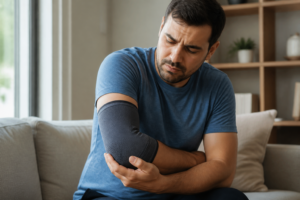
A puffy, tender lump at the tip of the elbow — appearing days after a bump against a hard surface — is one of the most recognizable presentations of olecranon bursitis that orthopedic clinicians encounter. A bursitis compression sleeve is frequently among the first conservative interventions recommended, offering meaningful symptom relief while the body progresses through the inflammatory healing process.
Does Compression Help Treat Bursitis? The Short Answer
Going deeper: Do Compression Sleeves Reduce Bursitis Swelling? — the longer answer
Yes — for most non-infected cases, compression sleeves do help with bursitis, though they manage symptoms rather than cure the underlying inflammation. Gentle, well-fitted compression limits the space available for fluid to accumulate in the inflamed bursa, supports the body’s reabsorption of existing swelling, and provides proprioceptive feedback that discourages the movements and pressure that keep a flare going. What compression cannot do is drain an infected bursa or resolve bursitis while the aggravating activity continues. Clinicians position sleeves as one component of first-line conservative care — alongside rest, ice during acute flares, and offloading pressure from the joint — rather than a standalone treatment.
What Is Bursitis and Why Does Compression Help?
Bursae are small, synovial fluid-filled sacs distributed throughout the musculoskeletal system to reduce friction between bones, tendons, and surrounding soft tissue. When a bursa becomes irritated — through repetitive mechanical stress, acute trauma, prolonged external pressure, or systemic inflammatory conditions such as rheumatoid arthritis or gout — it responds with an inflammatory cascade that causes the sac to fill with excess fluid. The result is the characteristic swelling, warmth, and localized tenderness clinicians define as bursitis.
The two most commonly affected upper-body locations are the olecranon bursa at the posterior tip of the elbow and the subdeltoid bursa within the shoulder complex. The American Academy of Orthopaedic Surgeons (AAOS) identifies olecranon bursitis as particularly prevalent among individuals who rest their elbows on hard surfaces regularly, including office workers, students, and manual laborers.
Research on compression therapy in musculoskeletal inflammation suggests that graduated external pressure around an affected joint may encourage interstitial fluid mobilization away from the site of swelling, supporting the body’s natural reabsorption process. Beyond fluid dynamics, compression provides measurable proprioceptive feedback — neurological input that heightens joint position awareness and reduces the likelihood of inadvertent reinjury. Physical therapists in clinical practice also observe that the mild warmth generated by a well-fitted sleeve helps reduce morning stiffness in the periarticular musculature surrounding the inflamed bursa, improving functional comfort early in the day.
How Does a Bursitis Compression Sleeve Actually Work?
Not all compression sleeves deliver equivalent therapeutic benefit for bursitis, and understanding the mechanical differences is essential for selecting the appropriate device.
Basic Compression Sleeves
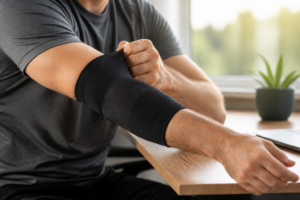
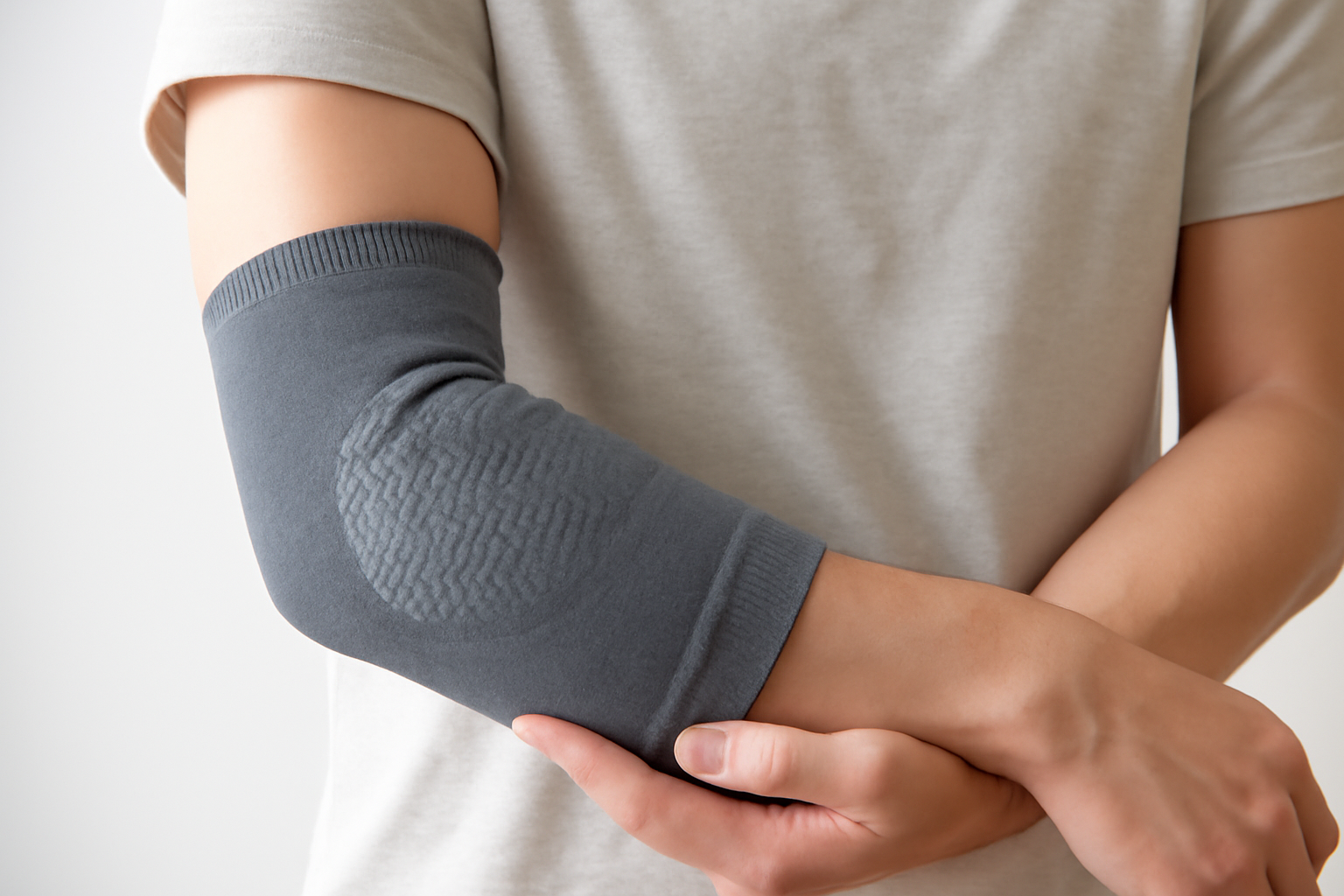
A standard compression sleeve applies consistent circumferential pressure to the elbow or shoulder via elastic or knitted fabric. This uniform pressure supports venous and lymphatic return, helps stabilize the soft tissue envelope surrounding the inflamed bursa, and reduces the pain amplification that often accompanies unprotected joint movement. These sleeves are low-profile, compatible with most clothing, and appropriate for continuous daytime wear during light to moderate activity.
Padded Bursa Sleeves
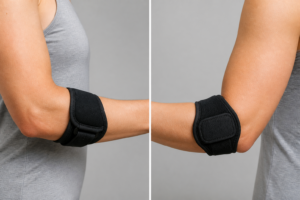
A padded bursa sleeve incorporates a foam or viscoelastic gel cushion positioned directly over the anatomical site of the inflamed bursa — most commonly the olecranon at the posterior elbow. This design is generally considered advantageous for patients whose bursitis was precipitated by direct impact or who work in environments requiring frequent contact between the elbow and hard surfaces. The padding functions as a mechanical shock absorber, dissipating compressive forces before they reach the sensitized bursa and reducing the cumulative microtrauma that prolongs the inflammatory cycle.
Some padded sleeve designs also integrate lateral spring supports or structured stabilizing panels. The American Physical Therapy Association (APTA) recognizes joint stabilization as a meaningful component of conservative bursitis management, particularly during the subacute phase when patients are beginning to resume functional activity.
When Should You Wear a Bursitis Compression Sleeve?
Clinicians experienced in musculoskeletal care identify several clinical contexts where compression sleeve use is most appropriate:
- During work and daily activities — Individuals whose occupations involve repetitive elbow flexion and extension, keyboard use, or surface contact benefit from wearing a sleeve throughout the workday to reduce cumulative irritation to the bursa.
- During athletic training and sport — Athletes participating in racket sports, weightlifting, or overhead sports should wear a compression sleeve to limit bursal stress during activity and reduce post-exercise swelling.
- During the acute inflammatory phase — In the first 48 to 72 hours following onset or reinjury, compression is most effective when combined with rest and localized ice application, consistent with standard RICE (Rest, Ice, Compression, Elevation) protocol guidance.
- As a preventive measure after recovery — Once acute inflammation has resolved, a padded sleeve provides ongoing mechanical protection against recurrence, particularly for individuals returning to high-risk occupational or athletic environments.
Compression sleeves are not recommended for overnight wear unless explicitly prescribed by a treating physician or physical therapist. Extended nocturnal use can impair local circulation and cause skin irritation, counteracting the therapeutic benefits achieved during daytime hours.
Does Compression Help Bursitis in Other Joints?
Although the elbow receives the most attention, compression plays a role in conservative management of bursitis at several other joints — with important anatomical caveats for each.
Why Does Compression on the Shoulder Help Bursitis?
The mechanism at the shoulder is the same as elsewhere: external pressure limits the space available for fluid to accumulate around the inflamed subdeltoid or subacromial bursa, while the garment’s contact with the skin provides proprioceptive support — heightened positional awareness that discourages the overhead reaching and sleeping postures that aggravate shoulder bursitis. The practical challenge is that the shoulder is genuinely difficult to compress. Its ball-and-socket geometry and constant multi-directional movement mean a simple sleeve tends to slide or bunch rather than hold consistent pressure. For that reason, clinicians typically point patients toward shoulder spica-style supports or wrap-around compression shirts and bandage systems that anchor across the chest or upper arm, rather than a tube sleeve. Expectations should also be modest: at the shoulder, compression contributes comfort and swelling control, but activity modification and physical therapy carry more of the therapeutic load.
Compression Sleeves and Knee Bursitis Treatment
Prepatellar bursitis — the “housemaid’s knee” swelling over the kneecap — responds to compression in much the same way olecranon bursitis does: a knee sleeve can meaningfully limit fluid accumulation and reduce the visible swelling over the patella. The critical caveat is pressure. Because the prepatellar bursa, like the olecranon bursa, sits directly beneath the skin, kneeling on a compressed, inflamed bursa continues the mechanical irritation that caused the problem. A sleeve helps manage the swelling, but recovery depends on avoiding direct kneeling pressure — using knee pads or cushioned surfaces when kneeling is unavoidable, and keeping the sleeve snug rather than tight so the swollen sac is not aggressively squeezed against the bone.
Compression Sleeve vs. Compression Bandage for Bursitis
Patients frequently ask whether an elastic compression bandage (an ACE-style wrap) can substitute for a purpose-made sleeve. Each has a legitimate role, and the trade-offs are straightforward:
- Compression bandages offer adjustable pressure and fit any joint — including awkward sites like the shoulder or hip where sleeves fit poorly. They are inexpensive and useful in the first days of an acute flare when swelling changes rapidly. Their weakness is consistency: wraps loosen with movement, are easy to apply too tightly (a real risk over a distended bursa), and require rewrapping several times a day.
- Compression sleeves deliver uniform, predictable, graduated pressure without reapplication, stay in place during work and activity, and can incorporate protective padding over the bursa. The trade-off is a fixed compression level and the need for accurate sizing.
A practical rule from clinical practice: a bandage suits the first 48–72 hours of an acute flare or joints a sleeve cannot grip; a well-fitted sleeve is the better tool for the weeks of daily wear that follow. Whichever is used, the two-finger test applies — if two fingers cannot slide under the edge, the compression is tight enough to risk worsening a swollen bursa.
Products Worth Trying for Elbow Bursitis Relief
Based on clinical criteria — including cushioning placement, compression gradient, structural support, and sustained user outcomes — the following products meet JointHealthFAQ’s standards for bursitis compression and protection:
The Elbow Pad That Actually Stays Put During Flare-Ups
If you’re dealing with acute elbow bursitis, a compression sleeve with real padding is the difference between managing pain through the day and constantly adjusting something that slides down your arm. This one’s designed specifically for bursa inflammation, not just generic elbow support.
What works
- Targeted compression actually reduces swelling noticeably within the first few days of consistent wear—this isn’t placebo; compression directly addresses fluid buildup in the bursa.
- The foam padding absorbs impact and pressure that would otherwise aggravate the bursa, which means you can use your arm without triggering pain spikes.
- Unlike thin sleeves, this design stays in place during movement and doesn’t require constant readjustment, so you actually wear it consistently instead of abandoning it.
What doesn’t
- A brace handles pain and swelling but doesn’t address the underlying cause—if you keep doing the movement that triggered bursitis, the sleeve just buys you time, not healing.
- Some people find the compression too tight after a few hours of wear, especially in warm weather; you need to dial in the right fit on first try or deal with discomfort that defeats the purpose.
Compression sleeves work best as part of a strategy—not as a standalone fix—so you’ll still need to rest the joint and avoid aggravating movements while wearing it. BraceAbility Bursitis Elbow Pad Brace (L/XL)
Quick Answers on Compression and Bursitis Swelling
Do compression sleeves actually reduce bursitis swelling?
For the swelling itself, yes — that is the part compression is genuinely good at. A bursa is a small fluid-filled cushion, and when it is irritated it fills with fluid. Steady external pressure opposes that refilling, and just as usefully it shields the bursa from the leaning and bumping that inflamed it in the first place. What compression does not do is fix the underlying cause, and it does nothing at all for an infected bursa.
How tight should it be?
Snug, never tight. You should be able to slide a finger underneath it. Numbness, tingling, throbbing, or the hand below it changing colour all mean it is too tight — loosen it straight away. Swelling also tends to rise overnight, so a sleeve that felt fine at bedtime can be compressing by the early hours. Take firm compression off before you sleep.
When is a compression sleeve the wrong choice?
When the bursa may be infected. Hot skin, spreading redness, fever, pain that is escalating quickly, or any break in the skin over the swelling all point to septic bursitis, and that needs same-day medical care rather than a sleeve. Compressing an infected bursa wastes time you do not have. This is general information to help you follow along with your own care, not medical advice — your own clinician has examined you and this page has not.
About This Article

Written by Michael Torres. Michael Torres has had joint problems his whole life — hypermobile as a kid, chronic sprains and a dislocating shoulder through his twenties, an osteoarthritis diagnosis in his early fifties, and a right knee replacement since. He is not a doctor or a physical therapist and has no clinical training. He writes about what has helped him and what he has watched help the people around him, and says plainly when he has not tried something himself. More about this site.
Scope and limits. Michael has no medical or clinical training — he writes about living with his own joint pain, not about treating anyone else's. Nothing here is medical advice. Talk to a doctor before starting anything new, and get seen promptly for pain that is new, severe, worsening, or comes with swelling, fever, or numbness.
Verify this against a primary source
Specifics change, and your situation may differ from the one described here. These are the authorities worth checking directly:
- NIAMS — arthritis and musculoskeletal research from the NIH
- MedlinePlus — plain-language medical reference from the NIH
- Arthritis Foundation — condition guides and treatment overviews