
You know that tight, nagging ache deep in the front of your hip — the one that flares up when you stand after sitting at your desk for hours, or when you try to climb stairs and your leg just doesn’t want to cooperate? That’s your hip flexors talking, and they have a lot to say. If you’ve been searching for real hip flexor pain relief support, you’re not alone. This is one of the most common complaints I hear, and the good news is that there are genuinely effective ways to manage it — without jumping straight to medications or expensive treatments.
What’s Actually Going On With Hip Flexor Pain?
Your hip flexors are a group of muscles — primarily the iliopsoas and the rectus femoris — that run from your lower spine and pelvis down to your thigh. Their job is to lift your knee toward your chest and keep your pelvis stable when you walk, run, or even just sit. The problem? Most of us spend the majority of our day sitting, which keeps these muscles in a chronically shortened position. Over time, they tighten up, weaken, and become irritated. That irritation is what you feel as that deep, sometimes stabbing ache in the front of your hip or groin area.
Hip flexor pain can also radiate down the thigh, mimic sciatica, or contribute to lower back discomfort because of how closely these muscles are connected to your lumbar spine and sacroiliac joint. So when your hip flexors are unhappy, your whole kinetic chain can feel it. The approach to managing this kind of pain is usually multi-layered: stretch and strengthen the muscles, support the area during recovery, and make some simple lifestyle adjustments that keep things from getting worse.
Stretches and Movement Habits That May Help
Before we talk products, let’s talk movement — because no brace or wrap replaces good daily habits. Many people find significant relief by incorporating a few targeted stretches into their routine consistently. Here are the ones I recommend most often:
The Kneeling Hip Flexor Stretch
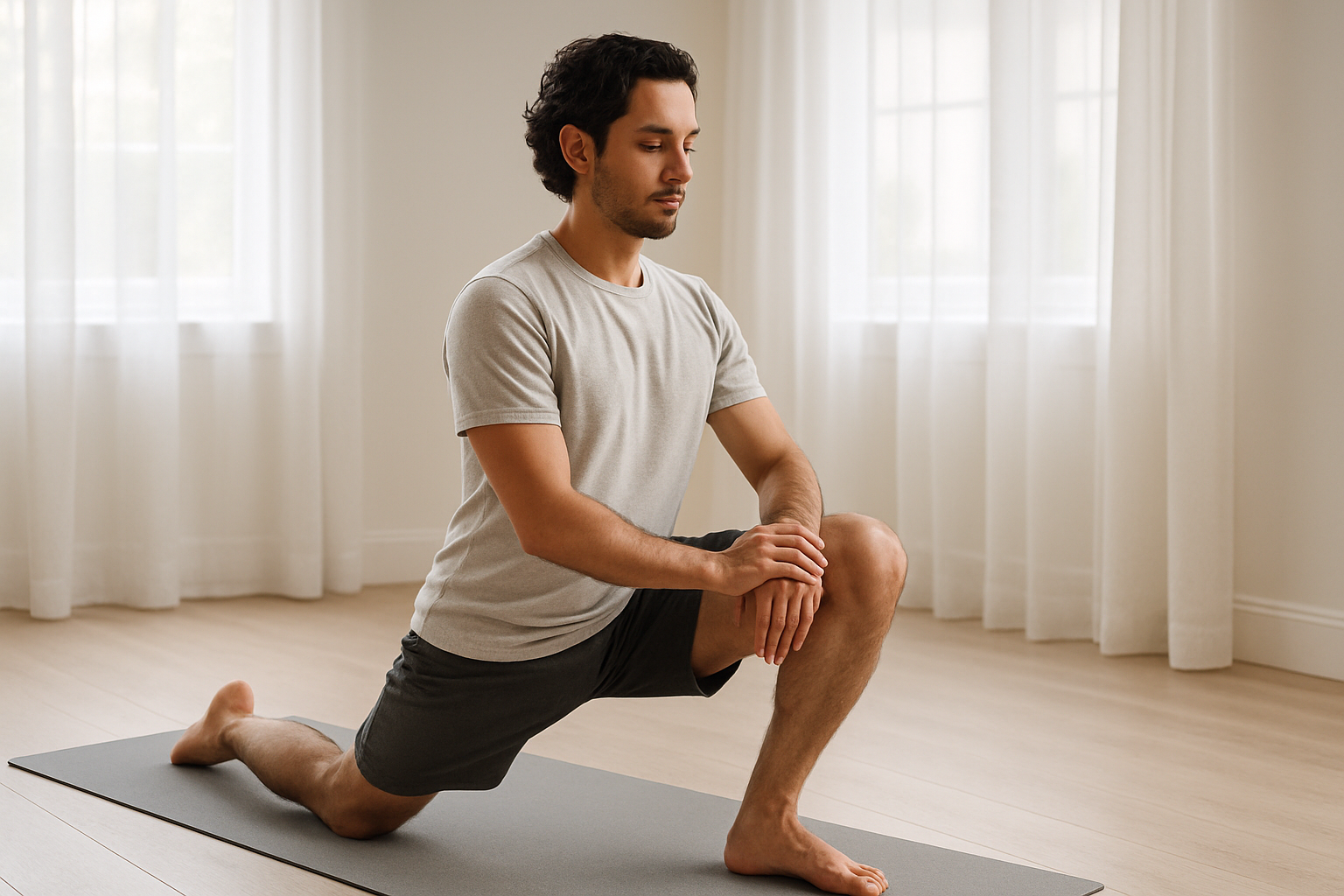
Drop into a half-kneeling position with one knee on the ground and the other foot forward. Gently push your hips forward until you feel a stretch in the front of your back hip. Hold for 30 seconds and repeat 3 times on each side. This is the gold standard for lengthening the iliopsoas, and research suggests regular stretching of this kind may help reduce tension and improve range of motion over time.
The Supine Hip Flexor Release
Lie on your back at the edge of a bed or table. Let one leg hang off the side while keeping the other knee pulled to your chest. The hanging leg’s hip flexor gets a gentle passive stretch under the influence of gravity. Many people find this particularly relieving because it requires zero effort and can be held comfortably for 60 seconds or more.
Glute and Core Strengthening
This one surprises people, but weak glutes and a weak core often force the hip flexors to overwork. Simple exercises like glute bridges, clamshells, and dead bugs may help take the load off your hip flexors by giving them better muscular neighbors to work with. Even 10 minutes a few times a week can make a meaningful difference.
Beyond stretching, one of the simplest things you can do is break up prolonged sitting. Set a timer to stand and walk for 2–3 minutes every 45 minutes to an hour. It sounds almost too easy, but chronically shortened hip flexors need movement to stay healthy.
Hip Flexor Pain Relief Support: What Actually Helps
When the pain is active — especially during physical activity, recovery from a strain, or daily movement that just won’t let you rest the area — a well-designed hip brace or compression wrap can be a genuinely useful tool. Compression may help reduce inflammation, provide proprioceptive feedback (which helps your body move more carefully), and offer stabilization around the hip and groin. Here are the products I feel comfortable recommending based on design, adjustability, and user feedback:
The Hip Flexor Stretch Strap That Actually Stays in Place During Use
If you’ve tried stretching your hip flexors manually and either can’t reach the right angle or can’t hold it long enough to feel a difference, a dedicated stretch strap designed for hip flexor work removes the guesswork and lets you apply consistent, safe tension without straining your lower back or shoulders.
What works
- Allows you to achieve deeper flexor lengthening than most people can access on their own, which is where the actual tissue adaptation happens — research supports that sustained, moderate stretching over 4-6 weeks produces measurable range-of-motion gains.
- Most users report noticeable relief within 2-3 weeks of consistent daily use (5-10 minutes), particularly when combined with addressing the sitting habits that tightened them in the first place.
- The anchor point design keeps tension stable so you’re not fighting to hold your leg in position — this matters because shaky, inconsistent stretches don’t produce results.
What doesn’t
- If your hip flexor tightness is paired with significant lower back pain or a structural issue, a stretch strap alone won’t fix the underlying mechanics — you’ll likely need assessment and corrective work beyond this.
- This is a consistency tool, not a quick fix; I’ve seen people buy these, use them for 3 days, then abandon them expecting overnight relief — the gains compound over weeks, not days.
Stretching takes patience, and skipping days will slow your progress, so think of this as a 30-day commitment before you’ll know if it’s genuinely helping.
About This Article

Written by Michael Torres. Michael Torres has had joint problems his whole life — hypermobile as a kid, chronic sprains and a dislocating shoulder through his twenties, an osteoarthritis diagnosis in his early fifties, and a right knee replacement since. He is not a doctor or a physical therapist and has no clinical training. He writes about what has helped him and what he has watched help the people around him, and says plainly when he has not tried something himself. More about this site.
Scope and limits. Michael has no medical or clinical training — he writes about living with his own joint pain, not about treating anyone else's. Nothing here is medical advice. Talk to a doctor before starting anything new, and get seen promptly for pain that is new, severe, worsening, or comes with swelling, fever, or numbness.
Verify this against a primary source
Specifics change, and your situation may differ from the one described here. These are the authorities worth checking directly:
- NIAMS — arthritis and musculoskeletal research from the NIH
- MedlinePlus — plain-language medical reference from the NIH
- Arthritis Foundation — condition guides and treatment overviews