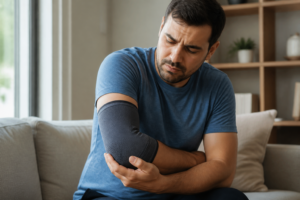
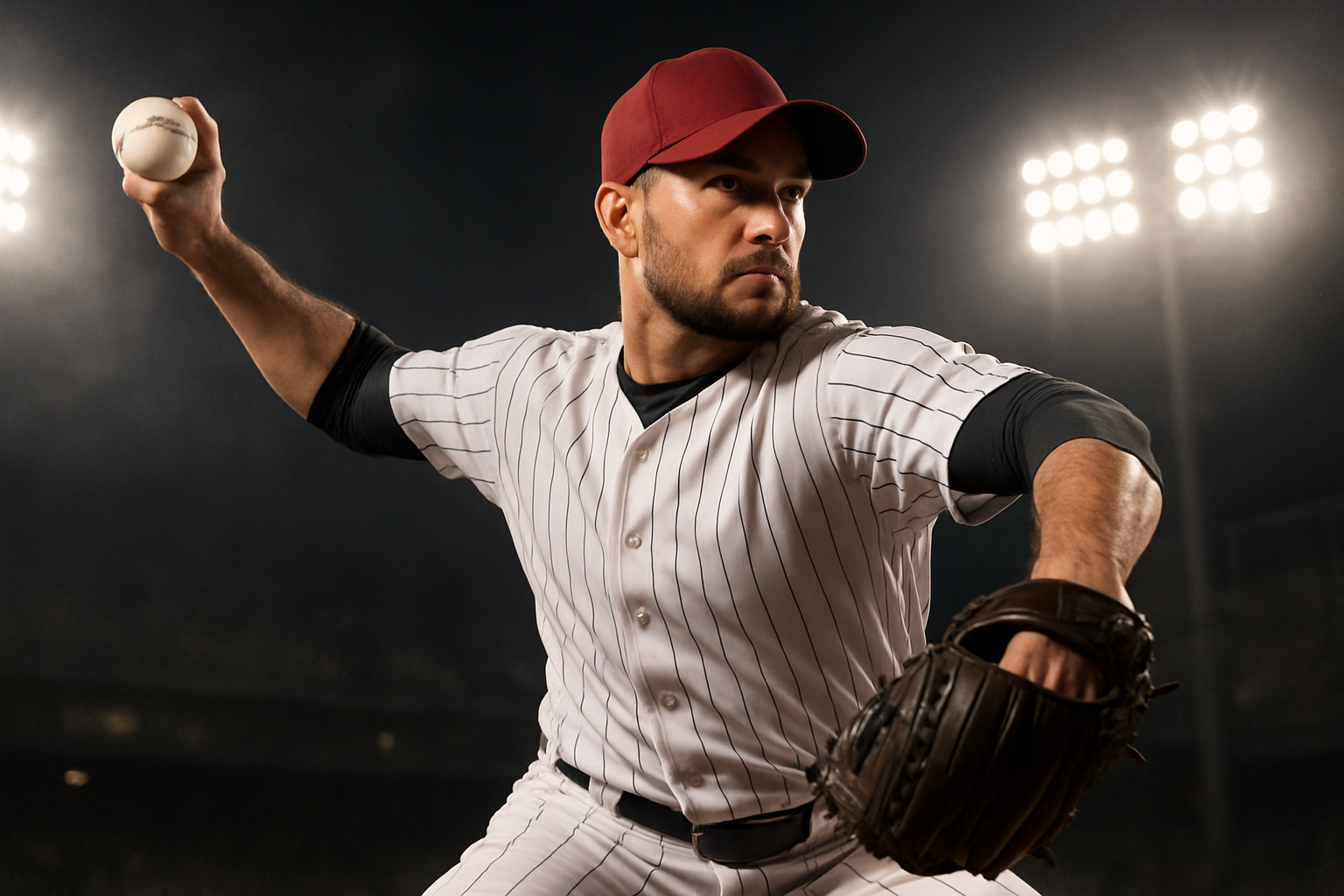

Picture this: it’s the third inning, your pitcher’s arm feels a little tight, and by the sixth inning that tightness has turned into a dull, nagging ache on the inside of the elbow. Sound familiar? Whether you’re a competitive baseball player, a volleyball setter, or a swim coach watching athletes push through overhead movements day after day, you’ve probably seen — or felt — this story play out. Finding the right elbow support for overhead athletes is one piece of the puzzle, but understanding why the elbow gets stressed in the first place is where real protection begins.
What Is Pitcher’s Elbow and Who Does It Affect?
Pitcher’s elbow is a broad term that most commonly refers to medial epicondyle stress — irritation or injury along the inside of the elbow joint. The medical community often breaks this down into conditions like medial epicondylitis (golfer’s elbow), ulnar collateral ligament (UCL) sprains, or in younger athletes, medial apophysitis. But here’s what I want you to understand right away: this isn’t just a baseball problem. Anyone whose sport demands repeated overhead or throwing mechanics — quarterbacks, javelin throwers, tennis players, and even competitive swimmers — can develop the same patterns of wear and discomfort.
The elbow is caught in the middle of a chain. When the shoulder or hip doesn’t do its job efficiently, the elbow absorbs forces it was never designed to handle repeatedly. Research suggests that poor throwing mechanics, inadequate rest, and underdeveloped rotator cuff and forearm strength are among the most significant contributing factors. That means protection has to start well before the elbow ever starts talking to you.
Early Warning Signs You Shouldn’t Ignore
One of the most frustrating things I see — both professionally and personally — is athletes waiting too long to address elbow discomfort. They push through because the season is on the line, or because they don’t want to seem weak. I get it. But your elbow will always outlast your denial if you give it a chance. Here are the early warning signs worth taking seriously:
- A dull ache on the inner elbow during or after throwing or overhead activity
- Tenderness when pressing along the inside of the elbow joint
- Decreased throwing velocity or endurance without an obvious cause
- A feeling of looseness or instability when the arm is fully loaded
- Tingling or numbness into the ring finger and pinky (which may point to ulnar nerve involvement)
If any of these sound like your situation right now, please loop in a sports medicine physician or physical therapist before continuing at full intensity. These symptoms can escalate quickly without proper guidance.
Building a Joint Protection Strategy From the Ground Up
Protecting the elbow joint starts with understanding the whole kinetic chain. I always tell the athletes I work with: strong hips and a stable core reduce the demand on your elbow. Pitchers who generate power efficiently from the lower body place meaningfully less stress on the medial structures of the elbow. Alongside that, a dedicated forearm and wrist strengthening program — think wrist curls, reverse wrist curls, and pronation/supination exercises with light resistance — can significantly support the muscles that stabilize the joint during throwing.
Pitch counts and load management matter enormously, especially for youth athletes whose growth plates are still developing. Many youth sports organizations now follow pitch count guidelines for good reason. Adults aren’t immune either — cumulative throwing volume without adequate rest is one of the most reliable paths to a chronic elbow problem.
Flexibility work for the shoulder — specifically the posterior capsule — is something many overhead athletes overlook. A tight posterior capsule can shift the mechanics of the entire throwing motion and increase medial elbow stress. Cross-body stretches and doorway chest openers performed consistently may help maintain healthy range of motion and reduce compensatory loading at the elbow.
Elbow Support for Overhead Athletes: What Actually Helps
Now let’s talk gear. External support isn’t a replacement for strength and mechanics work, but many athletes find that wearing the right brace during training or competition helps manage discomfort and gives confidence to the joint while healing or conditioning is ongoing. Here are the options I feel good recommending based on the type of support you need.
The Elbow Brace That Actually Stays Put During Overhead Movements
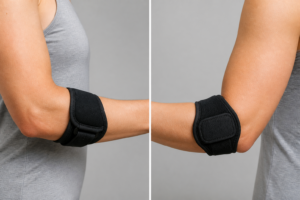
Pitcher’s elbow demands more than compression—it needs targeted support that doesn’t slip during the explosive moments when you need it most. The CAMBIVO 2 Pack addresses the medial elbow stress overhead athletes face by combining neoprene compression with a structured design that keeps the brace anchored through full range of motion.
What works
- The dual-strap design actually reduces migration during throwing and overhead pushing—most users report it stays in place through a full practice or game, unlike single-wrap sleeves that creep up with sweat and movement.
- Neoprene compression provides immediate warmth and proprioceptive feedback to the medial elbow, which research supports as part of reducing tendon overload during repetitive overhead work.
- The two-pack format means you can rotate pairs through wash cycles and have backup support if one gets stretched out—realistic for athletes training 5-6 days a week.
What doesn’t
- A brace is symptom management, not a cure—if your throwing mechanics are broken or volume is escalating too fast, this will delay the problem, not solve it. You still need the conditioning work.
- Neoprene can irritate skin if worn directly against bare arm for extended periods; most users need a thin sleeve underneath or will experience mild redness after 2-3 hours of continuous wear.
A brace buys you time and reduces pain signals, but it’s not a substitute for addressing load, mechanics, and recovery—expect 1-2 weeks of consistent use before you notice a real difference in how your elbow feels mid-workout. CAMBIVO 2 Pack Elbow Brace
About This Article

Written by Michael Torres. Michael Torres has had joint problems his whole life — hypermobile as a kid, chronic sprains and a dislocating shoulder through his twenties, an osteoarthritis diagnosis in his early fifties, and a right knee replacement since. He is not a doctor or a physical therapist and has no clinical training. He writes about what has helped him and what he has watched help the people around him, and says plainly when he has not tried something himself. More about this site.
Scope and limits. Michael has no medical or clinical training — he writes about living with his own joint pain, not about treating anyone else's. Nothing here is medical advice. Talk to a doctor before starting anything new, and get seen promptly for pain that is new, severe, worsening, or comes with swelling, fever, or numbness.
Verify this against a primary source
Specifics change, and your situation may differ from the one described here. These are the authorities worth checking directly:
- NIAMS — arthritis and musculoskeletal research from the NIH
- MedlinePlus — plain-language medical reference from the NIH
- Arthritis Foundation — condition guides and treatment overviews