
You know that feeling — a brutal week at work, barely any sleep, tension knotting up your shoulders, and then out of nowhere your knees start aching or your hips feel stiff even though you haven’t done anything particularly strenuous? That’s not a coincidence. The connection between stress and joint pain is very real, and if you’ve been brushing it off as “just getting older” or “overdoing it at the gym,” it’s worth taking a closer look at what’s actually happening inside your body when stress levels go through the roof.
The Real Link Between Stress and Joint Pain
Here’s what most people don’t realize: stress isn’t just a mental state. It’s a full-body physiological response. When you’re chronically stressed — whether from work, relationships, financial pressure, or even overtraining — your body pumps out elevated levels of cortisol and inflammatory cytokines. Research suggests that prolonged cortisol spikes can actually increase systemic inflammation, which is one of the main drivers of joint pain, stiffness, and swelling.
Think of it this way: your joints are surrounded by synovial fluid and connective tissue that thrives in a low-inflammation environment. When stress keeps that inflammatory dial turned up, those tissues get irritated. You might notice your knees feel puffy after a particularly anxious week, or your fingers are stiff in the morning after a stretch of poor sleep. That’s your body waving a flag.
There’s also a muscular component. Stress causes your muscles to tighten and guard — it’s a survival mechanism going back to our prehistoric ancestors. But chronically tight muscles pull on tendons, compress joints, and throw off your movement patterns. Over time, that creates wear and friction in places that shouldn’t be experiencing it. Your hips, knees, ankles, and even your jaw can all take the hit.
Why Athletes and Active People Are Especially Vulnerable
If you’re someone who exercises regularly, you might think you’re immune to stress-related joint issues. After all, exercise is supposed to reduce stress, right? Yes — but only up to a point. When you layer high psychological stress on top of heavy training loads, your body’s ability to recover between sessions takes a serious hit.
Cortisol interferes with the repair processes that happen while you sleep. Collagen synthesis slows down. Micro-tears in cartilage and connective tissue that would normally heal overnight linger instead. What used to be a manageable training schedule suddenly feels like it’s grinding your joints down faster than you can rebuild them. Many athletes describe this as feeling “broken” during periods of high life stress even when the training load hasn’t changed at all.
The practical takeaway here is that managing stress isn’t just a mental health issue — it’s a recovery and performance issue. Your joints absolutely depend on it.
What Actually Helps: Practical Recovery Strategies
Alright, let’s get into the part you actually came here for. The good news is that the connection between stress and joint pain, while real, is also very addressable. These aren’t miracle cures — but many people find real, meaningful relief with a consistent combination of the following approaches.
Prioritize Sleep Like It’s Your Job
I can’t stress this enough (pun intended). Sleep is when your body does the heavy lifting of joint repair. Aim for 7–9 hours in a cool, dark room. If stress is keeping you awake, try a wind-down routine that includes light stretching, limiting screens an hour before bed, and even some diaphragmatic breathing. Getting your cortisol down before bedtime is one of the most powerful things you can do for joint recovery.
Move Gently, Even on Hard Days
When your joints are achy and you’re stressed out, the last thing you want to do is move. But gentle movement — think walking, swimming, or a slow yoga flow — actually helps circulate synovial fluid and reduce stiffness. You’re not trying to crush a workout. You’re trying to remind your body that it’s safe to move freely. Even 15–20 minutes may help more than you’d expect.
The Foam Roller That Actually Targets Stress-Induced Muscle Tension Before It Locks Down Your Joints
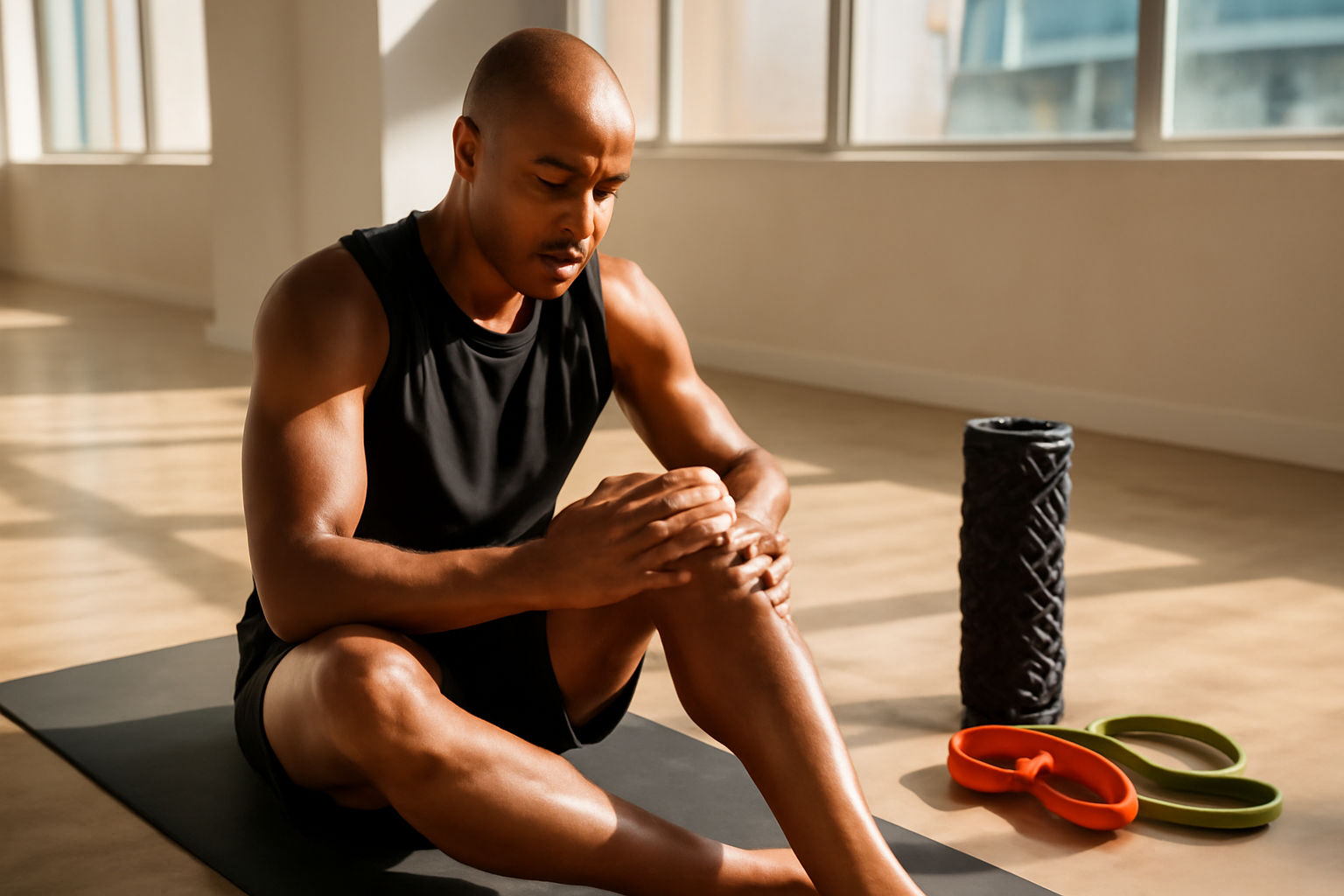
When stress tightens your muscles, especially around high-tension areas like your calves, quads, and hip flexors, that chronic tension directly translates to joint compression and restricted movement. A quality foam roller gives you a way to release that muscular tightness on your own timeline—before it calcifies into stiffness and starts limiting your joints.
What works
- The textured surface and firm core actually break up adhesions in muscle tissue, not just compress the surface—most people notice noticeably less muscle tightness within 3–5 days of consistent use.
- Unlike generic foam rollers that soften or shred after a few months, this one holds its density and texture through years of daily use, which matters because consistency is what actually moves the needle on chronic tension.
- The grid pattern provides targeted pressure that mimics hands-on massage without requiring someone else or expensive weekly sessions—research supports that self-myofascial release activates parasympathetic response, actually helping reverse some of the physiological stress response.
What doesn’t
- If your joint pain is coming from inflammation or structural damage rather than muscular tension, rolling won’t address the root cause—you’ll feel temporary relief but the underlying issue stays put.
- You have to actually use it consistently (4–5 minutes per problem area, 4–5 times a week minimum) for real results; one weekend session won’t undo a week of desk posture and stress-induced tightness.
Foam rolling is a tool for managing stress-related muscle tension, not a fix for the stress itself—you still need to address sleep, workload, and recovery alongside the physical work. Check out the TriggerPoint Grid 1.0 Foam Roller if you’re ready to commit to consistent use.
About This Article

Written by Michael Torres. Michael Torres has had joint problems his whole life — hypermobile as a kid, chronic sprains and a dislocating shoulder through his twenties, an osteoarthritis diagnosis in his early fifties, and a right knee replacement since. He is not a doctor or a physical therapist and has no clinical training. He writes about what has helped him and what he has watched help the people around him, and says plainly when he has not tried something himself. More about this site.
Scope and limits. Michael has no medical or clinical training — he writes about living with his own joint pain, not about treating anyone else's. Nothing here is medical advice. Talk to a doctor before starting anything new, and get seen promptly for pain that is new, severe, worsening, or comes with swelling, fever, or numbness.
Verify this against a primary source
Specifics change, and your situation may differ from the one described here. These are the authorities worth checking directly:
- NIAMS — arthritis and musculoskeletal research from the NIH
- MedlinePlus — plain-language medical reference from the NIH
- Arthritis Foundation — condition guides and treatment overviews