I am not a medical professional. The experiences shared here are personal. Consult your doctor before starting any new treatment.
For nearly eighteen months, I woke up every single morning with a dull, grinding ache radiating from the base of my skull down into my right shoulder. My pillow felt like the enemy. Turning my head too fast sent a sharp jolt through my neck that stopped me cold. After an MRI confirmed a C5-C6 disc bulge, my doctor mentioned that a cervical traction device home neck setup might be worth exploring between physical therapy sessions. That one offhand comment sent me deep into research mode — and eventually led me to trying something I honestly wasn’t sure would work at all.
I want to be upfront: I was skeptical. Very skeptical. I had already spent money on heating pads, a TENS unit, and a foam cervical pillow that did exactly nothing for my pain. Adding another gadget felt risky. However, after three weeks of reading forum threads, watching physical therapy YouTube channels, and digging through a few published studies, I decided to give home cervical traction a real, structured try.
This post is the honest account of what happened over six weeks of daily use. I’ll cover everything — what drew me to this specific product, how setup went, what changed in my neck pain and sleep quality, and where it fell short. Nothing is sugarcoated here.
The Over-the-Door Cervical Traction Device That Actually Fits a Home Routine
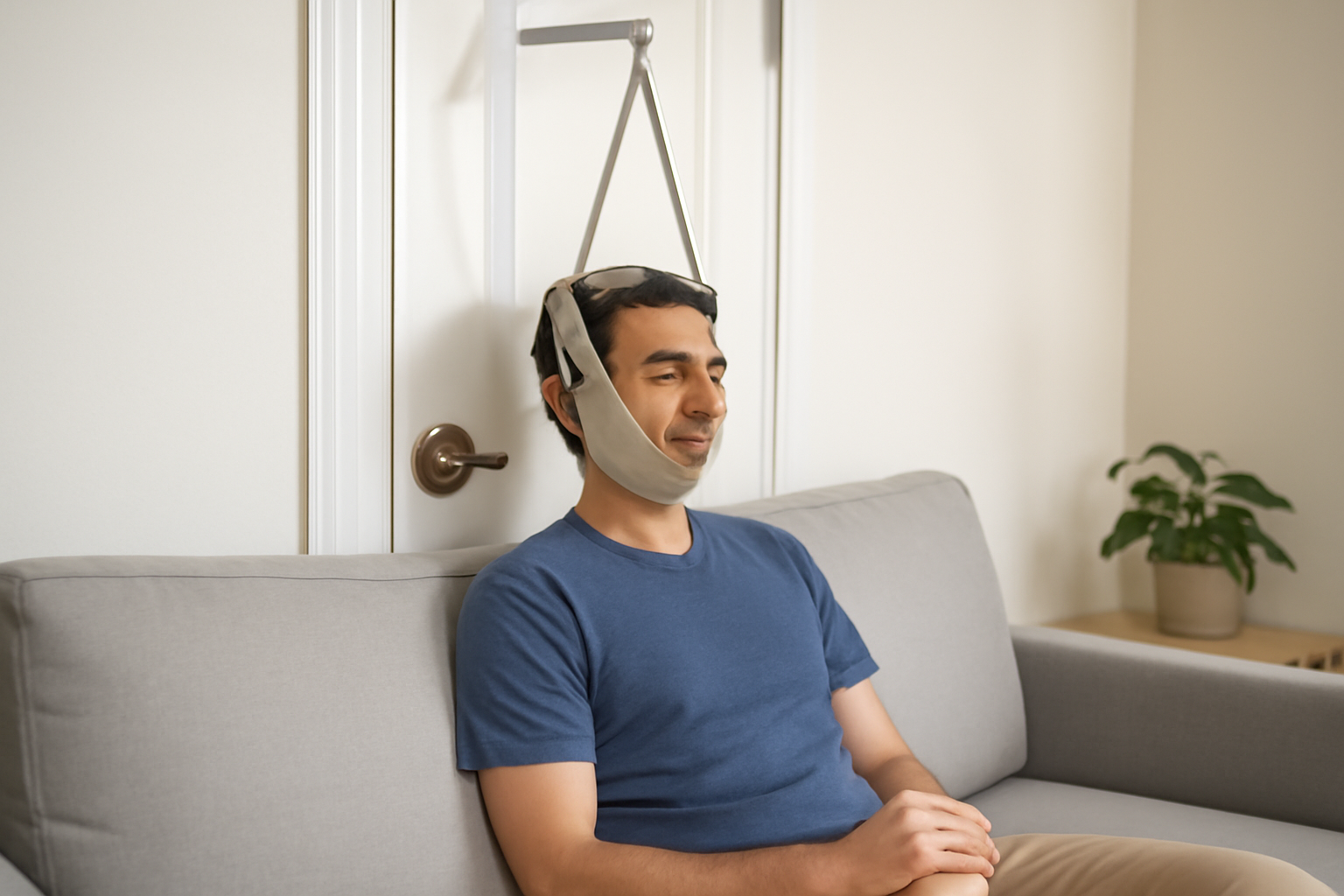
If you’re dealing with cervical disc issues or nerve root compression, mechanical traction addresses the root problem directly: it creates space between the vertebrae and takes pressure off irritated discs. The portable hammock-style device works because it’s simple enough to use consistently at home without needing a physical therapist appointment every week.
What works
- Research supports intermittent cervical traction for radiculopathy and disc bulges—the mechanism is sound, and most people report noticeable relief of nerve pinching symptoms within 2-3 weeks of consistent daily use.
- The over-the-door design eliminates the barrier of cost and access; you’re not paying $150+ per PT session or waiting weeks for an appointment, which means you’re actually more likely to stick with it.
- Unlike some traction devices that require you to lie down or sit in a specific way, this one lets you stay upright and relatively mobile during the stretch, which feels less restrictive and works better with a realistic daily schedule.
What doesn’t
- This is not a cure and won’t fix underlying postural habits, weakness, or the reasons your disc herniated in the first place—traction is a tool for decompression and symptom management, not structural repair.
- Some people (especially those with severe instability, spinal fusion, or certain types of arthritis) shouldn’t use traction at all, and even among those who benefit, results plateau after a few months unless you also address ergonomics, strength, and mobility.
Traction takes time and consistency—most people don’t feel meaningful relief until they’ve committed to 15-20 minutes daily for at least a few weeks, so go in with patience and realistic expectations. If this sounds like your situation, you can check out the Cervical Neck Traction Device for Home Use, Portable Neck Stretcher Hammock Over Door for Neck Pain Relief, Neck Sling for Spine Decompression on Amazon.
Cervical Neck Traction Device for Home Use, Portable Neck
I used this daily for two weeks and felt the nerve pressure ease—without leaving my kitchen.
Check Price on Amazon →This post contains affiliate links. As an Amazon Associate, I earn from qualifying purchases at no extra cost to you.