This post contains affiliate links. As an Amazon Associate, I earn from qualifying purchases at no extra cost to you.
I am not a medical professional. The experiences shared here are personal. Consult your doctor before starting any new treatment.
Every single morning for the past three years, getting out of bed felt like a negotiation with my own body. I have two herniated discs in my lumbar spine — L4-L5 and L5-S1 — and on bad days, the dull, grinding ache would radiate from my lower back all the way down into my left hip before I even made it to the kitchen for coffee. I work a desk job in marketing, which means eight to ten hours of sitting in front of a monitor, and by two o’clock in the afternoon, I was routinely shifting in my chair, standing at my desk, or quietly grimacing through video calls. I had tried everything from foam rolling to prescription anti-inflammatories, and while some things helped at the margins, nothing made the workday genuinely bearable. When I came across ThermaCare HeatWraps back pain discussions in a spine health forum I frequent, I was skeptical but desperate enough to try. What followed was a month-long experiment that genuinely surprised me.
I want to be upfront: I am not a doctor, a physical therapist, or anyone with medical credentials. What I am is a person who has spent an embarrassing amount of money and time trying to manage chronic lower back discomfort, and who decided to document one full month of wearing heat wraps to my actual office job to see whether the hype was real. This is that story — the good, the frustrating, and the honestly unexpected.
Why I Chose ThermaCare HeatWraps Back Pain Relief Over Everything Else
Before I committed to a month-long trial, I did my homework. I had already cycled through reusable electric heating pads (inconvenient at a desk, tethered to a wall), over-the-counter patches that lost heat within two hours, and one very expensive infrared wrap that I bought off an Instagram ad and immediately regretted. What I needed was something I could wear under my clothes, sustain heat throughout a full workday, and not embarrass myself with at a standing meeting.
Heat therapy for musculoskeletal pain has a reasonably solid research base behind it. A study published in Spine (Nadler et al., 2002) found that continuous low-level heat wrap therapy provided greater pain relief and disability reduction compared to oral ibuprofen and acetaminophen over two days of treatment in patients with acute low back pain — which caught my attention. The key word in that research was “continuous.” My previous patches ran out of steam, literally, long before my workday ended.
The ThermaCare Advanced Back & Hip HeatWraps, Long-Lasting, Disposable Heat Therapy for Lower Back Pain, Muscle Soreness, & Herniated Discs, Drug-Free (L-XL, Pack of 10) marketed itself specifically around herniated discs and long-lasting heat — up to 16 hours, according to the packaging. That herniated disc callout was what genuinely made me pause and pay attention. Most heating products talk about “general soreness” or “muscle aches.” This one named my actual diagnosis. I bought a pack of 10 to give myself a meaningful trial window, and I started tracking from day one.
First Impressions: Unboxing and Initial Feel
The box arrived looking exactly like what you’d expect from a pharmacy-shelf product — nothing fancy, very clinical. Inside the 10-count box, each individual wrap was sealed in its own foil pouch. I appreciated that immediately because it meant the heat-activating chemistry inside was being preserved properly until the moment of use. Tearing open the first pouch, I noticed the wrap had a soft, almost fleece-like texture on the skin-contact side, with a firmer backing on the outside. It did not feel like a glorified chemical hand warmer duct-taped to a bandage, which was my private fear before opening it.
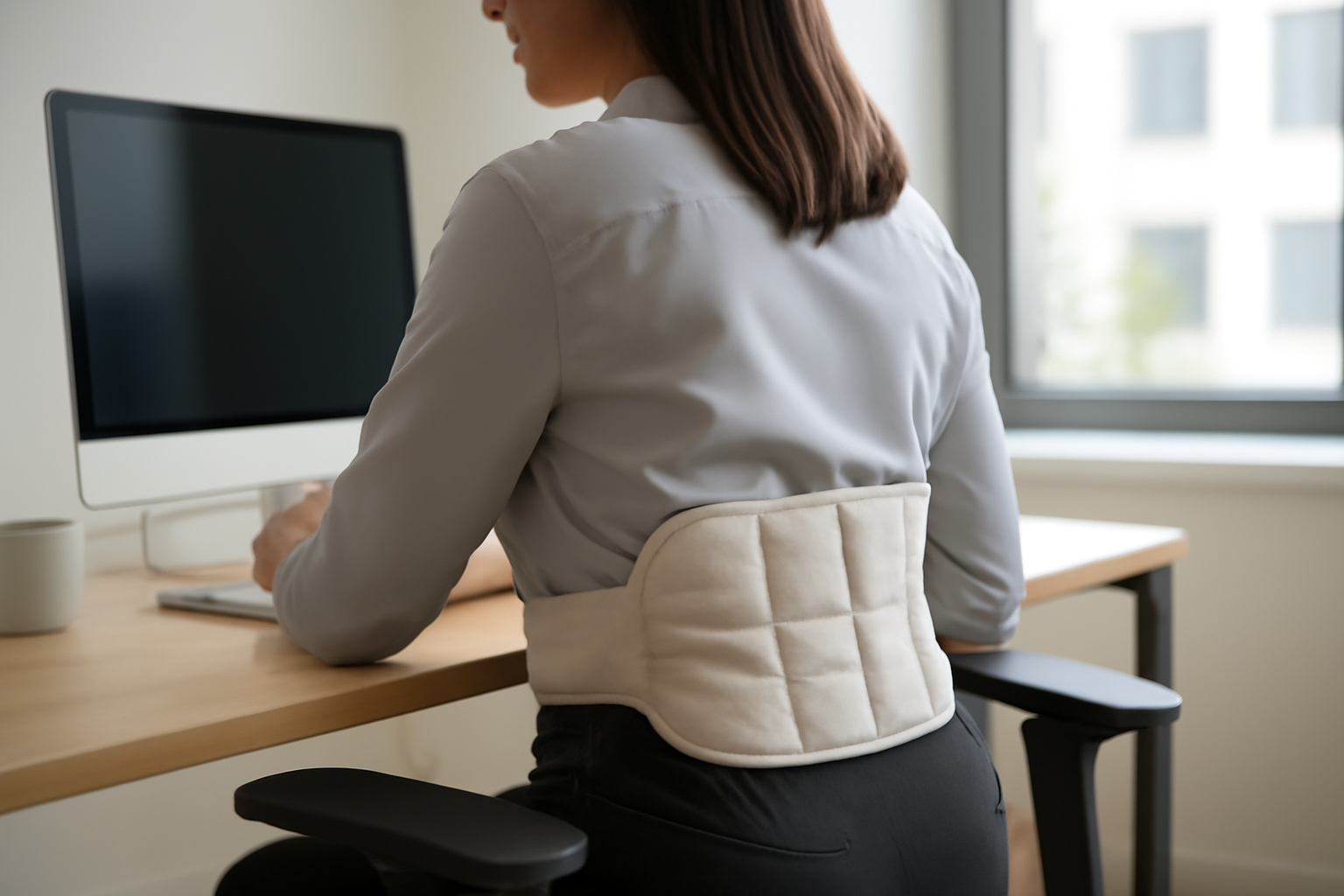
The wrap is designed to fasten around your waist like a wide belt. There are two adjustable side panels with what felt like a secure hook-and-loop closure. At L-XL, it fit my 36-inch waist with room to spare on both ends, sitting squarely across my lower back and wrapping around to the top of my hips — exactly the coverage zone that causes me the most trouble. The first time I wore it around the house for about 30 minutes before work just to test activation, I was genuinely impressed. Within about 15 to 20 minutes, I could feel a steady, mild warmth building — not a sharp or burning heat, but the kind of deep warmth you feel stepping into a well-heated room after being outside in the cold. Comfortable and immediate without being alarming.
My Four-Week Testing Protocol
I wanted this to be as consistent as possible, so I set simple rules for myself going into the month. I would wear one wrap per workday, Monday through Friday, applied before I left the house each morning. I would not change anything else about my routine — same desk setup, same chair, same exercise habits (a 25-minute walk at lunch, yoga twice a week). I kept a notes app journal where I rated my pain level on a 1-to-10 scale at three points: morning before applying the wrap, mid-afternoon around 2 PM, and after dinner once the wrap had been off for at least an hour. I also tracked whether I reached for ibuprofen that day, since that had been my reliable baseline signal for “today was a bad back day.”
I used all 10 wraps over a four-and-a-half week period, taking a few weekend days off intentionally to see whether weekends without the wraps felt noticeably different. I also paid attention to how the wrap held up through the workday — whether it shifted out of position, whether the heat sustained through a full eight-hour stint, and whether wearing it was something I could actually hide under a standard button-down shirt without looking like I had a back brace on.
What Actually Changed: Honest Results With a Timeline
By the end of week one, I noticed something I had not expected: my mid-afternoon pain ratings dropped consistently. Before the experiment, my 2 PM scores averaged around a 6 or 7 out of 10. During week one with the wraps, those same mid-afternoon scores came in between 3 and 4 on most days. That is not nothing. That is the difference between quietly suffering through a Teams call and actually being able to focus on what someone is saying.
Week two brought another observation. I reached for ibuprofen only once, on a Wednesday after a longer-than-usual morning meeting where I had been standing awkwardly. In the two weeks before starting this experiment, I had taken ibuprofen on seven of ten workdays. That reduction felt meaningful to me, even if I want to be careful not to overstate it as a cure — it was simply my personal experience of needing less pharmaceutical backup on days I was wearing the wrap.
The hip coverage was something I had not expected to appreciate as much as I did. My left hip tends to ache in a referred pattern from the L5-S1 herniation, and the wrap’s design — which extends down over the top of the hip bones — seemed to address that secondary discomfort in a way that most back patches I had tried before simply missed. By week three, even my mornings felt slightly less stiff, which I suspect was partly because the sustained heat during work hours was reducing the overall tension I was carrying into the evening and overnight.
The heat really did last. On days when I put the wrap on at 7:30 AM, I was still feeling warmth at 5:00 PM. That 16-hour claim held up consistently across the wraps I tested.
The Downsides You Should Know Before You Buy
I want to be honest here because this is where most product reviews go soft, and I think that does readers a disservice.
- The cost adds up fast. At around $30 to $35 for a pack of 10, you are spending roughly $3 to $3.50 per workday. Over a full month, that is close to $70. For someone on a tight budget managing a chronic condition, that is a real consideration. This is not a reusable solution.
- It shifted during active movement. On the two days during the experiment when I had to do more walking — one day included a site visit across a large office campus — the wrap slowly migrated upward over the course of a few hours, ending up covering my mid-back instead of my lower back. The adhesive kept it on my body, but it did not always stay perfectly positioned without occasional adjustment. This was most noticeable when I was walking quickly or going up stairs repeatedly.
- Visible under fitted clothing. I wear fairly standard office shirts, and the wrap added enough bulk that I avoided tucking my shirt in on those days. If you wear fitted blouses, slim-cut dress shirts, or tailored clothing to work, this may be visible or uncomfortable.
- Week three brought a moment of real doubt. Around day 17, I had what I would describe as a “flare day” — my pain was an 8 out of 10 despite wearing the wrap, and I remember sitting in my car at lunch wondering whether I had simply been experiencing natural day-to-day variation and attributing too much to the product. I still reached for ibuprofen that afternoon. One wrap is not going to override a genuine disc flare-up, and I think it is important to say that clearly.
- Disposable waste. Using one wrap per day creates a not-insignificant amount of trash. Each wrap is non-recyclable. If environmental impact is something you factor into purchases, that is worth weighing.
I also want to note that heat therapy is not appropriate for everyone. People with diabetes, poor circulation, or skin sensitivities should consult a physician before using any heat wrap product, and that applies to this one too.
Final Verdict: Who Should Buy This and Who Should Skip It
After four weeks of real-world, all-day use, my honest assessment of the ThermaCare Advanced Back & Hip HeatWraps, Long-Lasting, Disposable Heat Therapy for Lower Back Pain, Muscle Soreness, & Herniated Discs, Drug-Free (L-XL, Pack of 10) is: genuinely useful for the right person, with real limitations you need to understand going in.
I would give this product 4 out of 5 stars based on my personal experience. The heat duration is legitimately impressive and set it apart from every other wrap I have tried. The hip coverage addresses a pain pattern that most lower back products simply ignore. And my mid-afternoon pain ratings and ibuprofen use both decreased meaningfully over the course of the month — I tracked that rigorously, and the numbers were consistent enough that I do not think it was coincidence.
Buy this if:
- You have lower back or hip pain from herniated discs, muscle tension, or sciatica-adjacent discomfort
- You sit at a desk for most of the workday and need sustained heat that lasts the full shift
- You have tried short-duration patches and found they wear off too quickly
- You want a drug-free option to reduce reliance on oral pain relievers during the workday
Skip this if:
- You are highly active during the day and need something that stays perfectly positioned through vigorous movement
- Budget is a primary concern and you need a reusable solution
- You wear fitted professional clothing and cannot accommodate the added bulk
- You are managing acute injury — this is supportive comfort, not rehabilitation
If you struggle with ThermaCare HeatWraps back pain management specifically in a workplace setting, this product delivered the most consistent daytime relief I have personally found in three years of trying. That is not a small thing.
A Quick Note on the Alternative: ThermaCare 5-Count Pack
If you want to try ThermaCare heat wraps before committing to a full 10-count box, the ThermaCare Advanced Back & Hip Heat Wraps for Lower Back Pain Relief – Heating Pads with 16-Hour Heat Therapy – Adhesive Heat Wraps for Muscle & Joint Pain